Everything we have published
Fabrics
11 guides
How to compare a ponte fabric's stretch with a legging
The JEGINS Fit fabric standard puts leggings usually at 10 percent elastane or more, and usually at up to 20 percent elastane. That range is the reference point.
FabricsReviewed October 7, 2026
What elastane content suits pants for a long flight?
On the JEGINS Fit fabric standard, the band from 4 percent to 8 percent elastane is the one to look at for a long flight. From 4 percent elastane the fabric recovers after a day, and up to 8 percent it still looks like denim.
FabricsReviewed October 2, 2026
What fabric works best for long flights
A knit fabric with 4 to 8 percent elastane and a waistband at least 2 inches deep is the general standard for sustained sitting comfort, which is exactly the condition a long flight puts a garment under for hours at a stretch.
FabricsReviewed September 6, 2026
Do fleece-lined pants run small?
Fleece-lined pants often fit snugger than the same size in an unlined style, because the brushed lining adds bulk inside the garment that takes up some of the room the outer shell's measurements suggest is available.
FabricsReviewed September 6, 2026
What Tencel and modal do in stretch pants
Tencel and modal are both regenerated cellulose fibres — made by dissolving wood pulp and reforming it into thread — which puts them between cotton and polyester on feel: softer and more fluid than cotton, but still a plant-derived fibre rather than a…
FabricsReviewed September 5, 2026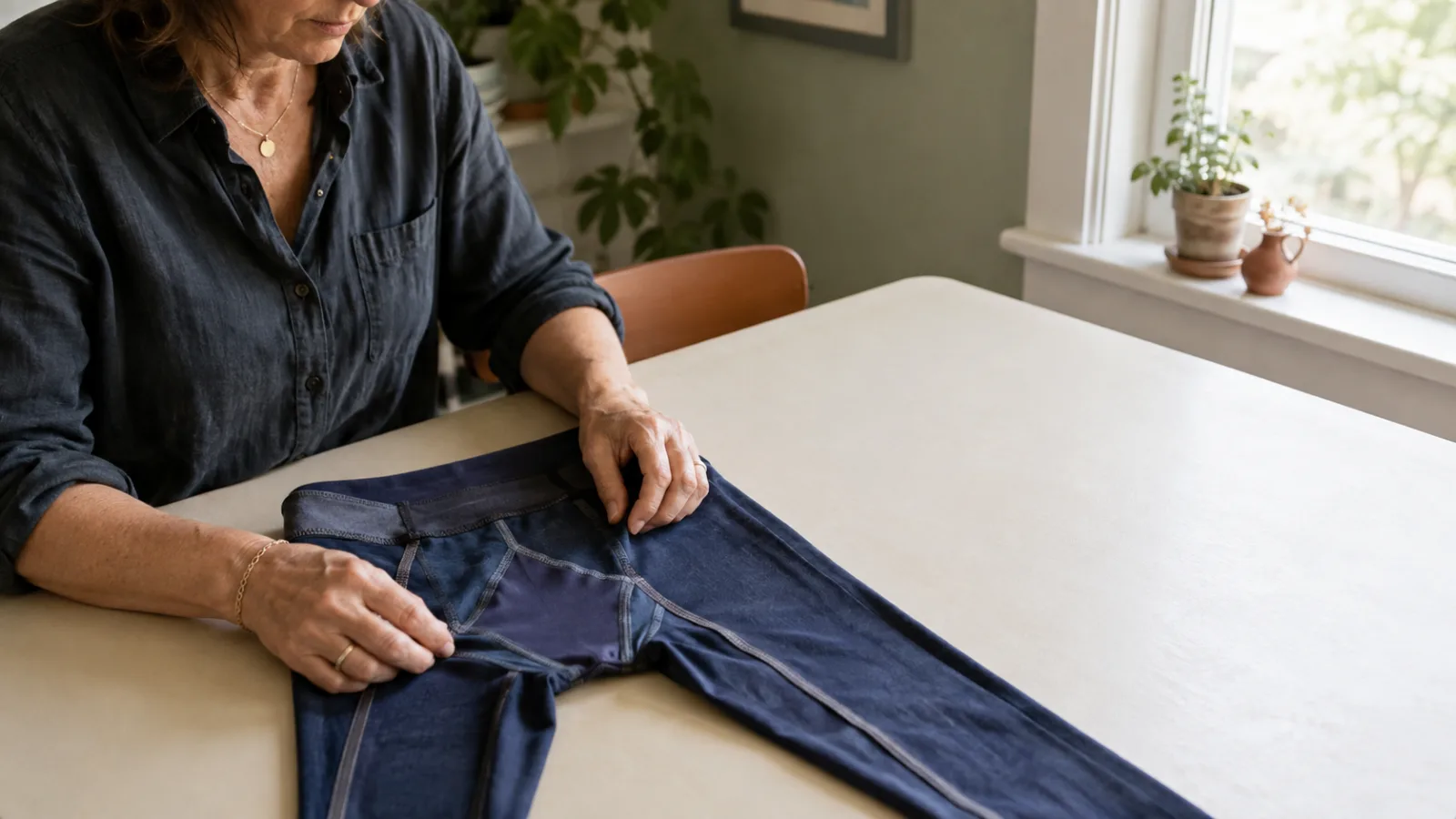
What a gusseted crotch is and why it matters
A gusset is a small extra piece of fabric — usually diamond or triangle shaped — set into the crotch seam where the front and back panels meet.
FabricsReviewed September 5, 2026
What ponte fabric is and where it works
Ponte is a double-knit fabric — two layers of interlocking loops knitted together — which is what gives it more body than a single-knit legging fabric while still stretching.
FabricsReviewed September 5, 2026
Cotton vs polyester pants: which is more comfortable, and when
Cotton feels better against the skin and breathes, which is why it is more comfortable for the first hour and in heat. Polyester holds its shape, sheds creases and dries fast, which is why it is more comfortable at the end of a long day and after a wash.
FabricsReviewed September 5, 2026
How much elastane jeans should have
For everyday jeans that should still look like denim, 2 to 3 percent elastane gives comfort stretch. For pull-on jeans, jeggings or long wear days, 4 to 8 percent recovers much better and resists bagging.
FabricsReviewed September 5, 2026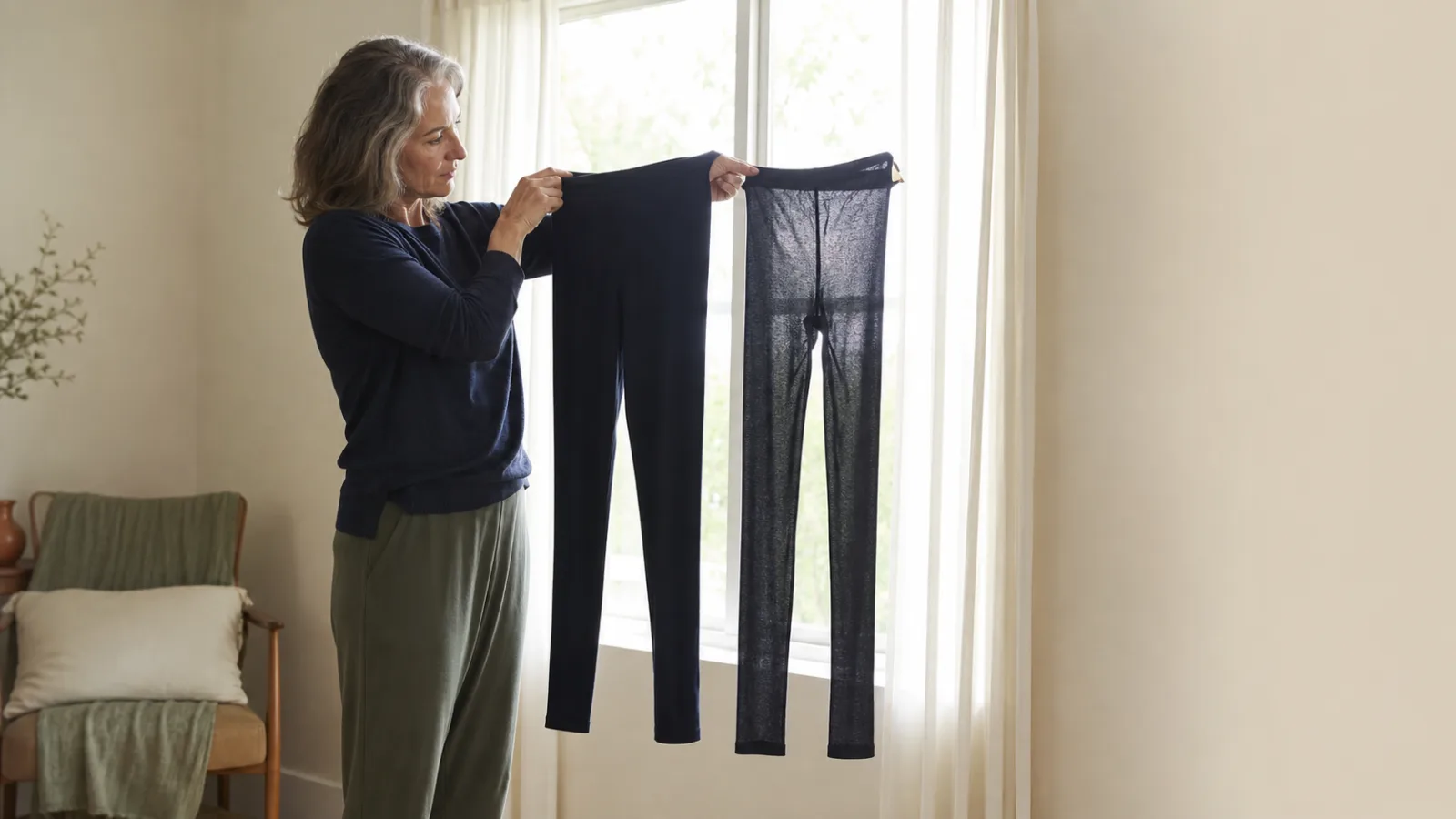
What makes leggings opaque: weight, knit and colour
A legging stays opaque when the knit is dense and heavy enough that stretching it over the seat does not open the loops. Three things decide that: fabric weight, knit density and colour.
FabricsReviewed September 5, 2026
Elastane percentage explained: what each band on the label means
The elastane percentage predicts stretch and, more importantly, recovery. At 0 to 1 percent the fabric is rigid and moulds slowly. At 2 to 3 percent it gives a little and still looks like denim.
FabricsReviewed September 5, 2026
Comparisons
14 guides
Does stretch denim ever behave like compression leggings?
Compression is a separate property from elastane content, and the JEGINS Fit fabric standard publishes no compression measurement. What it does publish is where denim ends and legging behavior begins.
ComparisonsReviewed October 4, 2026
Where does a mid rise end and a high rise begin?
On most women's blocks, a mid rise has a front rise of roughly 9 in up to roughly 10.5 in. A front rise of 11 in or more is a high rise. A 10 in front rise sits inside the mid-rise band.
ComparisonsReviewed October 1, 2026
Fleece-lined pants vs thermal leggings for cold weather
The two solve warmth differently: fleece-lined pants add a separate brushed layer inside a trouser shell, trapping air between the shell and the lining, while thermal leggings rely on the knit construction itself — often a brushed interior face on a single…
ComparisonsReviewed September 6, 2026
Leggings vs compression pants: what actually differs
The difference is elastane content and how tightly the garment is cut relative to the body, not a separate fabric category.
ComparisonsReviewed September 6, 2026
Stretch jeans vs rigid denim: which lasts, and which fits
Rigid denim, at 0 to 1 percent elastane, lasts longest as a fabric but never gives; stretch denim at 2 to 3 percent adds comfort with little cost to life; and at 4 to 8 percent the jeans recover after a day and feel like a different garment, at the price of…
ComparisonsReviewed September 5, 2026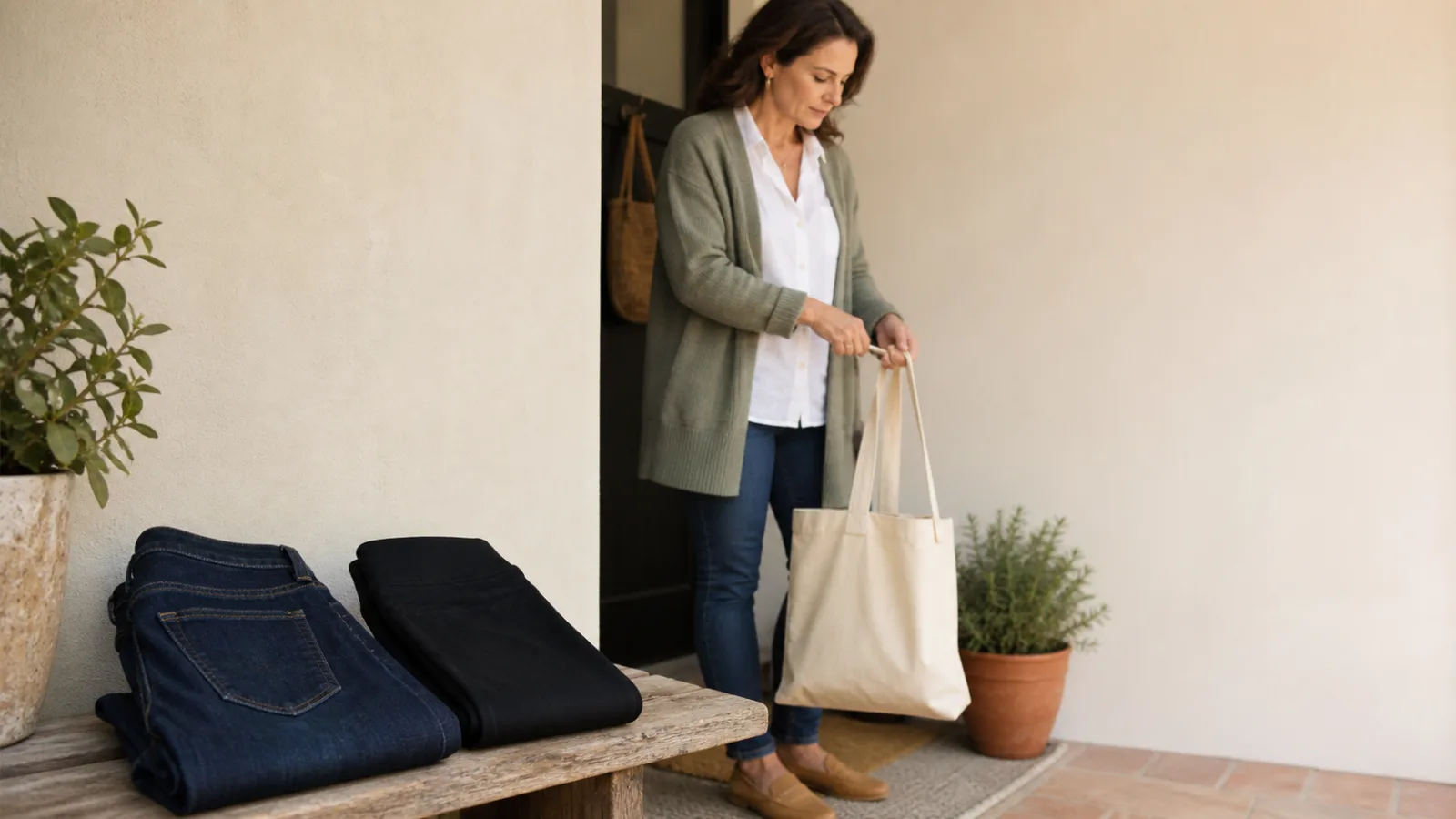
Jeggings vs leggings: which one you actually want
A legging is a knit tube with a waistband: the fabric is the whole garment, and above about 12 percent elastane it stretches and clings everywhere.
ComparisonsReviewed September 5, 2026
Ponte pants vs woven trousers for the office
For a day spent mostly seated, ponte wins: it is a dense double knit, usually a polyester, rayon and elastane blend, that stretches when you sit and recovers when you stand, with a pull-on waistband that does not dig in.
ComparisonsReviewed September 5, 2026
Travel pants vs regular pants: what the difference actually is
Travel pants are worth it when the fabric is actually different: a woven polyester or nylon blend with 4 to 8 percent elastane that recovers after hours seated, resists creasing and dries overnight.
ComparisonsReviewed September 5, 2026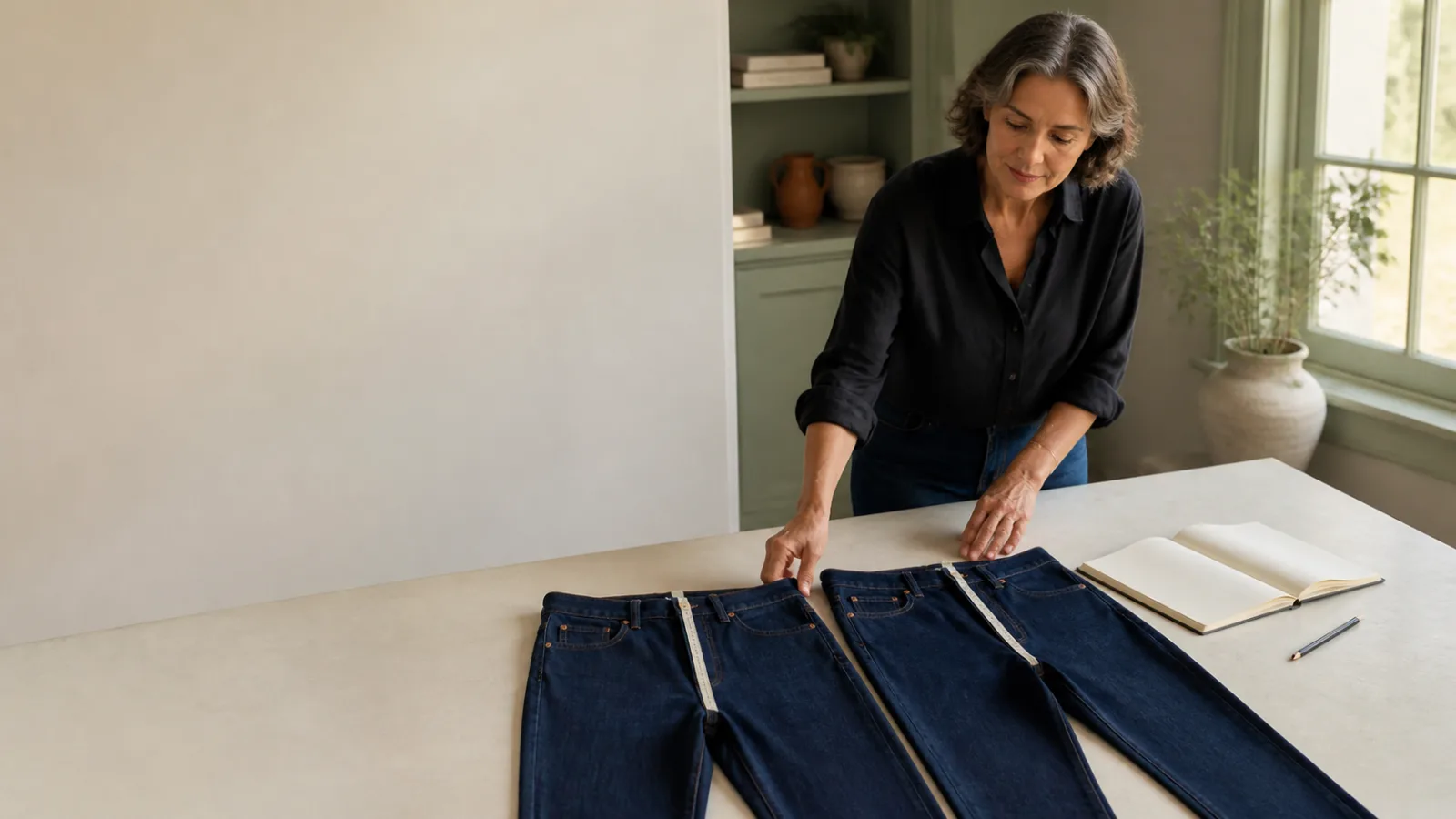
High rise or mid rise for a short torso
Mid rise. On a short torso the natural waist sits close to the ribs, so a front rise of 11 inches or more - a high rise on most blocks - reaches the ribcage when you sit.
ComparisonsReviewed September 5, 2026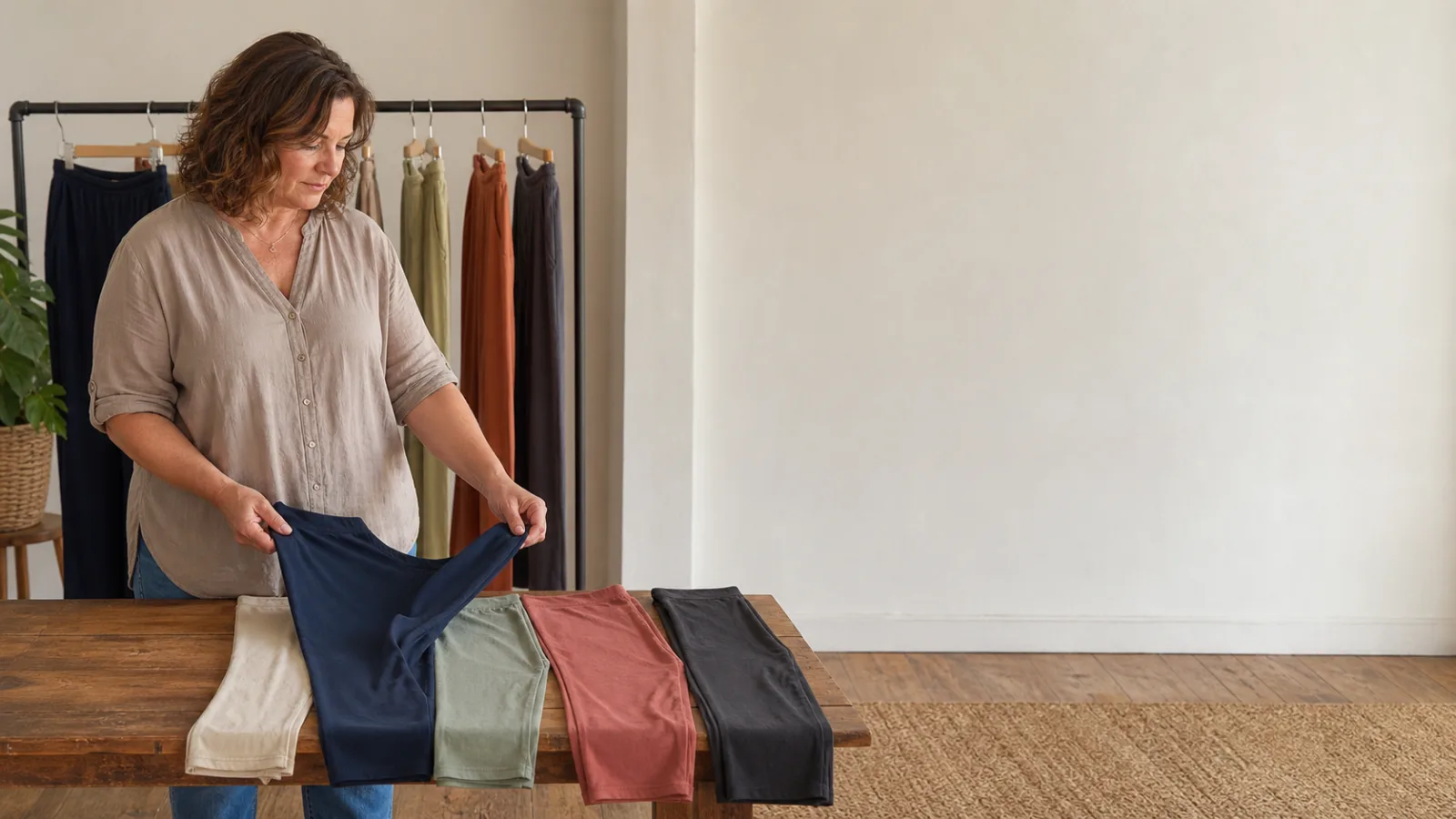
Leggings vs Compression Pants: What the Jeans Fabric Standard Can and Cannot Tell You
When you compare leggings, compression pants, and stretch jeans, elastane content is useful only as a construction clue. In a woven pull-on jean, below 2 percent elastane can bag out during wear.
ComparisonsReviewed September 5, 2026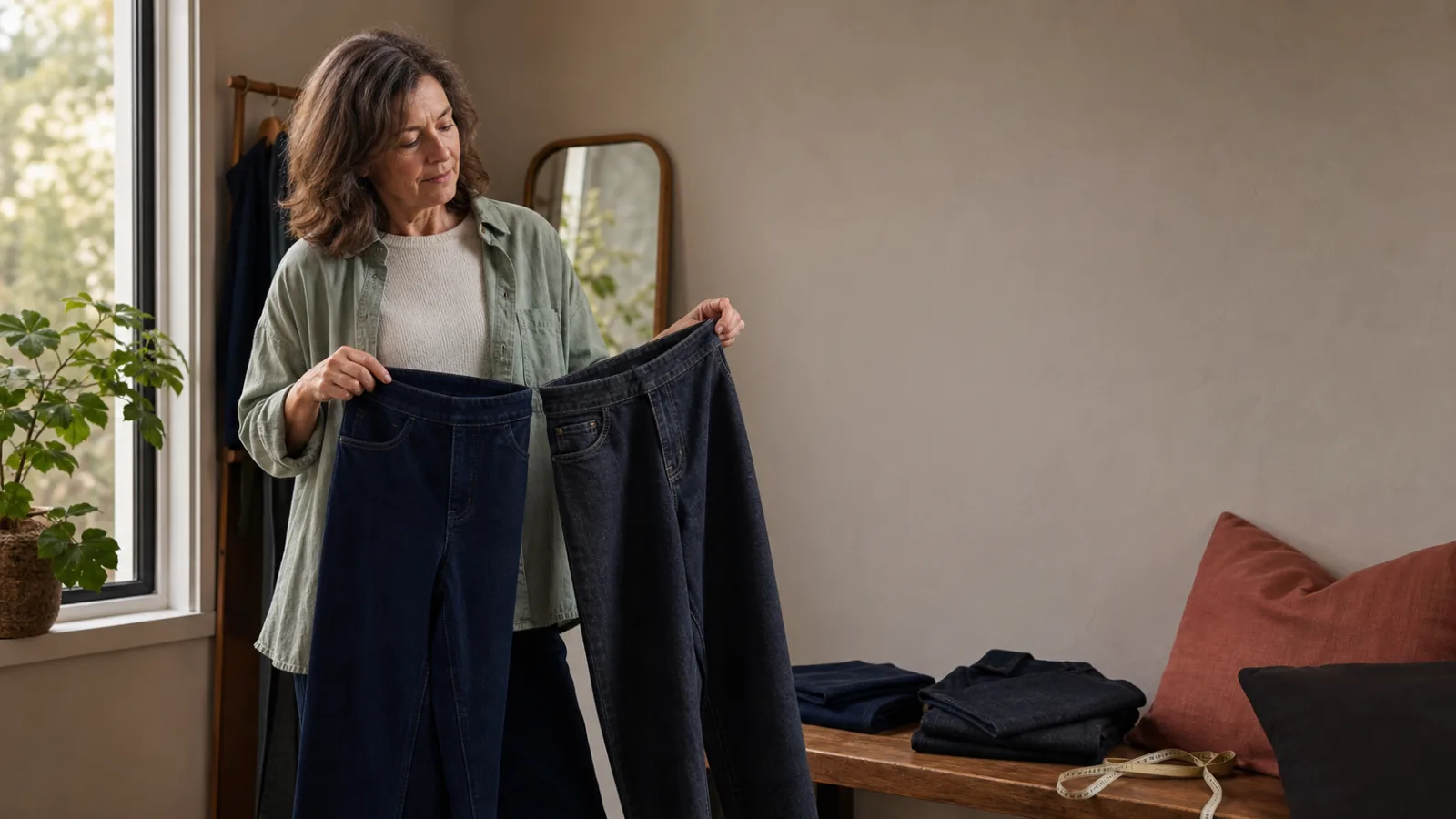
Comfort-Stretch Denim or High-Recovery Denim: What Is the Difference?
Comfort-stretch denim uses a lower elastane range: woven denim with 2 percent elastane gives comfort stretch, and up to 3 percent elastane stays in that comfort-stretch zone.
ComparisonsReviewed September 5, 2026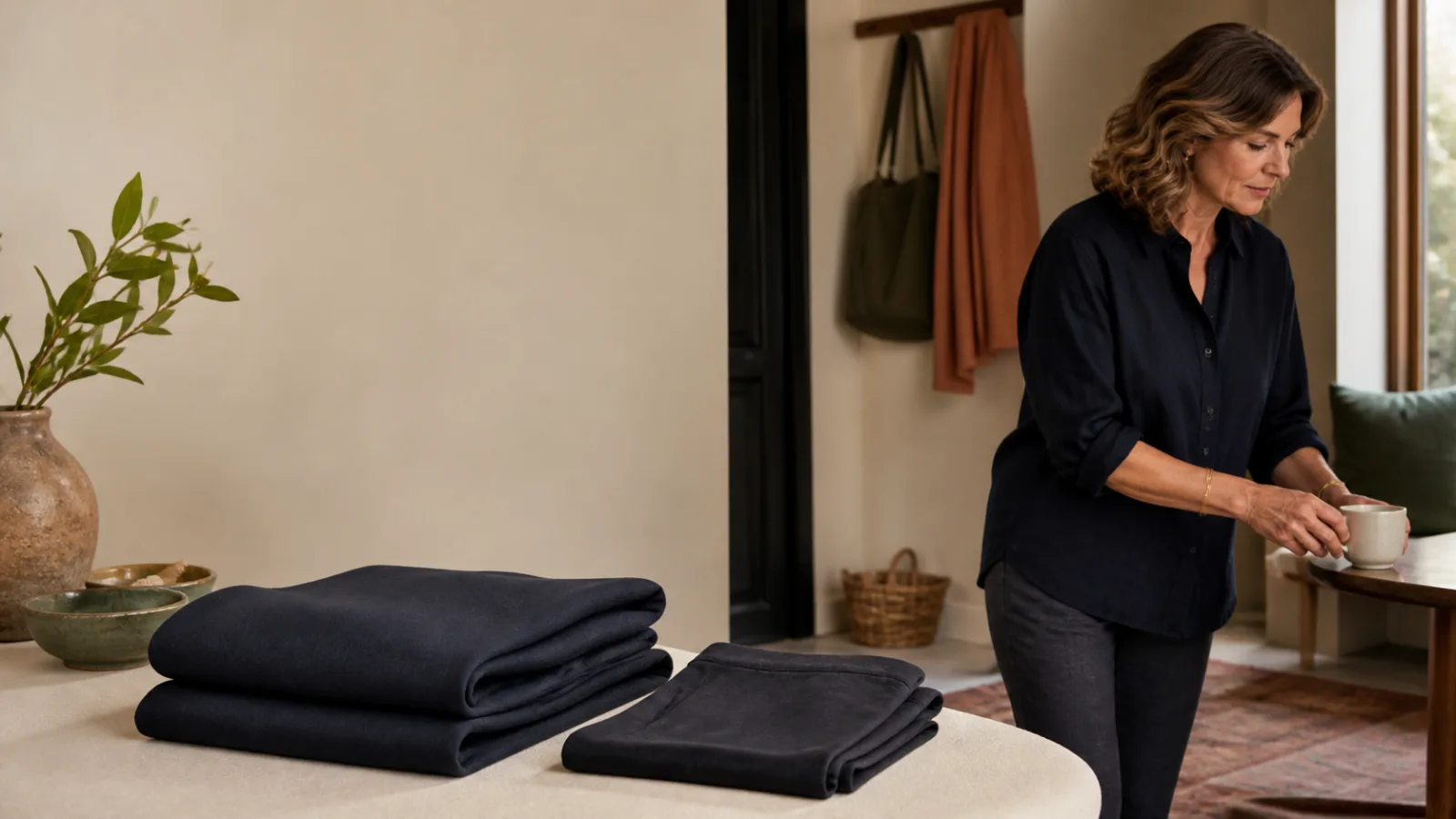
Ponte pants vs leggings
Ponte is a thick double knit that holds a clean line and resists creasing, which is why it works in an office. Leggings are a lighter, higher-stretch knit that follows the leg closely.
ComparisonsReviewed September 5, 2026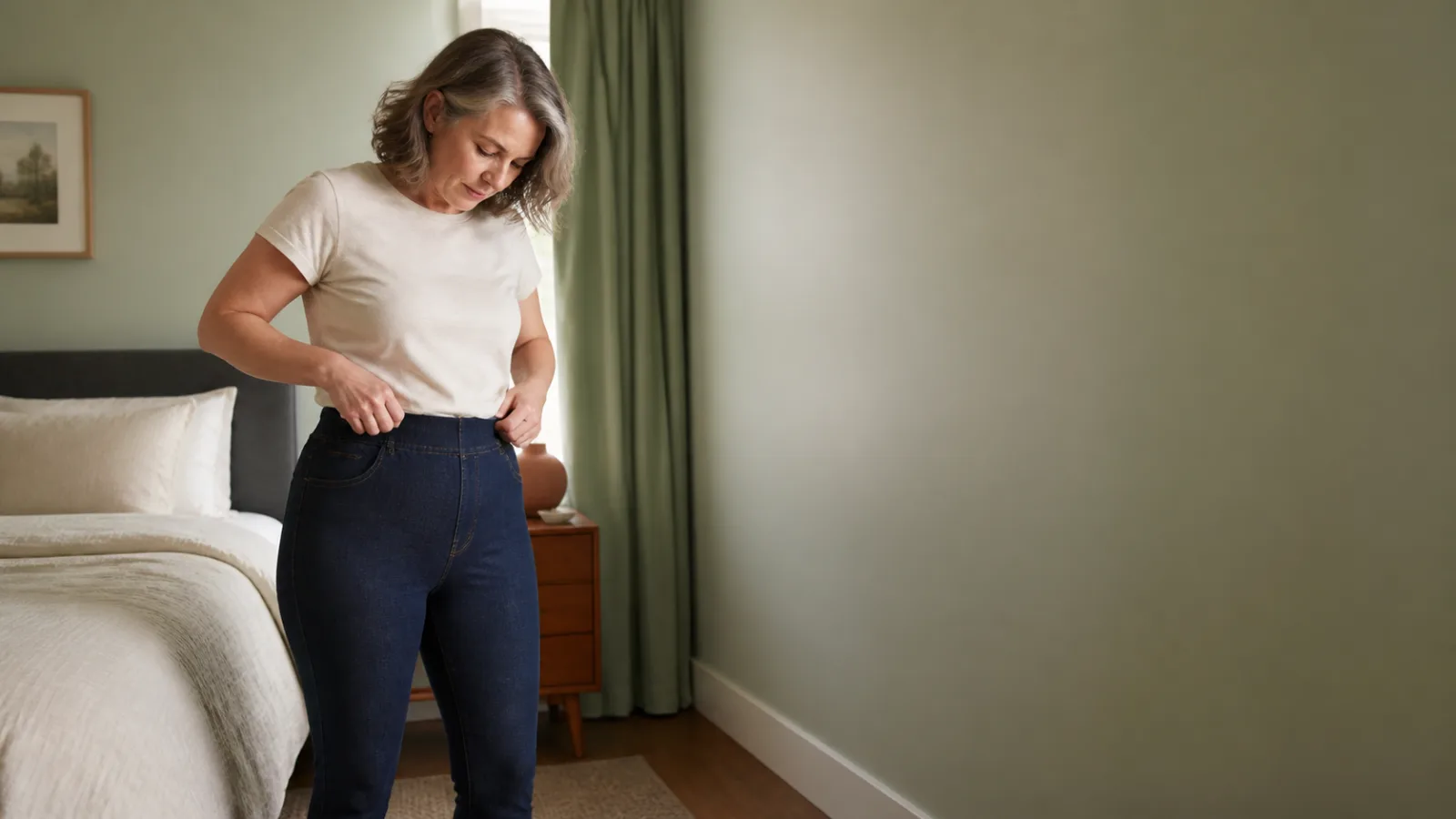
Jeggings vs pull-on jeans
Both replace the fly and button with an elastic waist. A pull-on jean is still woven denim, so it looks like a conventional jean. A jegging is a knit printed or woven to look like denim, so it looks and feels closer to a legging.
ComparisonsReviewed September 5, 2026
Jeggings vs skinny jeans: knit against woven
A skinny jean is woven denim cut close to the leg, usually with a button and zip. A jegging is a knit fabric made to look like denim and built like a legging, usually with an elastic waistband and often with faux front pockets.
ComparisonsReviewed September 5, 2026
Body shapes
16 guides
How deep should a waistband be if your size changes through the day?
Look for a waistband at least 2 inches deep, in fabric with 4 percent to 8 percent elastane. The deeper band spreads pressure across more of the waist, so it puts half the pressure per inch of a narrow band.
Body shapesReviewed October 2, 2026
What jeans stay up on a rectangle body shape?
Look at the fabric first. Jeans with 4 percent to 8 percent elastane tend to recover after a day of wear and still look like denim, so they are less likely to stretch out and slip.
Body shapesReviewed October 1, 2026
What pants work when your size changes through the day?
Look for pants with a knit waistband at least 2 in deep and fabric in the 4 percent to 8 percent elastane range. That combination gives the waistband more area to sit against the body and gives the fabric recovery after wear.
Body shapesReviewed September 6, 2026
What pants work through bloating and waist size changes
A waistband built from fabric with 4 to 8 percent elastane, at least 2 inches deep, has enough range to absorb a normal daily waist fluctuation without needing to be sized for the largest point of the day.
Body shapesReviewed September 6, 2026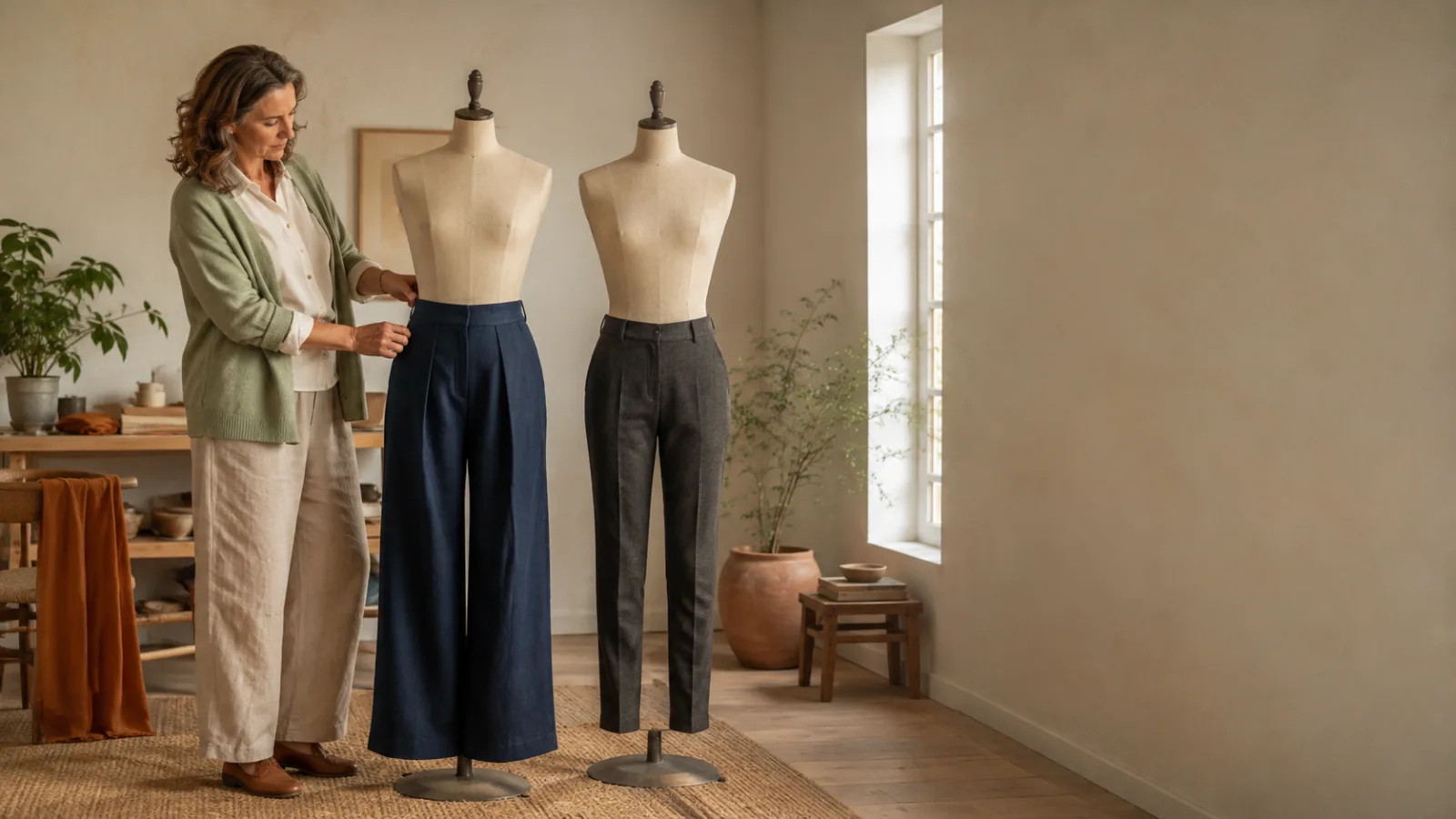
What pants work for an inverted triangle shape
An inverted triangle shape has shoulders and bust wider than the hip, so the pants question is about adding visual width below the waist rather than about fit problems the way it is for most other shapes.
Body shapesReviewed September 6, 2026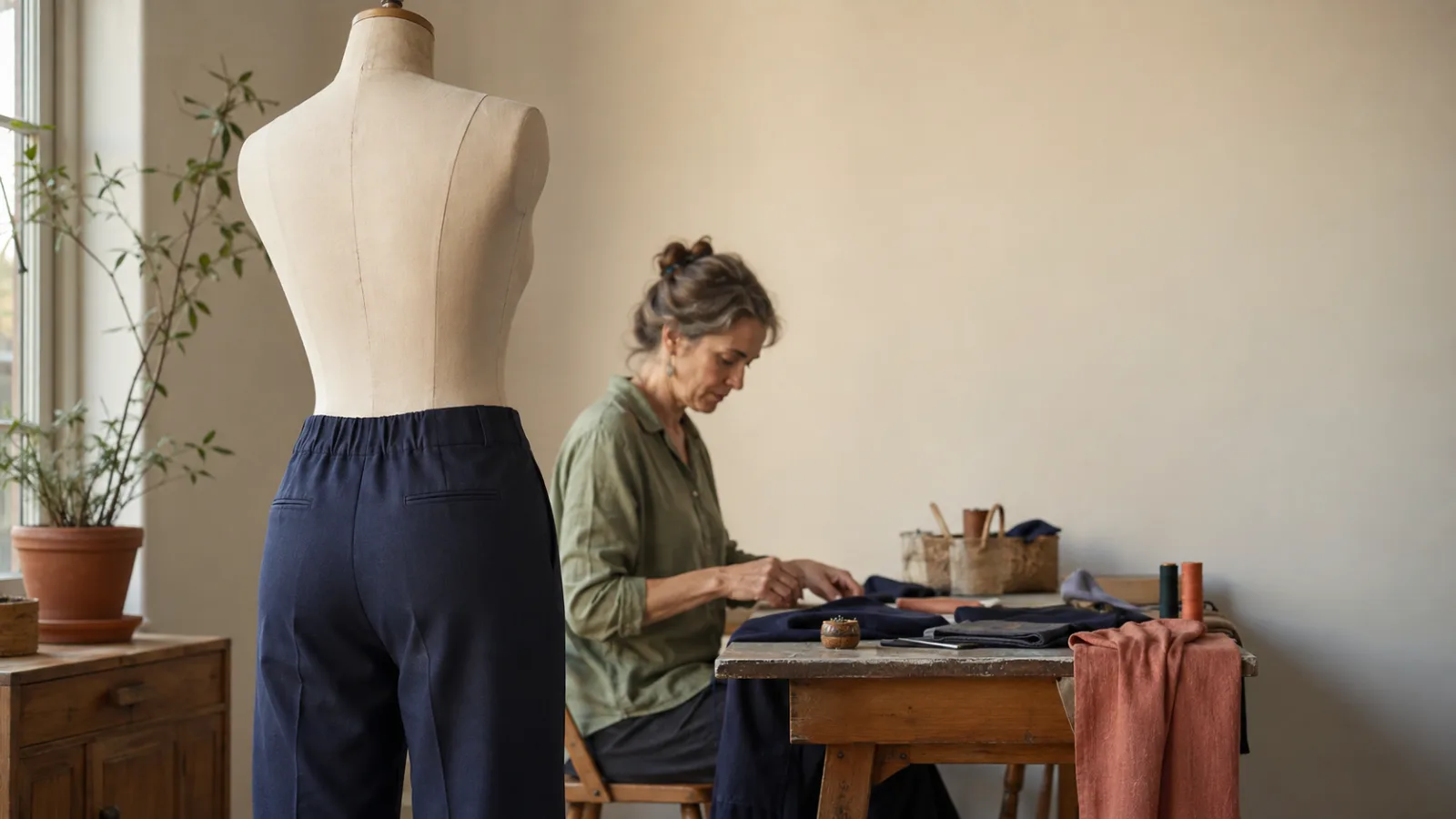
What pants work for a rectangle body shape
A rectangle shape means the waist-to-hip difference is close to or smaller than the roughly 10 inch difference most standard blocks are drafted for, so a pattern built for more curve leaves extra room at the waistband.
Body shapesReviewed September 6, 2026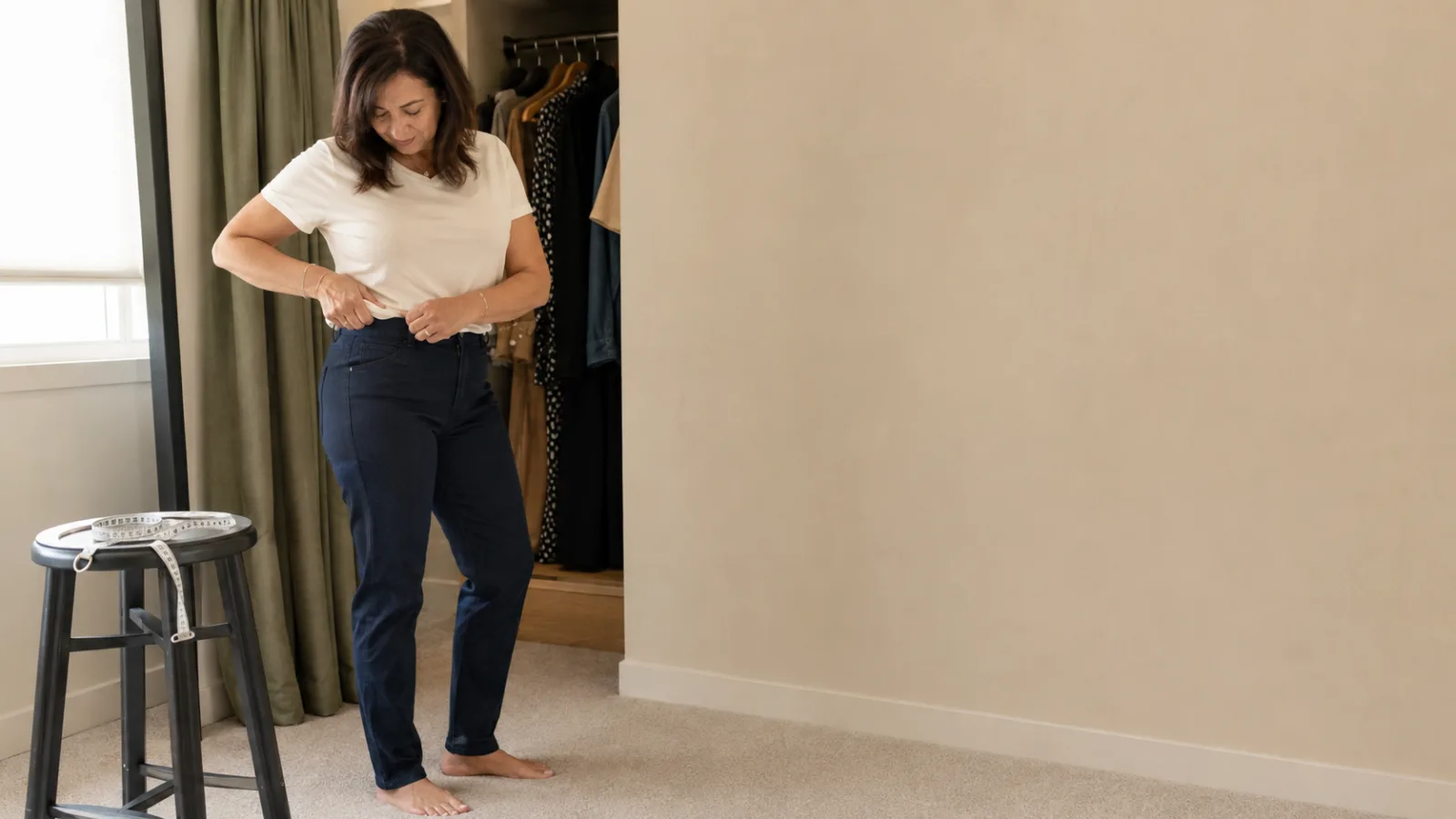
What pants work for a petite rectangle body shape?
For a petite rectangle body shape, start with the measurements that control length and waist placement. Petite ranges generally target heights under 64 in, and a petite full-length inseam usually runs from 27 in to 29 in.
Body shapesReviewed September 5, 2026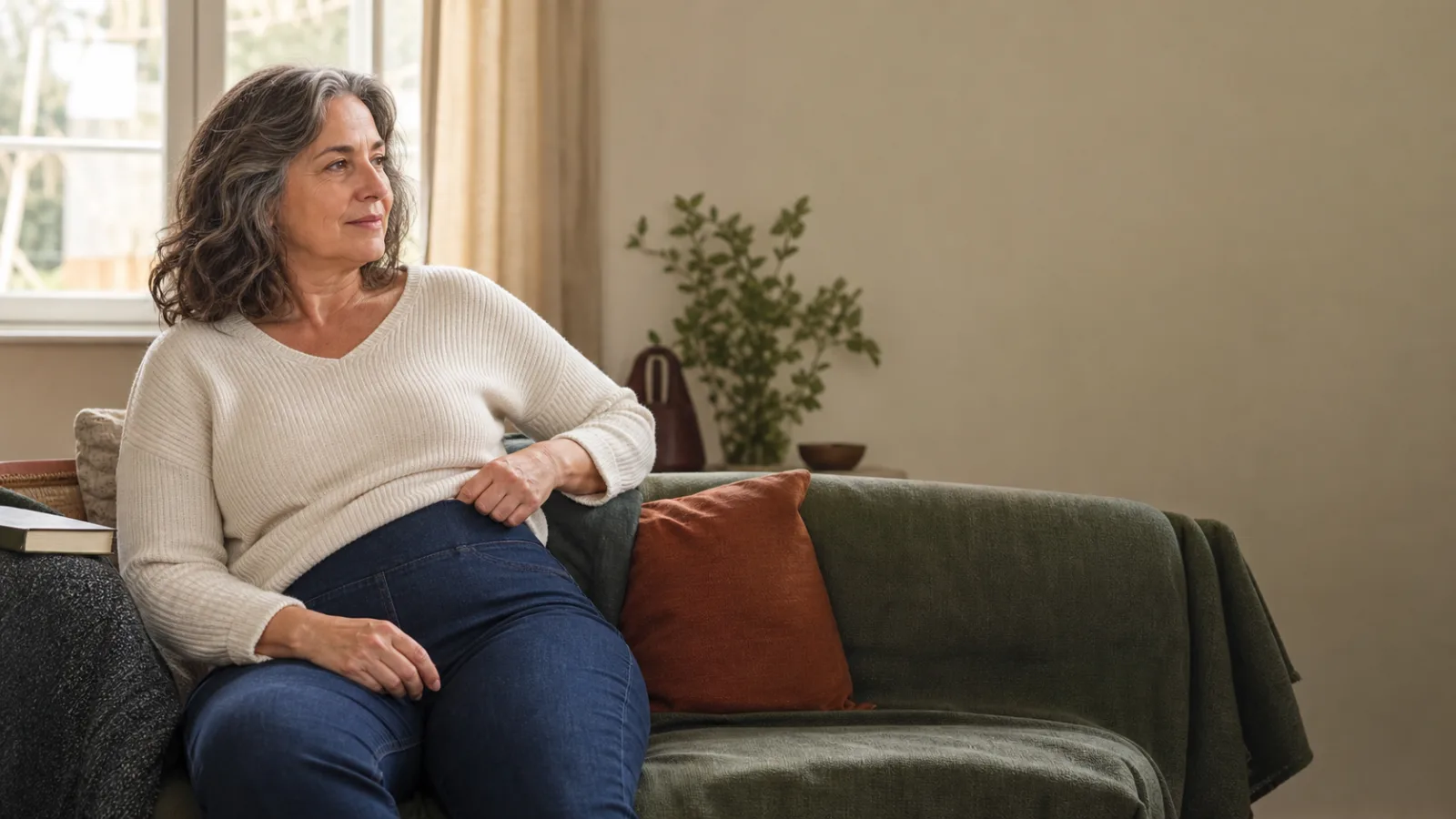
Jeans that do not dig in at the stomach
A waistband digs in at the stomach when it is narrow, rigid and sits below the fullest point, where the body pushes against it every time you sit.
Body shapesReviewed September 5, 2026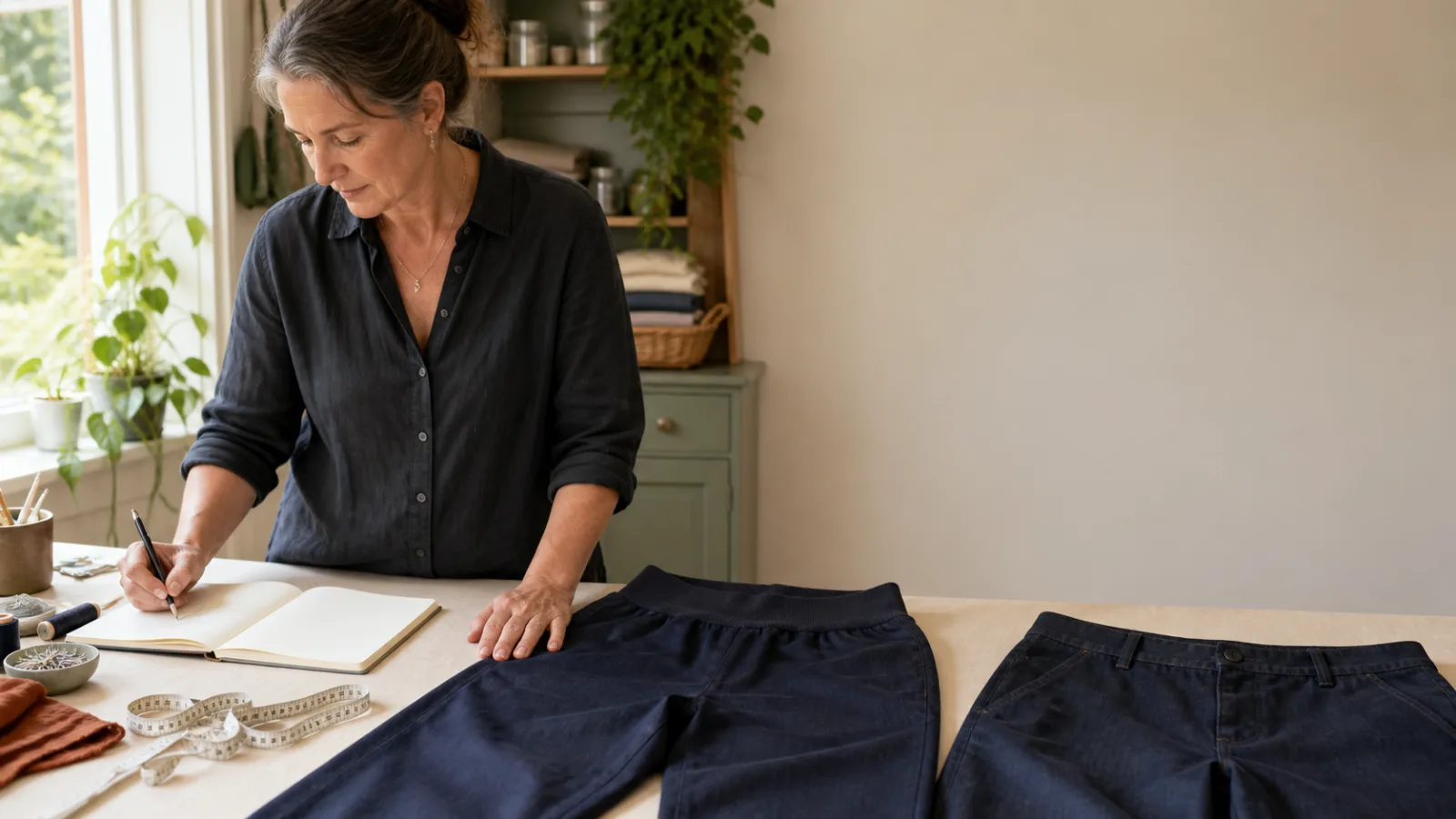
Pants for an apple shape: waistband first, then everything else
On an apple shape the waistband crosses the fullest part of the torso, so the band itself decides comfort.
Body shapesReviewed September 5, 2026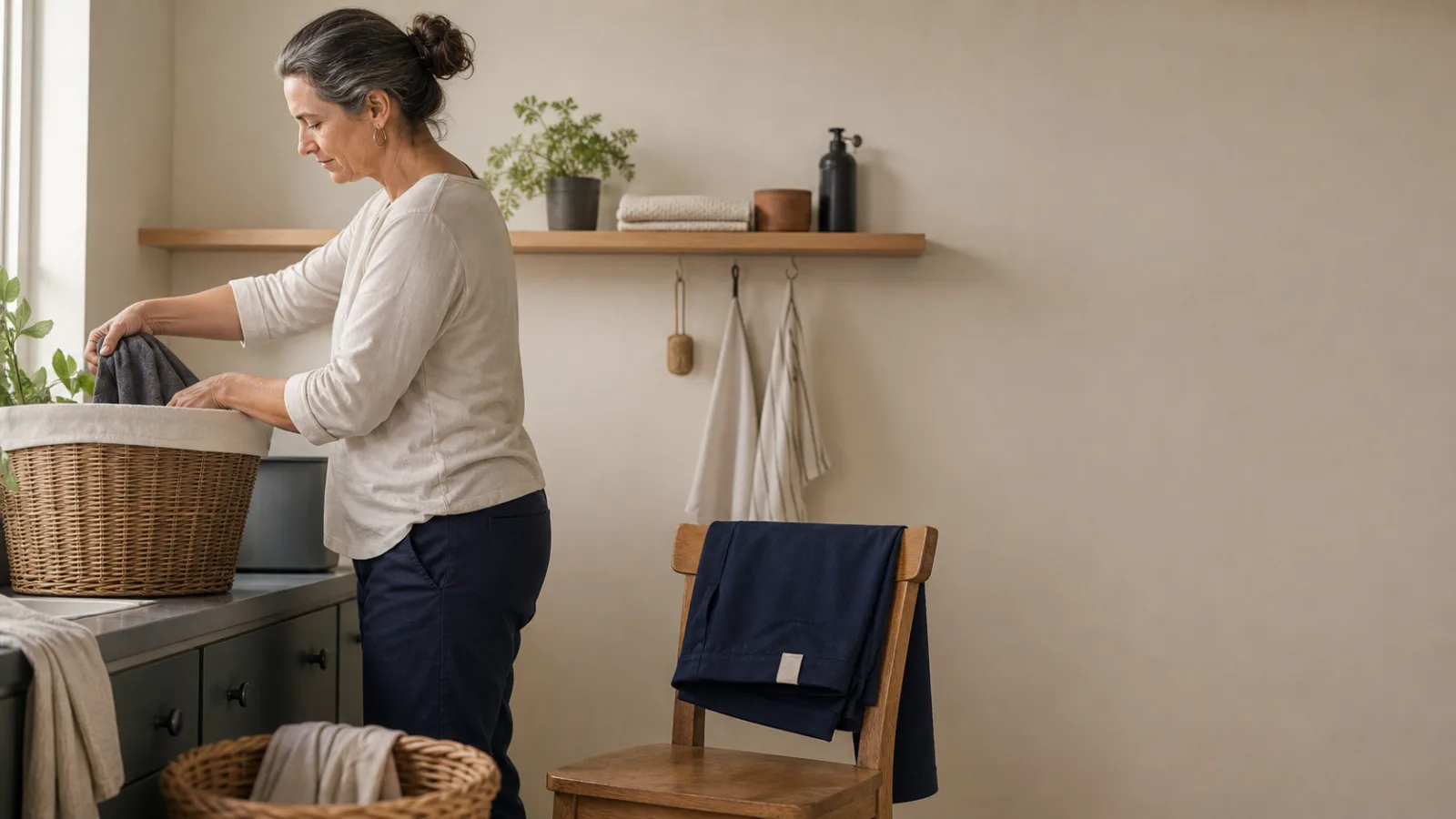
Pants for women over 60: comfort you can read off the label
The practical needs after sixty are the ones a label can answer: a pull-on or hidden-elastic waistband at least 2 inches deep so dressing and sitting are easy, a mid rise of roughly 9 to 10.5 inches that sits at the natural waist, 4 to 8 percent elastane so…
Body shapesReviewed September 5, 2026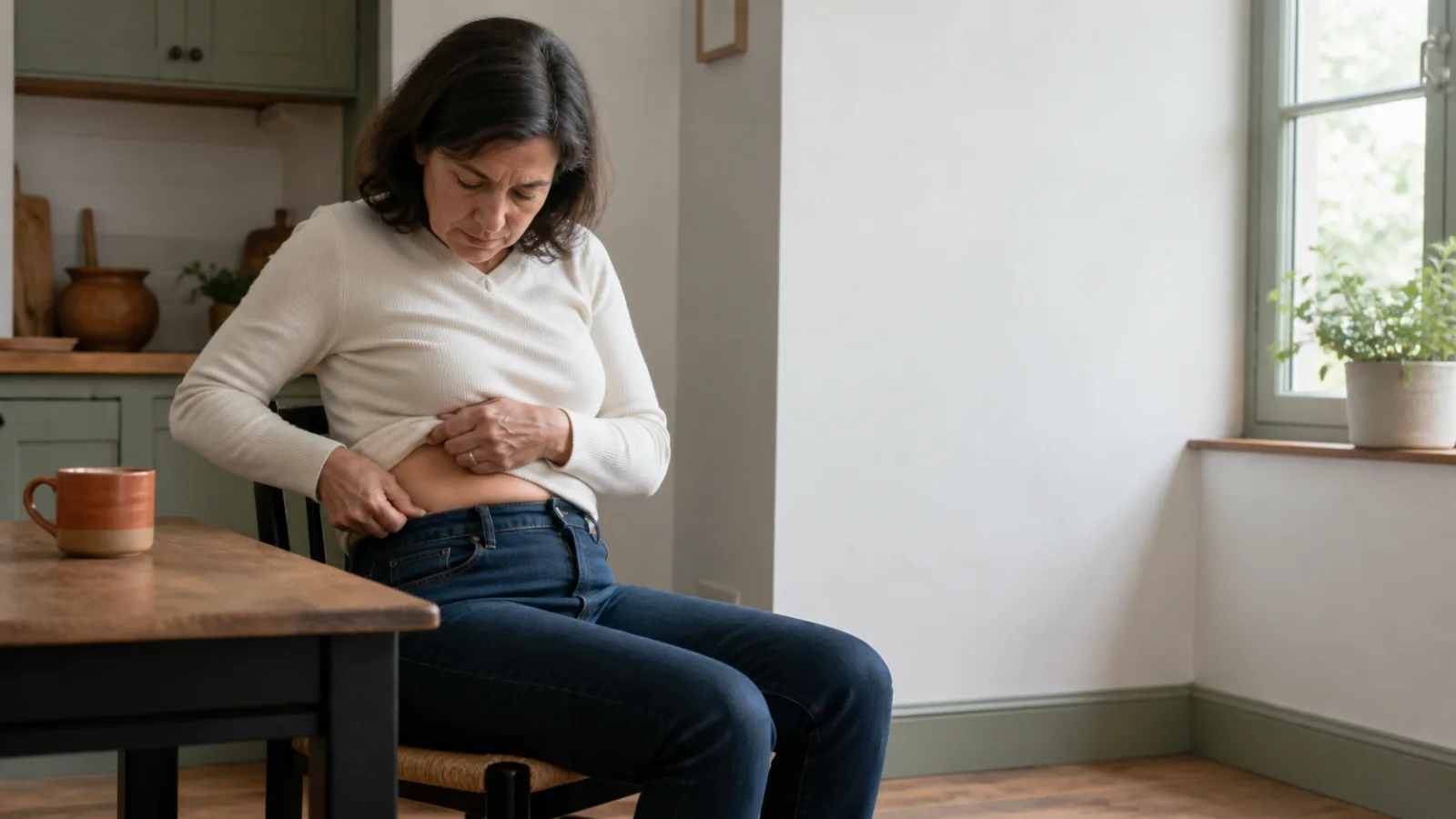
Pants for a petite frame with a short torso
A short torso has less distance between hip and ribs, so a front rise above about 11 inches sits on the ribs when you sit down.
Body shapesReviewed September 5, 2026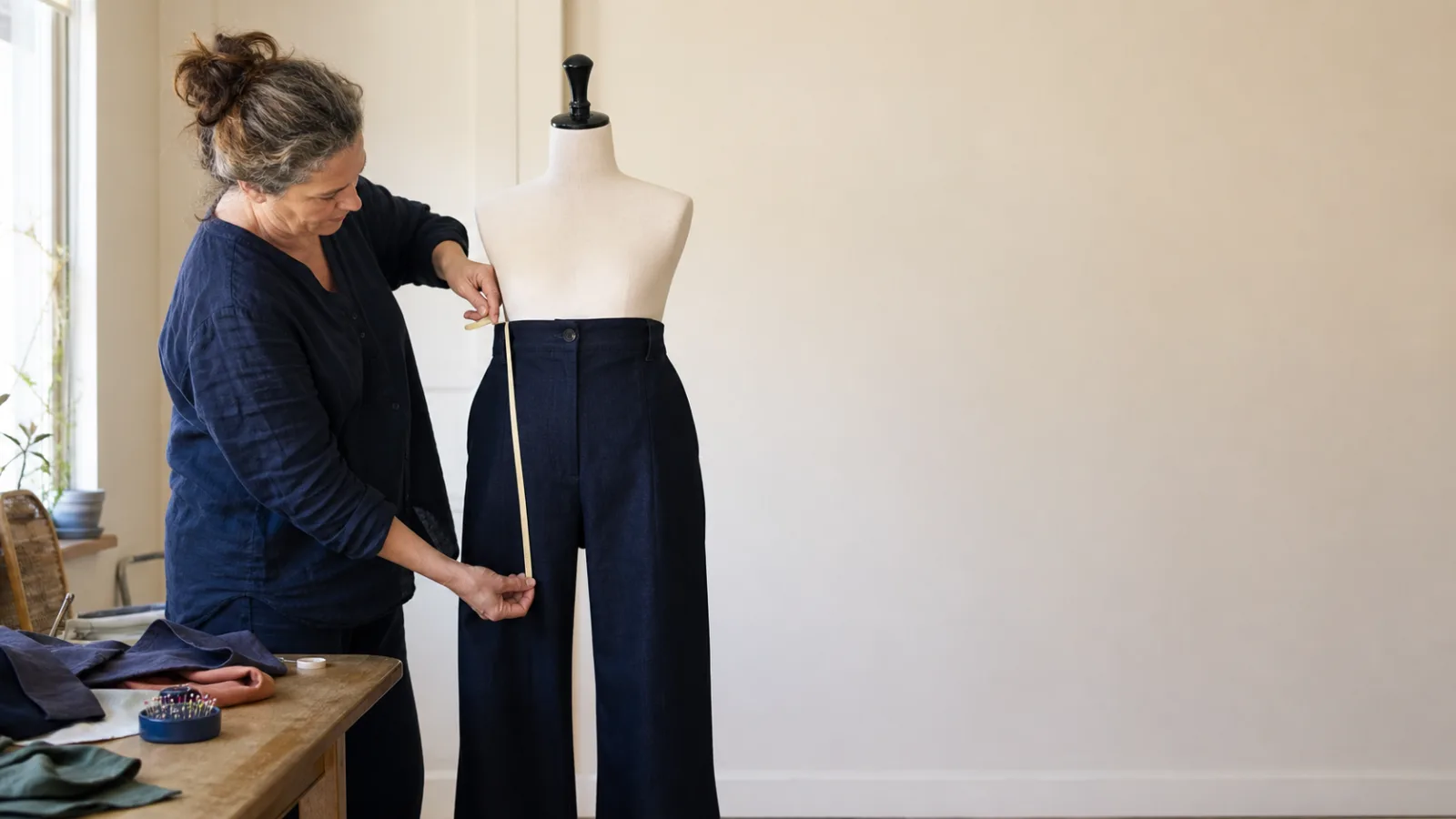
Pants for a longer torso: why mid rise slides and what to do
On a long torso the natural waist sits high, so a mid rise of 9 to 10.5 inches lands below it, on a part of the body that narrows upward, and slides down as you move. A front rise of 11 inches or more reaches the actual waist and stays put.
Body shapesReviewed September 5, 2026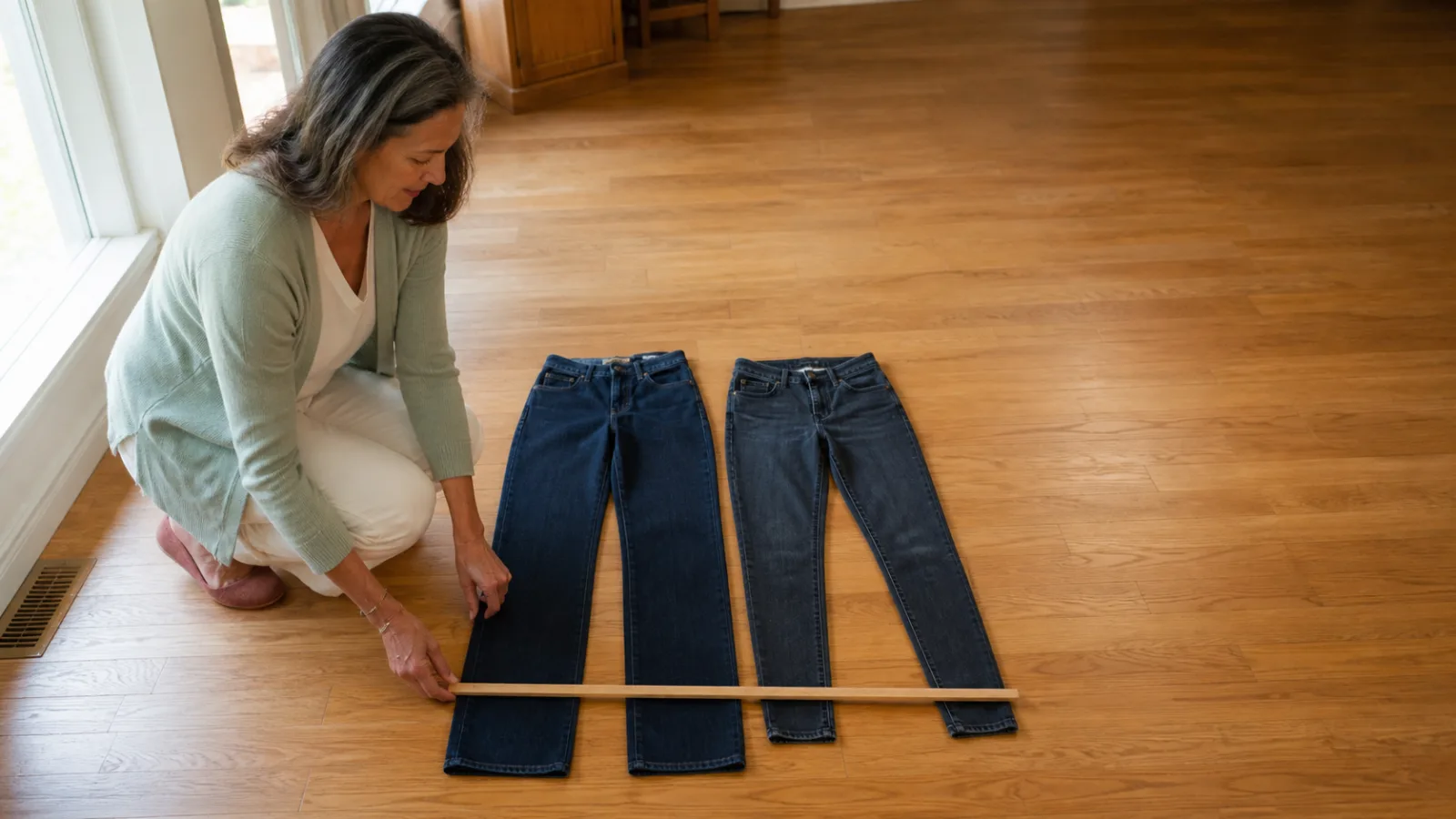
Jeans for short women with fuller legs
When the thigh decides the size, the rest of the pair is usually too long and too loose at the waist. Look for a petite inseam of 27 to 29 inches so you are not hemming a size you bought for the thigh, a straight or gently tapered leg that does not narrow…
Body shapesReviewed September 5, 2026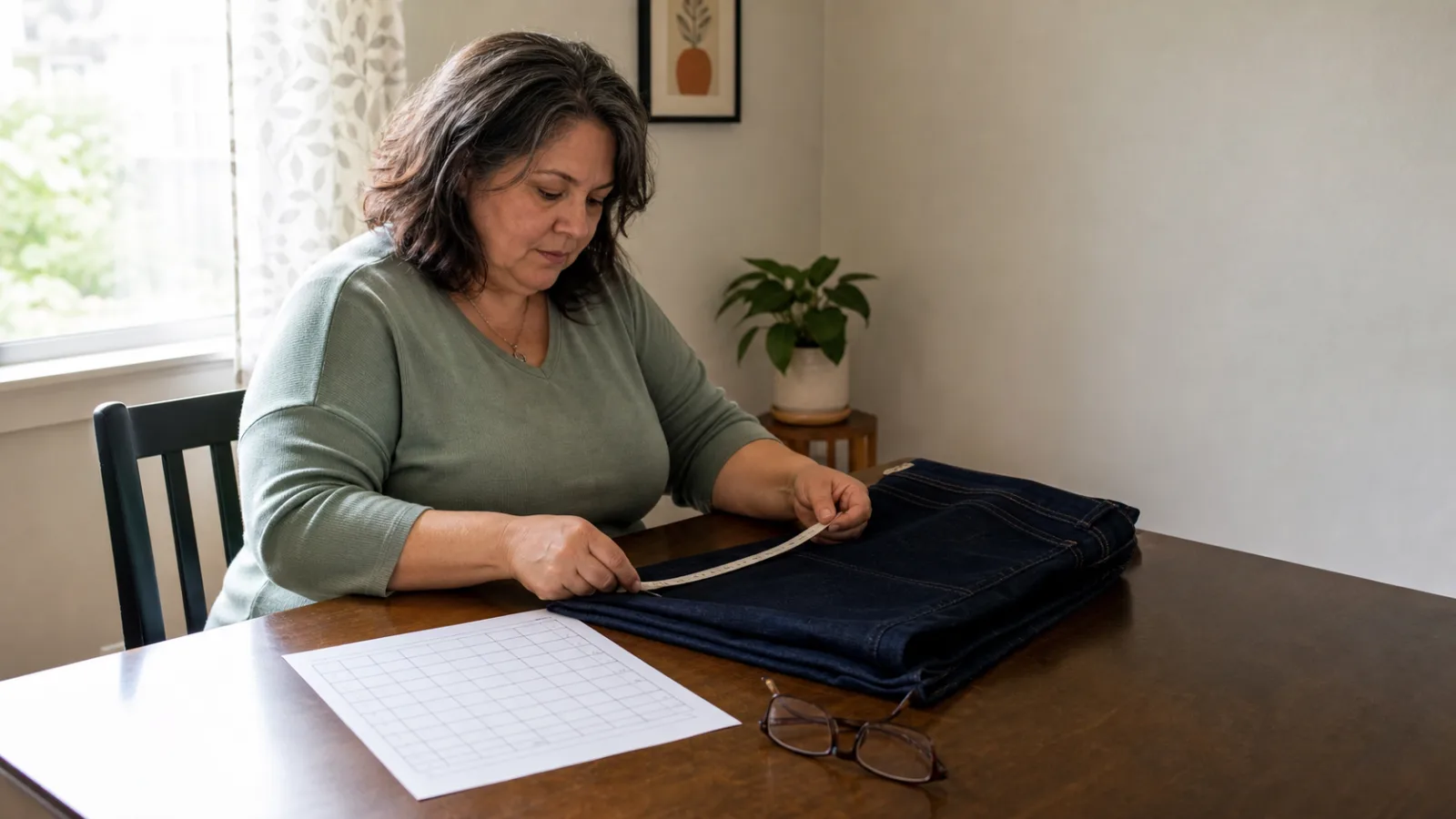
Pull-on jeans for plus-size petite women: what to check on the chart
The hard part is finding one size chart that covers both. Most brands grade plus sizes from a regular-height block, so a plus pair is usually long in the inseam and the rise.
Body shapesReviewed September 5, 2026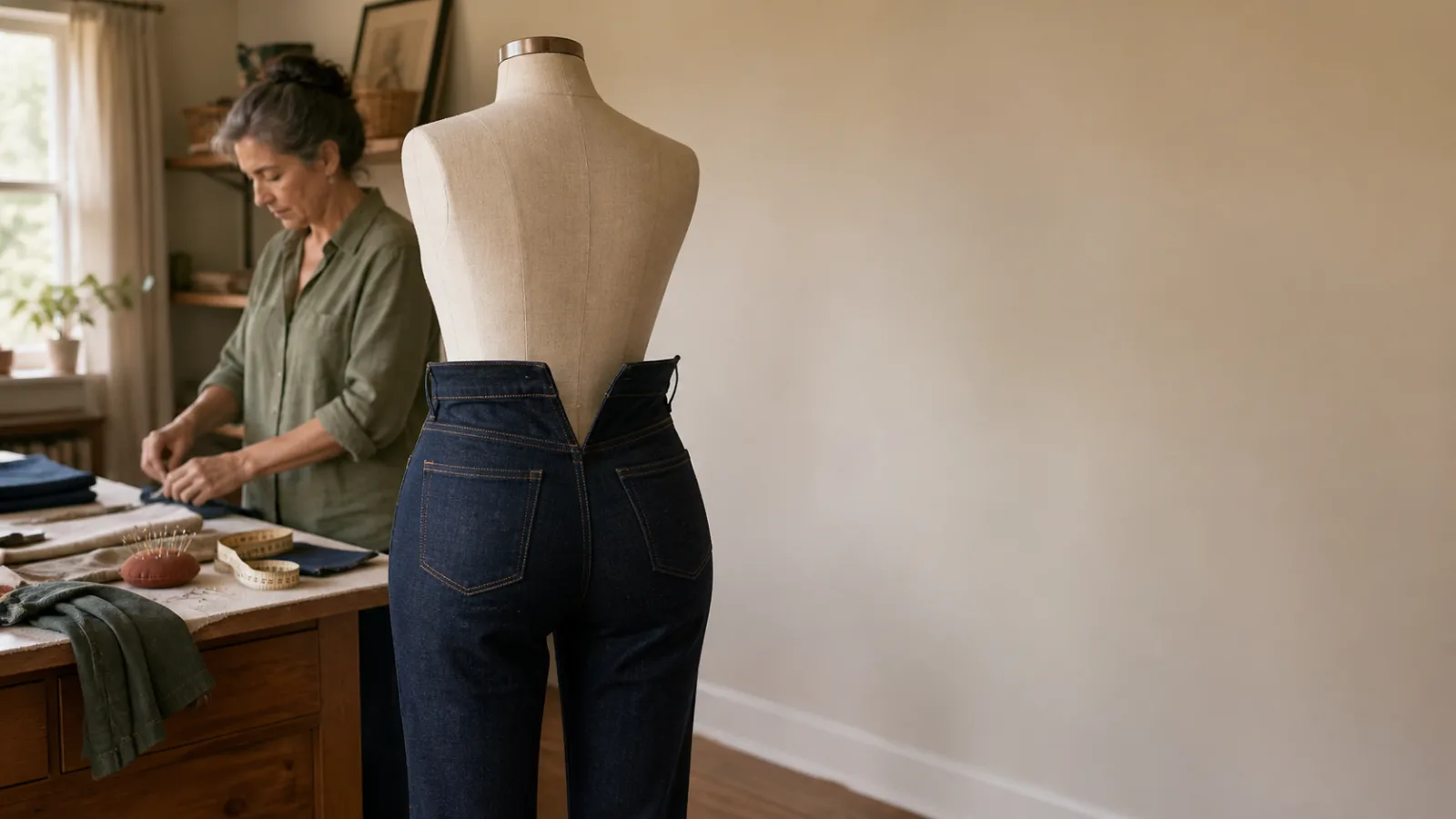
Jeans for a small waist and larger hips
Jeans gap at the waist when your hip measures more than the pattern was drafted for. Most standard women’s blocks assume a difference of around 10 inches between waist and hip; at 11 inches or more, a rigid waistband cannot close the gap in any size.
Body shapesReviewed September 5, 2026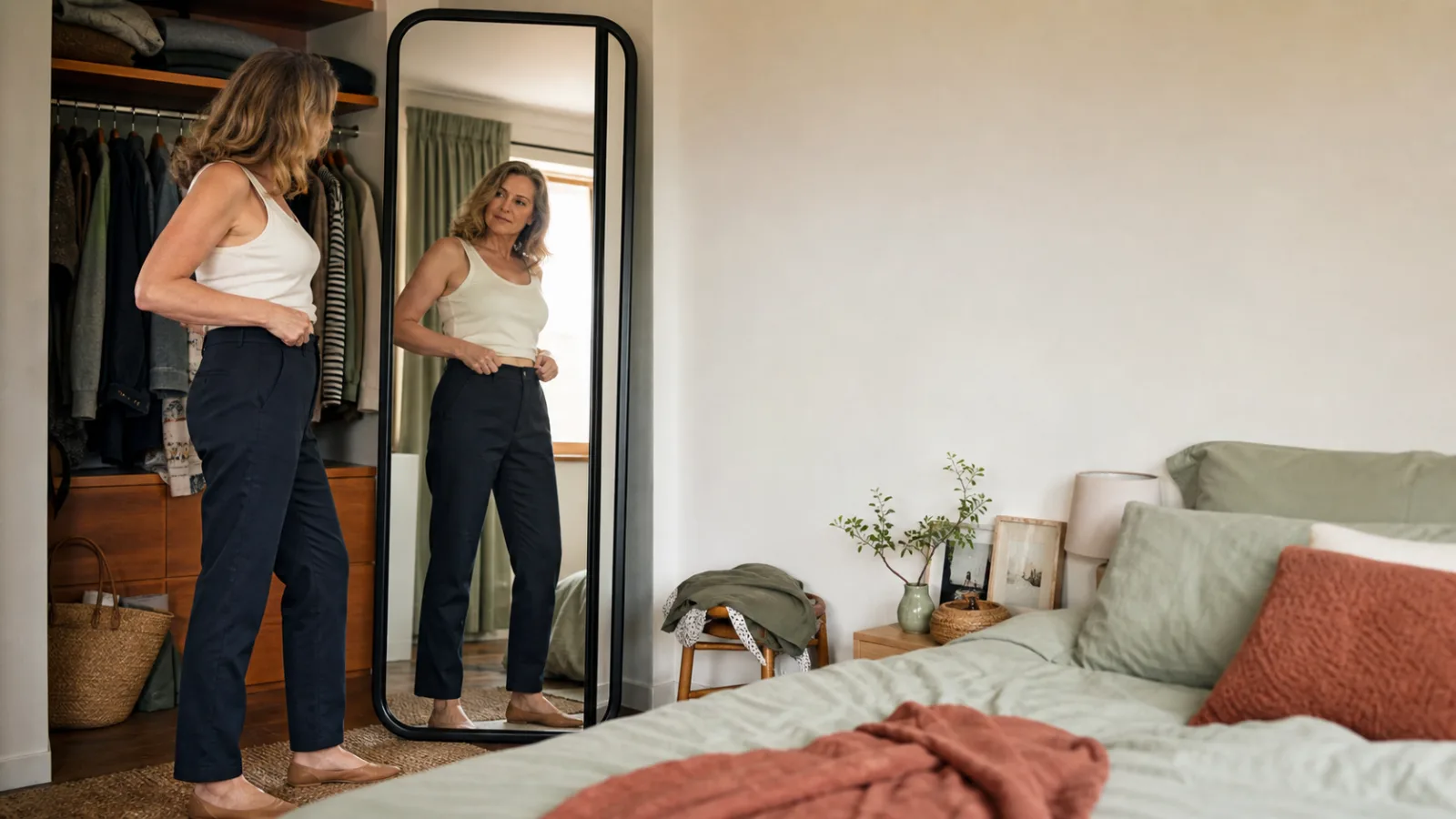
Pants for women over 50: what changes, and what to look for
After fifty, most fit problems come from three changes: the waist sits higher and carries more of the body, the torso carries weight differently through the day, and skin tolerates pressure less.
Body shapesReviewed September 5, 2026
Measurements
17 guides
What makes a pull-on waistband comfortable?
Three published measurements decide most of it. A waistband at least 2 inches deep grips without digging in. Fabric with at least 4 percent elastane recovers after sitting, and fabric with up to 8 percent elastane recovers and still looks like denim.
MeasurementsReviewed September 29, 2026
How far below your waist do you measure your hips?
The hip is measured at least 7 inches below the natural waist, and up to 9 inches below it. If you carry weight at the upper thigh, take a second hip measurement 2 inches lower than that first one, so you can compare both numbers against a size chart.
MeasurementsReviewed September 10, 2026
How to measure your hips for pants
Measure around the fullest part of your seat, standing with your feet together, holding the tape level with the floor and snug but not tight. On most bodies that point is 7 to 9 inches below the natural waist.
MeasurementsReviewed September 5, 2026
What inseam a 5′2″ woman should look for
At 5 foot 2 inches, a full-length inseam worn with a flat shoe usually sits around 27 to 28 inches, using the rule that a full-length inseam is roughly 45 percent of height. With a low heel, 28 to 29 inches works.
MeasurementsReviewed September 5, 2026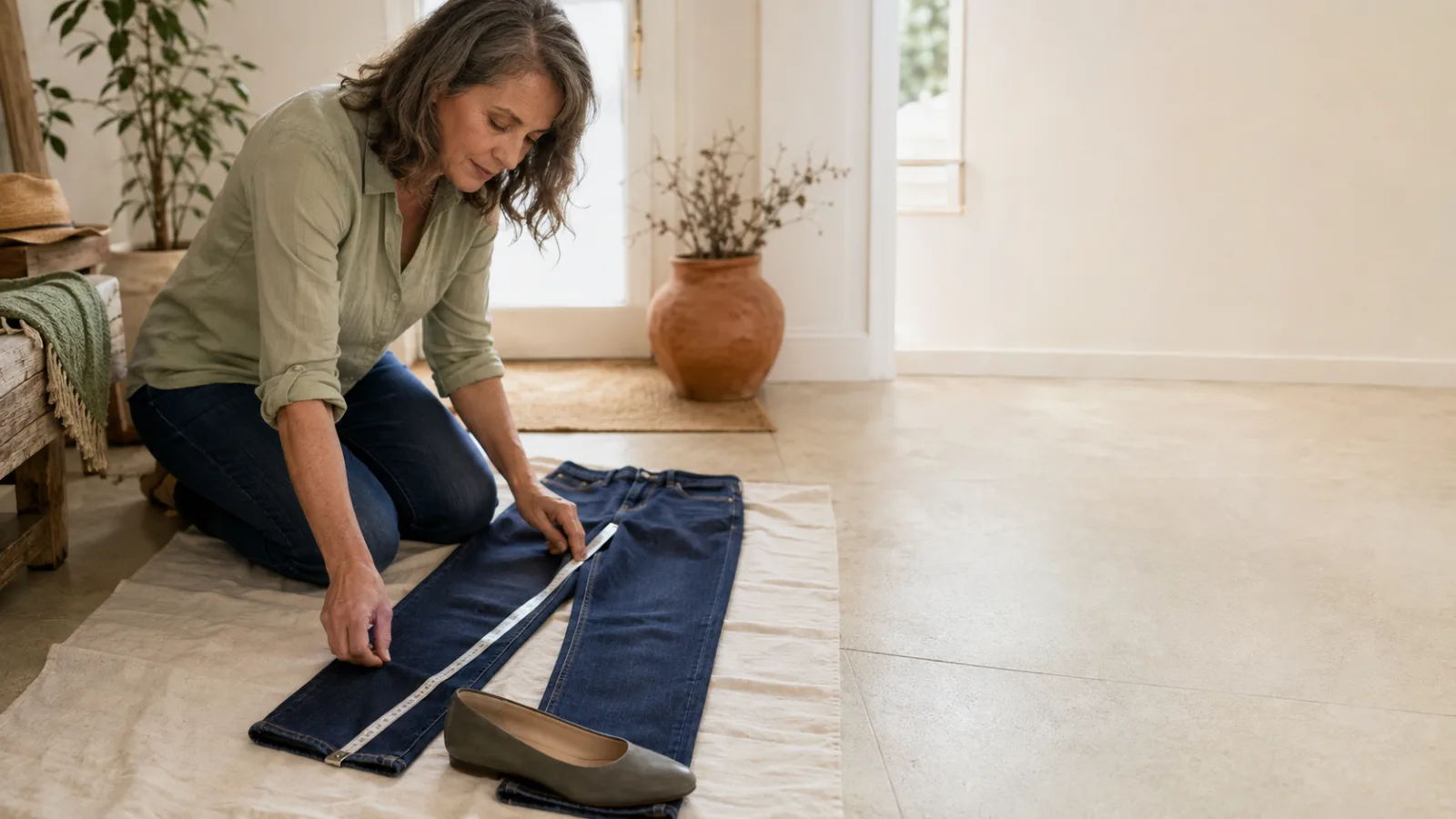
What inseam works at 5 foot 7
At 5 foot 7 a full-length inseam lands near 30 inches, using the rule that a full-length inseam is roughly 45 percent of height. An ankle length runs about 2 inches shorter.
MeasurementsReviewed September 5, 2026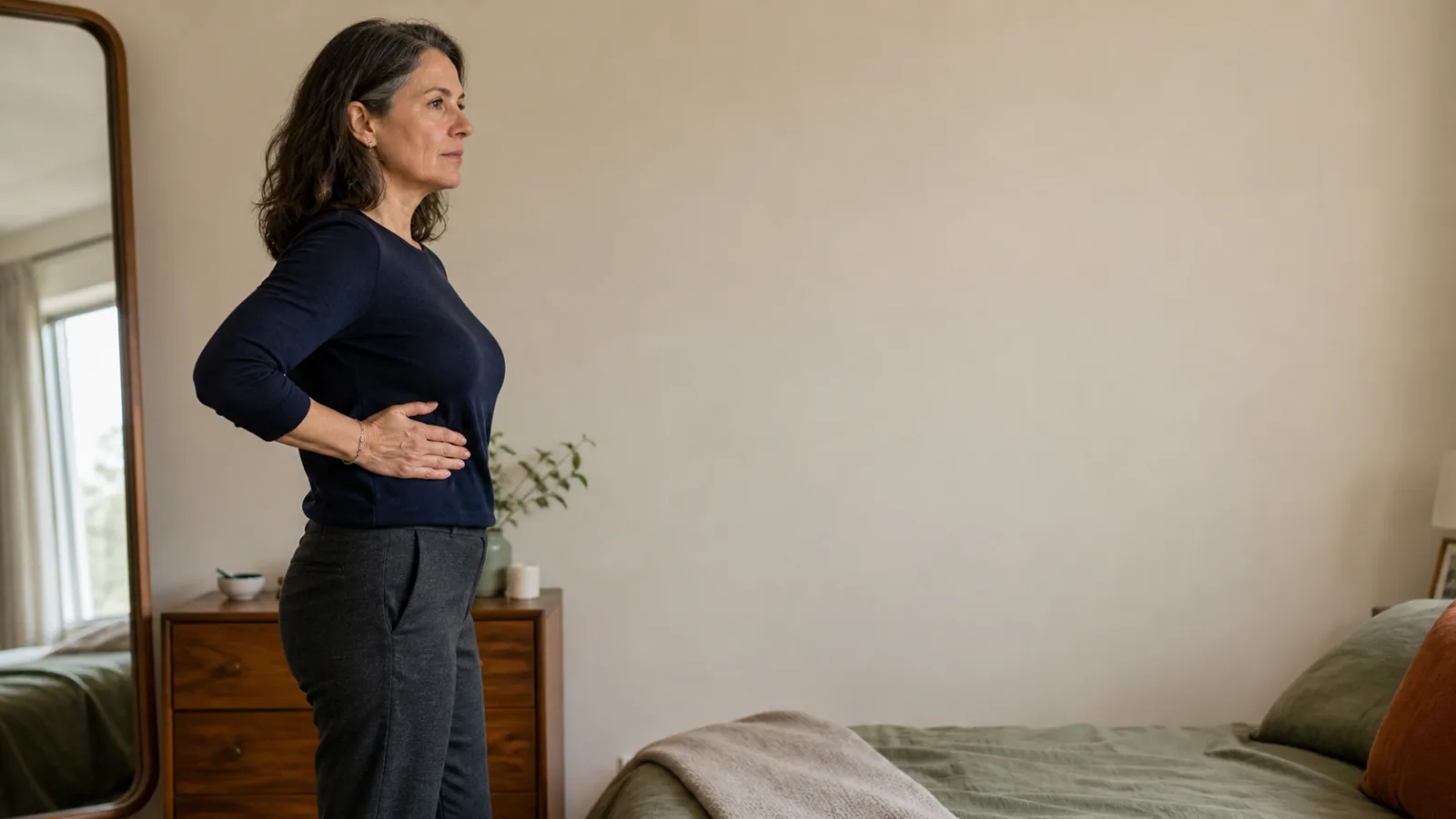
How to tell whether you have a short torso, and what it changes
Find the bottom of your ribcage and the top of your hip bone at the side. If there is less than a hand’s width between them, your torso is short, whatever your height.
MeasurementsReviewed September 5, 2026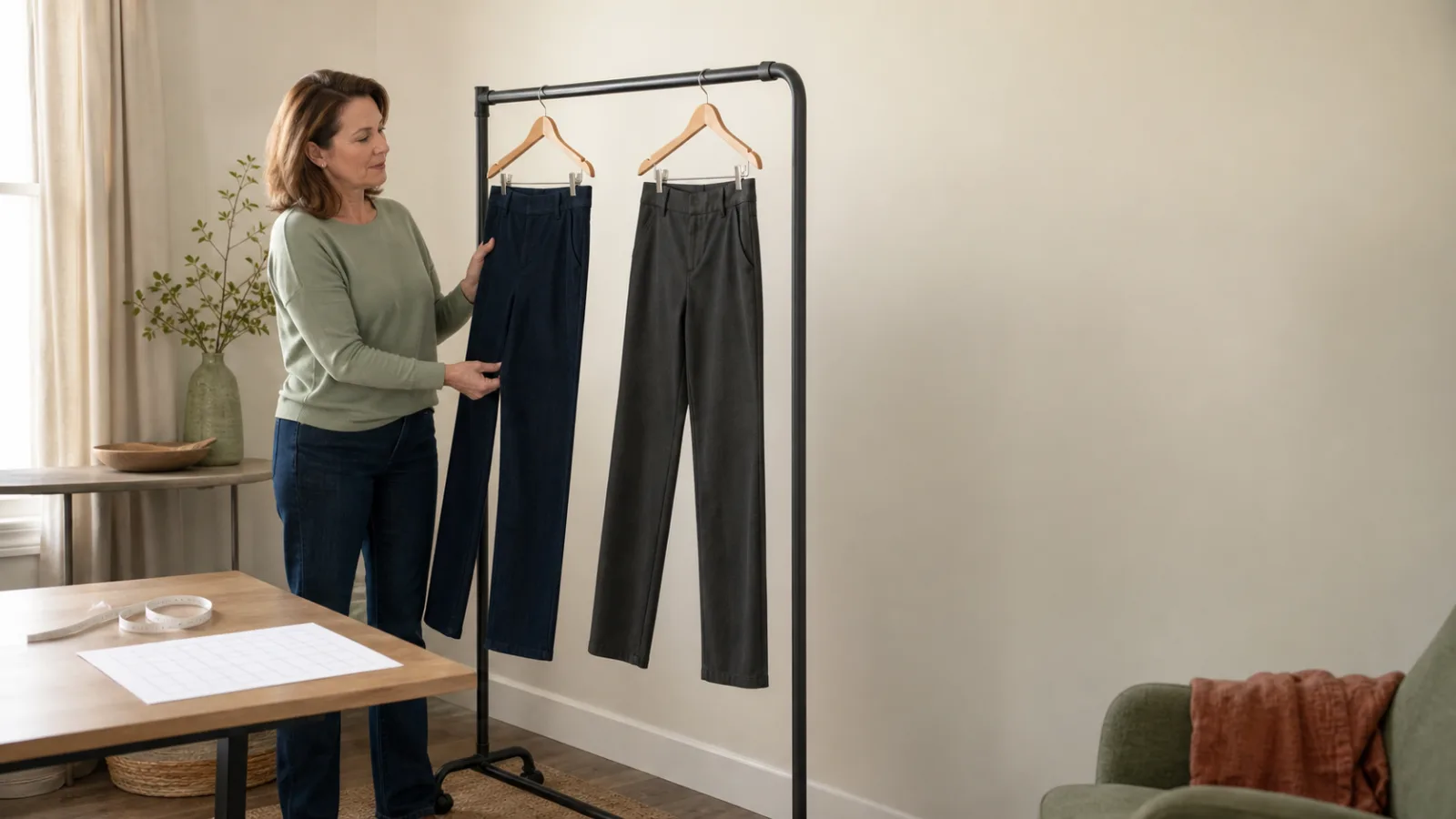
Does height decide whether you need petite pants?
Height is the starting point for petite sizing, not the whole fit decision. Petite ranges generally target heights under 64 in. If you are near that cutoff, use the brand’s size chart and garment measurements rather than assuming the label will settle the fit.
MeasurementsReviewed September 5, 2026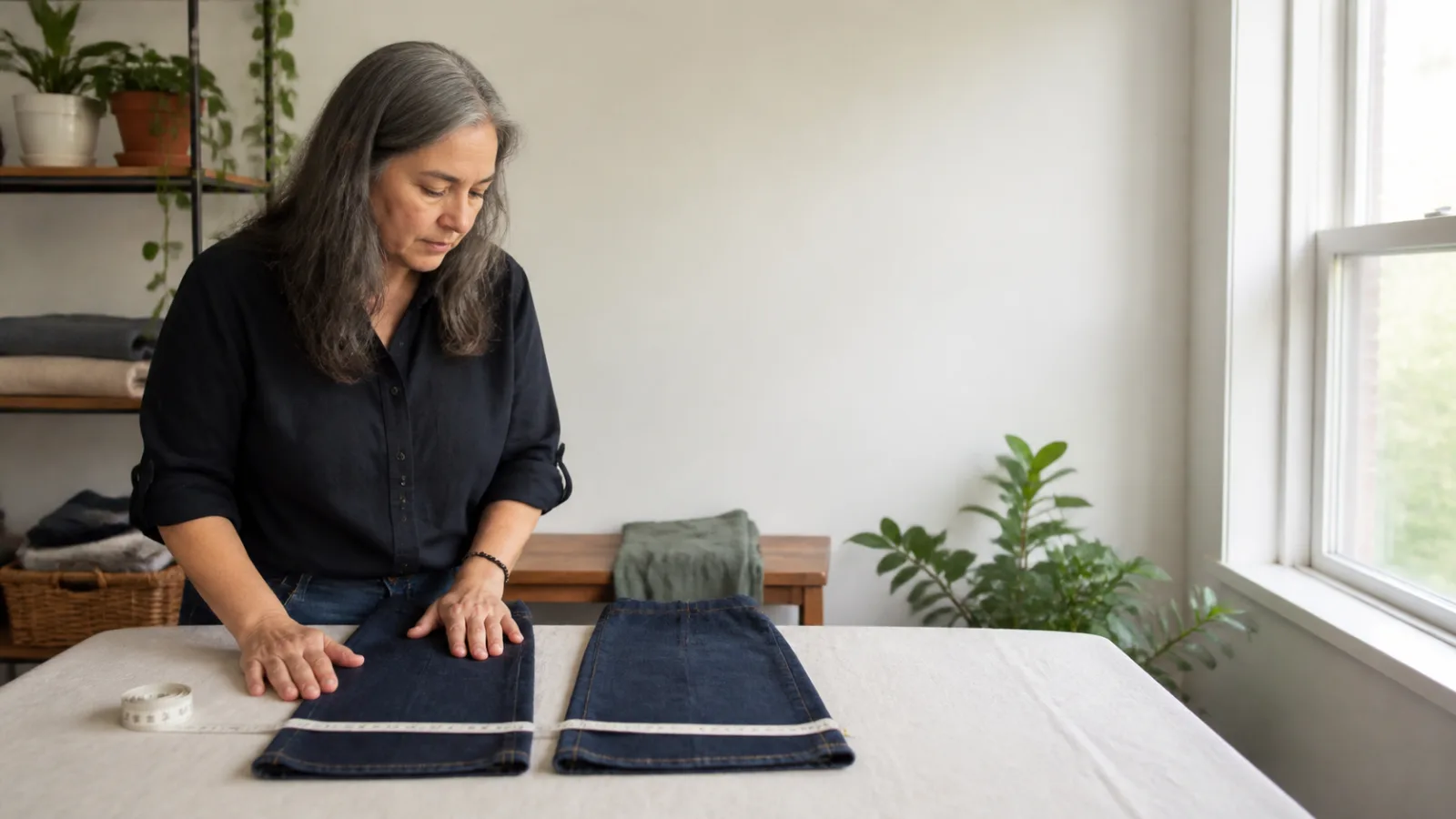
What inseam a 5′4″ woman should look for
At 5 foot 4 inches, a full-length inseam worn with a flat shoe usually sits around 29 inches, from the rule that a full-length inseam is roughly 45 percent of height. With a low heel, 30 inches works.
MeasurementsReviewed September 5, 2026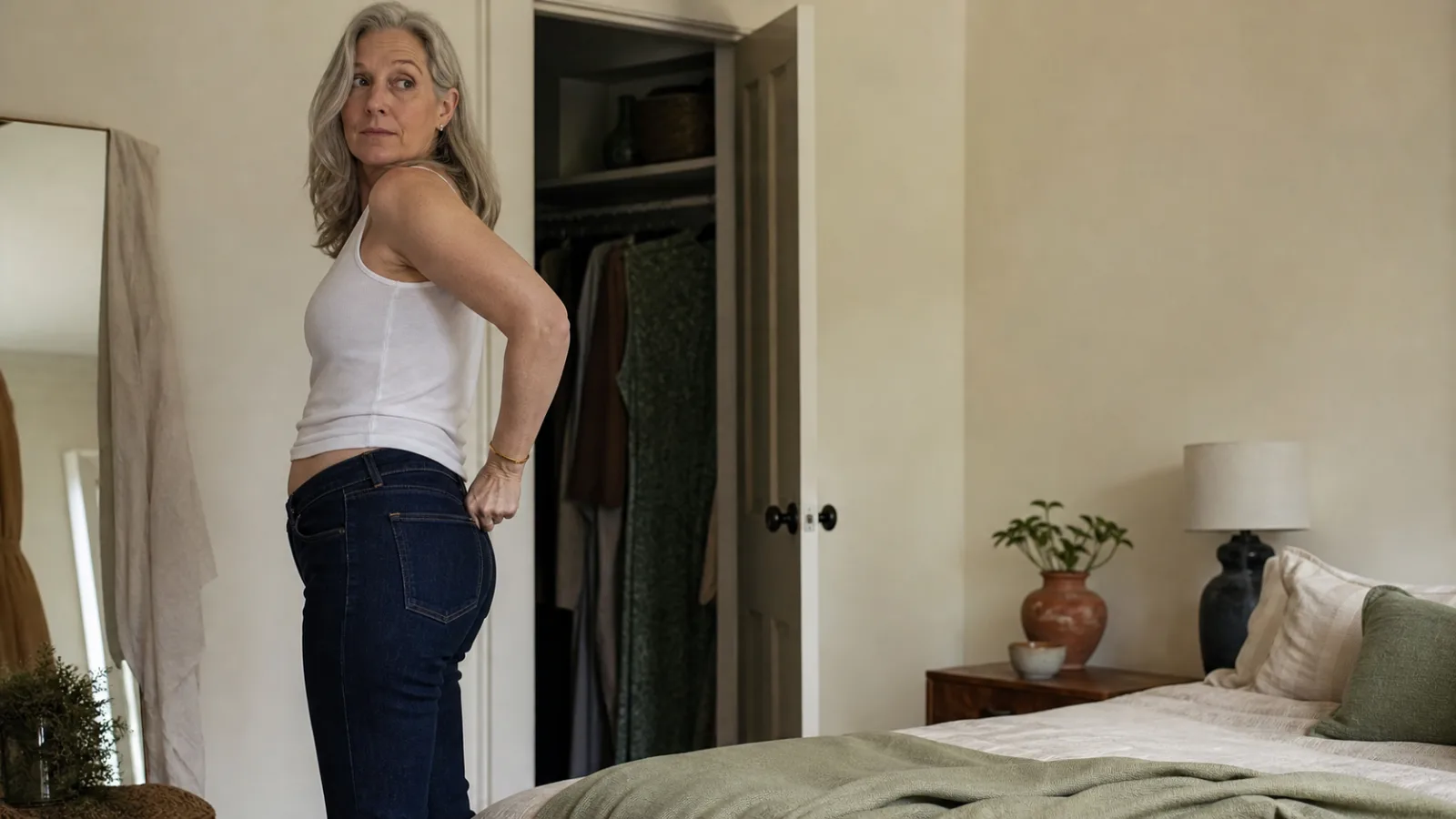
How pull-on jeans should fit, and how to tell before the tags come off
Pull-on jeans should be snug at the waistband and skim everywhere else. The band, at least 2 inches deep, does the job a button and zip do on a woven pair, so it has to grip without digging in: flat against the body standing, a finger of room seated.
MeasurementsReviewed September 5, 2026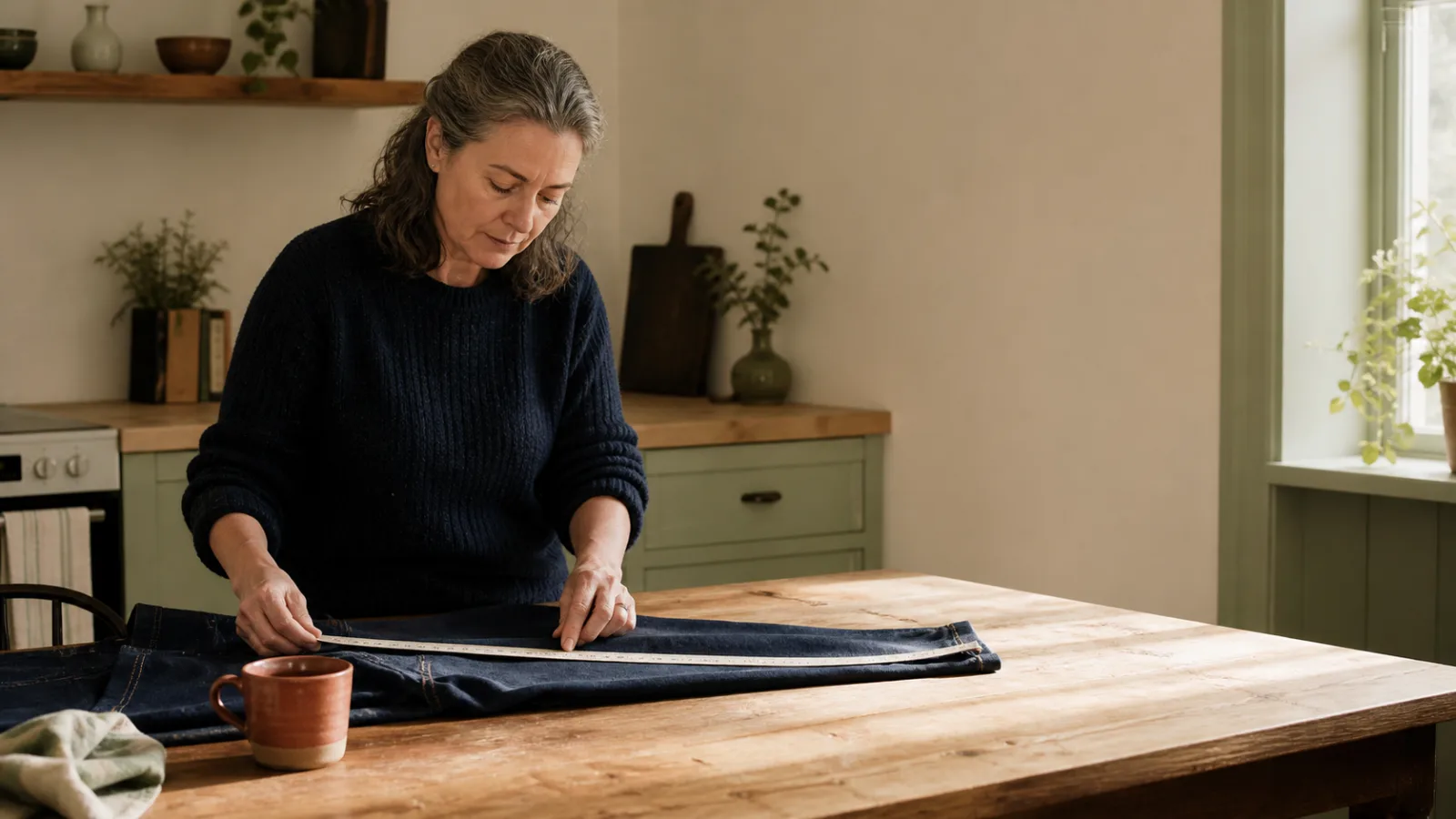
How to measure inseam for women
Measure a pair of pants that already fits: lay them flat and measure from the crotch seam straight down the inner leg to the hem. That number is your inseam, and it is the one to look for on a size chart.
MeasurementsReviewed September 5, 2026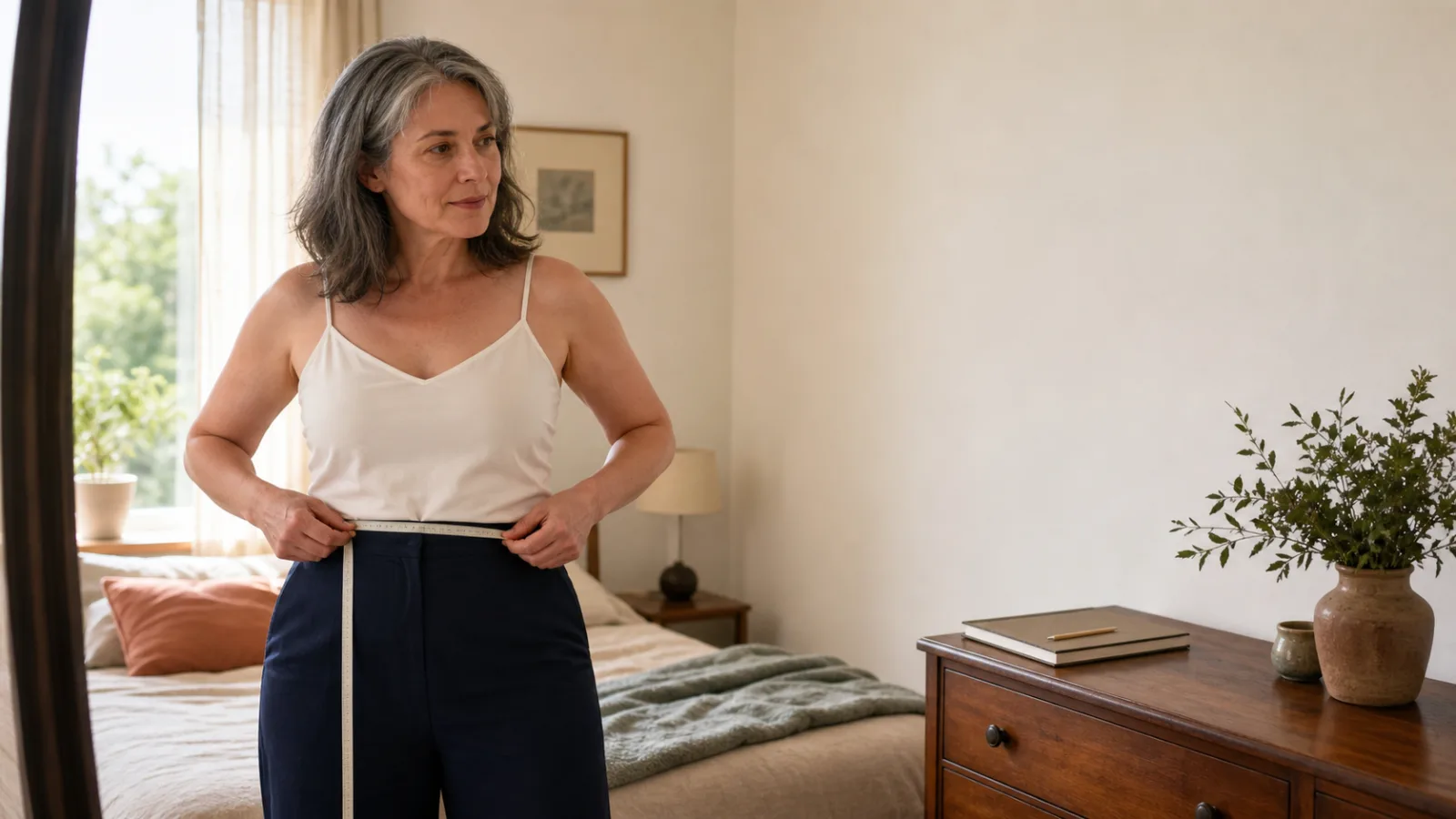
How to measure your waist for pants
Measure your natural waist: the narrowest point of your torso, usually just above the navel. Stand normally, breathe out, and wrap the tape level all the way round, flat against the skin but not tight.
MeasurementsReviewed September 5, 2026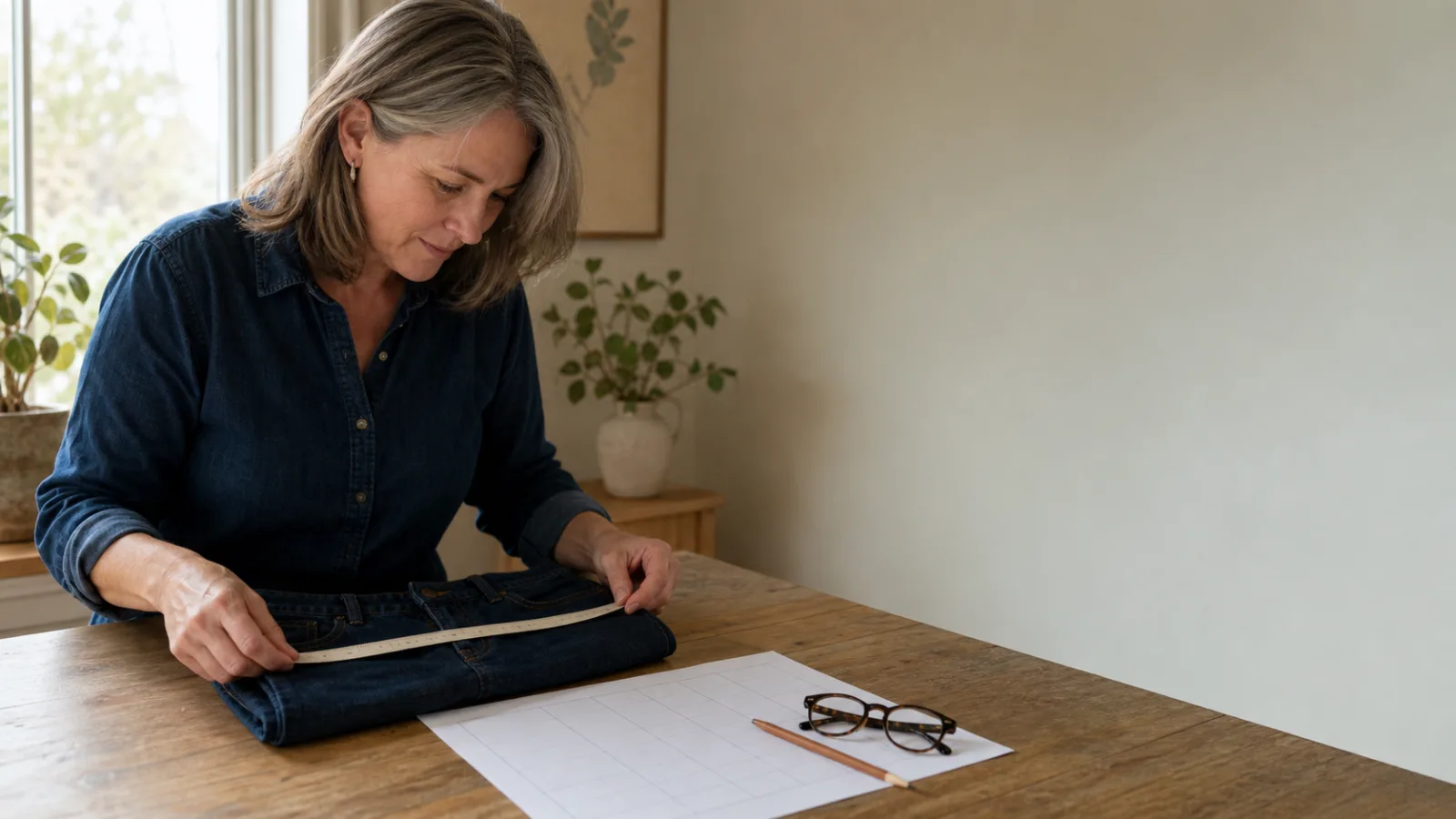
How to read a jeans size chart without getting caught out
A size chart lists either body measurements or garment measurements, and the chart rarely says which. Body charts tell you the body the size is drafted for; garment charts tell you the flat measurement of the pants, which you double to compare with your body.
MeasurementsReviewed September 5, 2026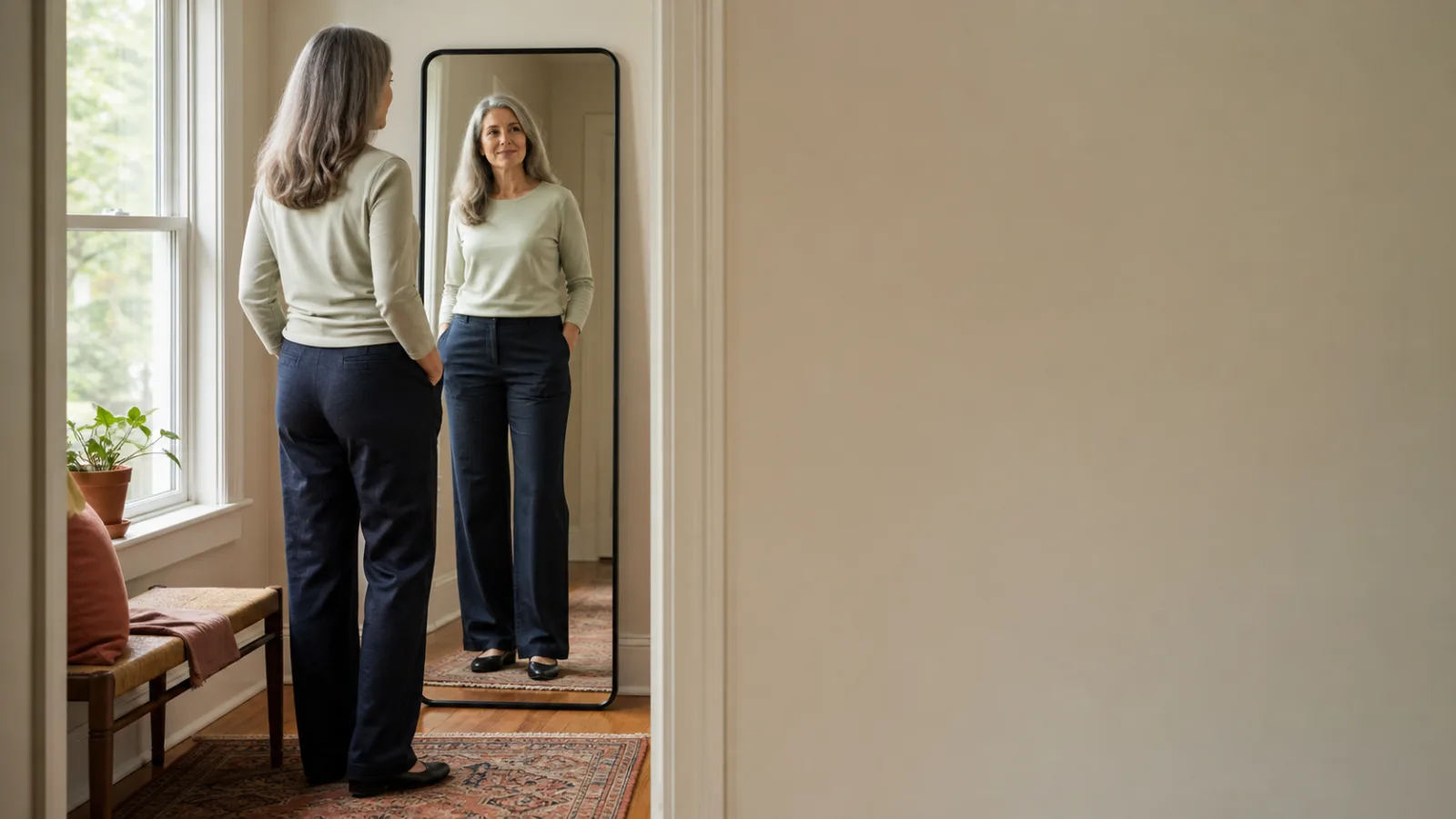
Inseam for tall women: what 5′9″ and up should look for
At 5 foot 9 inches, a full-length inseam with a flat shoe usually sits around 32 inches, from the rule that a full-length inseam is roughly 45 percent of height, and each further inch of height adds close to half an inch.
MeasurementsReviewed September 5, 2026
Back rise: the measurement that decides whether you gap
Back rise is the distance from the crotch seam up to the top of the waistband at the back. It is always longer than the front rise, because the body needs more length there to sit down.
MeasurementsReviewed September 5, 2026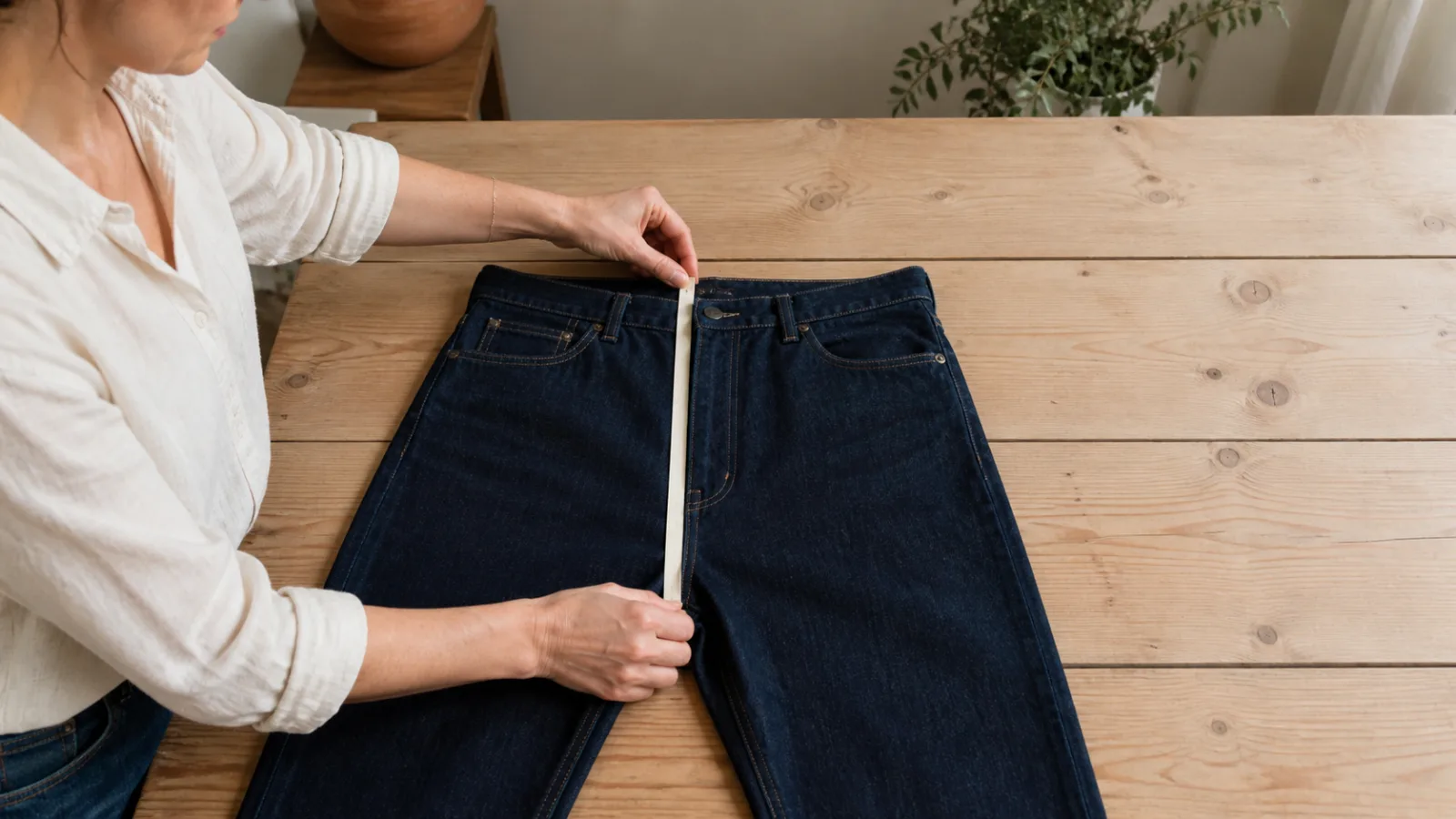
What front rise means, and how to use it
Front rise is the distance from the crotch seam up to the top of the waistband at the front, measured on the garment. It decides where the waistband lands on your torso.
MeasurementsReviewed September 5, 2026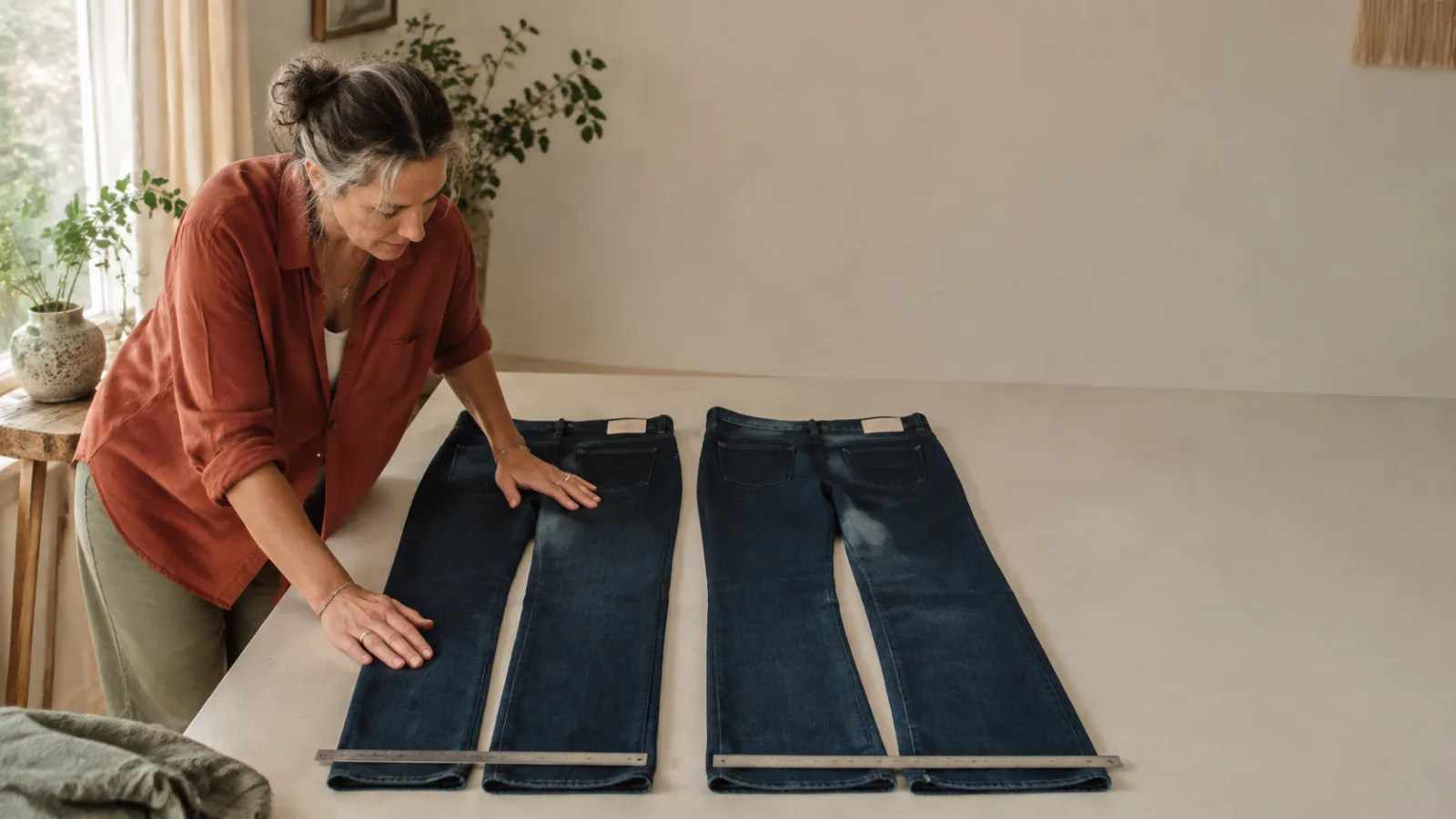
What the leg opening measurement tells you
Leg opening is the width of the hem, measured flat across one leg and doubled if you want the circumference.
MeasurementsReviewed September 5, 2026
Petite vs short sizing: what actually changes
Short usually means only a shorter inseam on the regular pattern. Petite, when a brand drafts it properly, is a different block: the rise is shorter, the knee shaping moves up and the pockets move up with it.
MeasurementsReviewed September 5, 2026
Care
13 guides
Can detergent bring back faded leggings?
Detergent can clean leggings, but it should not be treated as a dye repair. If the fabric dye has faded, detergent will not put that color back into the yarn. The safer care goal is to avoid harsh washing choices that can make dye loss more noticeable.
CareReviewed September 6, 2026
How to get odour out of synthetic leggings
Persistent odour in synthetic leggings usually means bacteria have built up in the fibre itself rather than sitting on the surface, which is why a normal wash cycle can leave a faint smell even on visibly clean fabric.
CareReviewed September 6, 2026
How to remove pilling from leggings
A fabric shaver or pilling comb, run gently over the affected area on dry fabric, cuts the small fibre balls away from the surface without pulling on the base knit the way scissors or picking by hand can.
CareReviewed September 6, 2026
Do jeggings shrink in the wash?
Jeggings can shrink somewhat, mostly in the cotton or other natural-fibre share of the blend, but the elastane content resists the kind of shrinkage a fully woven denim jean can show.
CareReviewed September 6, 2026
Can you restore stretched-out leggings?
Partial recovery is possible; complete recovery is not something we can promise, and how much comes back depends on how the fabric got stretched in the first place.
CareReviewed September 6, 2026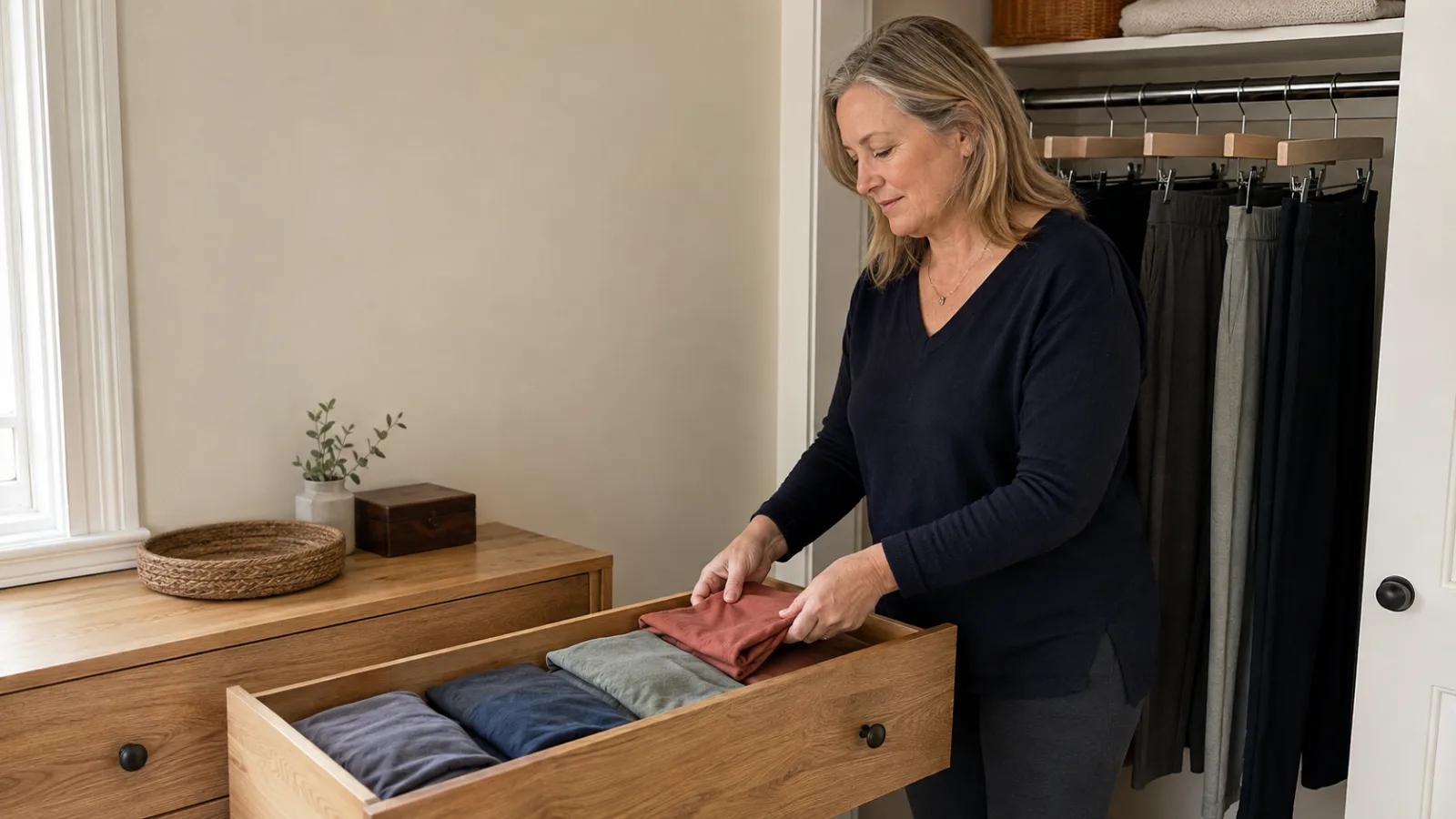
How to store leggings and stretch pants
Folding is generally the better choice for leggings and other elastane-containing stretch pants, because hanging by the waistband lets gravity pull on that one point of fabric continuously, which over time can stretch the waistband out of shape faster than…
CareReviewed September 5, 2026
Should you use fabric softener on stretch fabric?
Liquid fabric softener is generally not recommended for elastane-containing stretch fabric, because it coats fibres with a residue that reduces the fabric's breathability and, on some finishes, can degrade the fibre's recovery over repeated washes.
CareReviewed September 5, 2026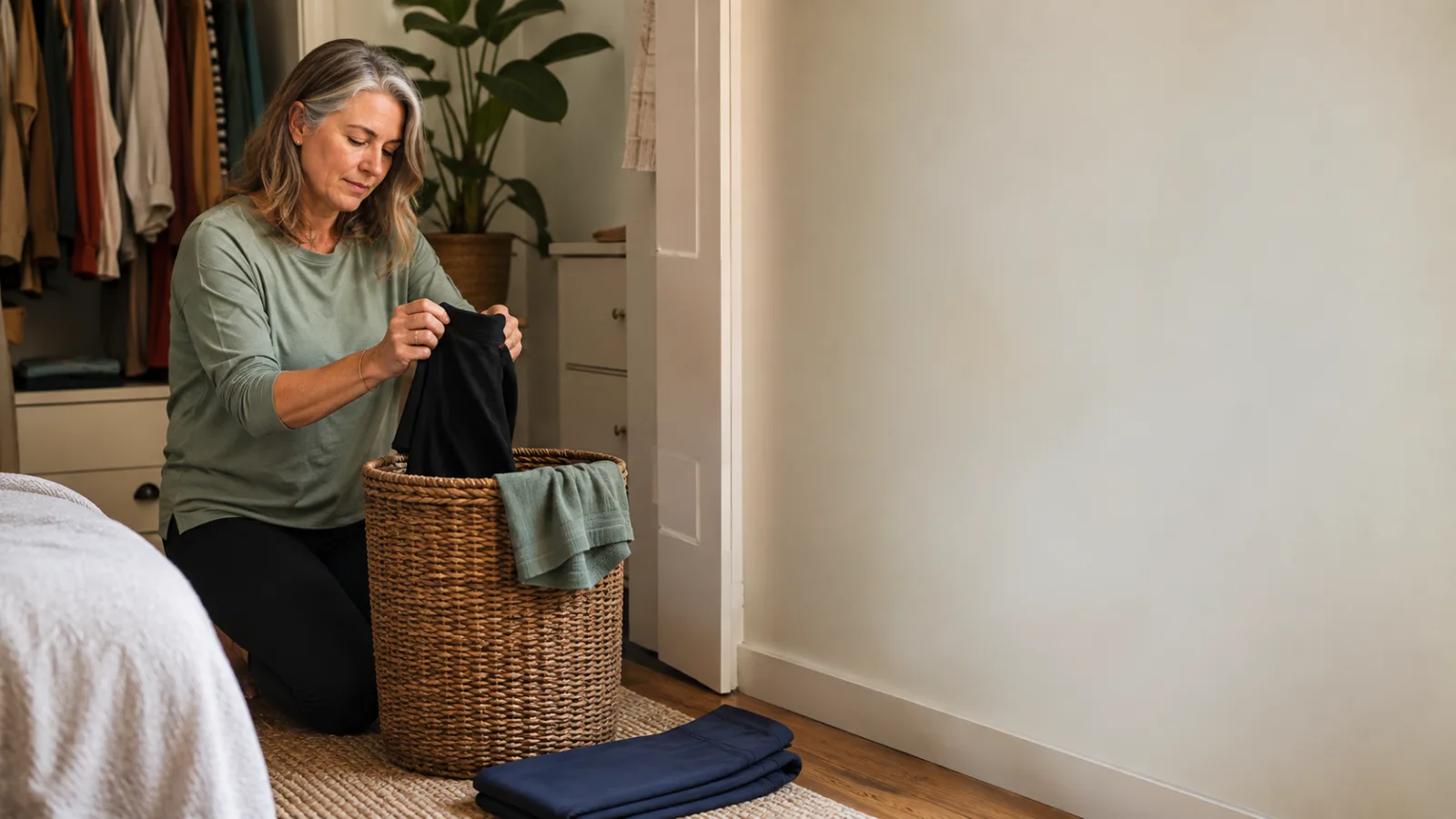
How often to wash leggings
Washing after every wear is the safer default for leggings worn for activity or against skin all day, because the synthetic knit most leggings are made from holds odour-causing bacteria more than cotton does, even when the fabric does not look dirty.
CareReviewed September 5, 2026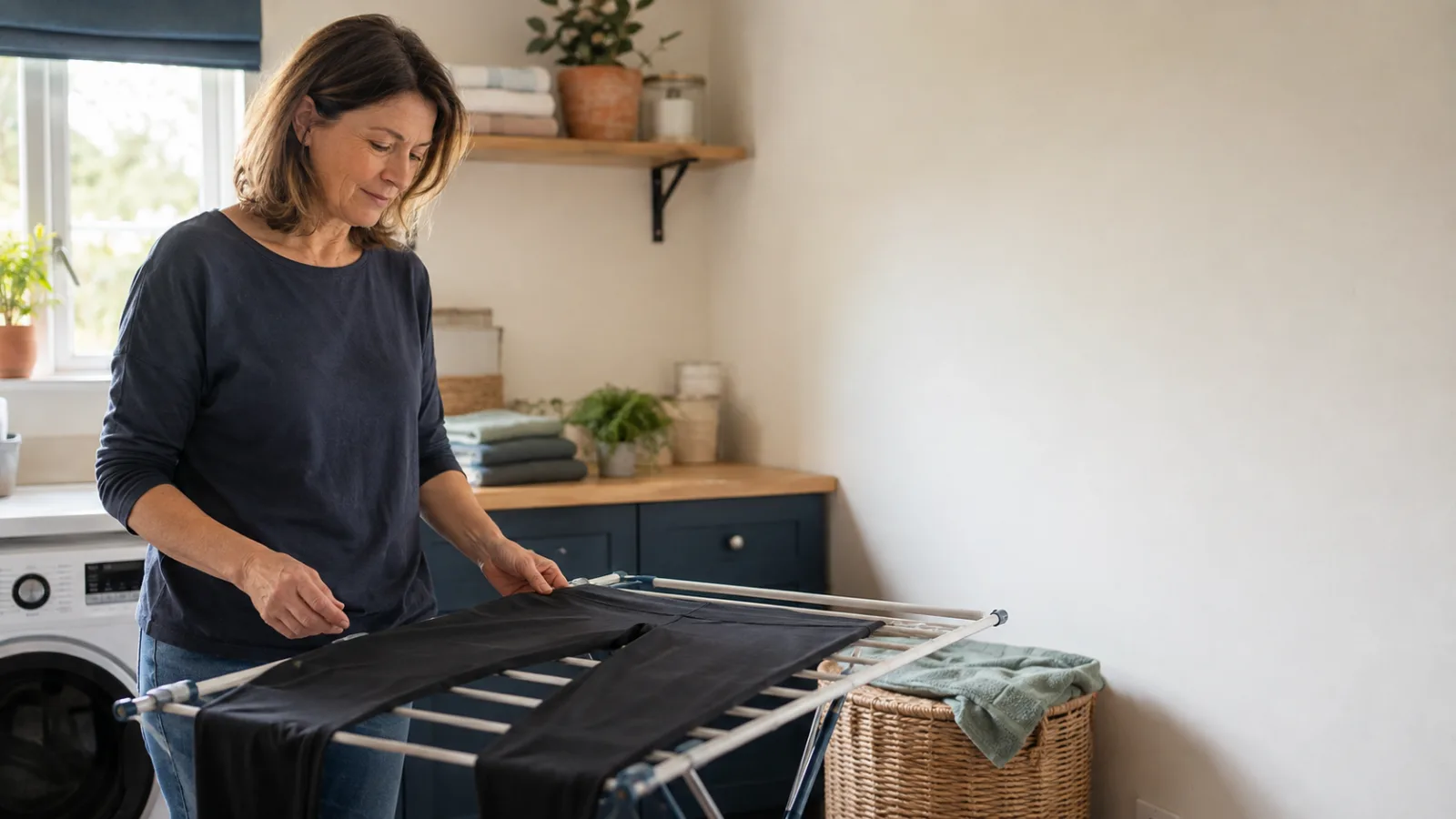
Can Drying Restore Stretched-Out Leggings?
Drying may make stretched leggings feel temporarily closer to the body, but it is not a reliable repair for lost elasticity.
CareReviewed September 5, 2026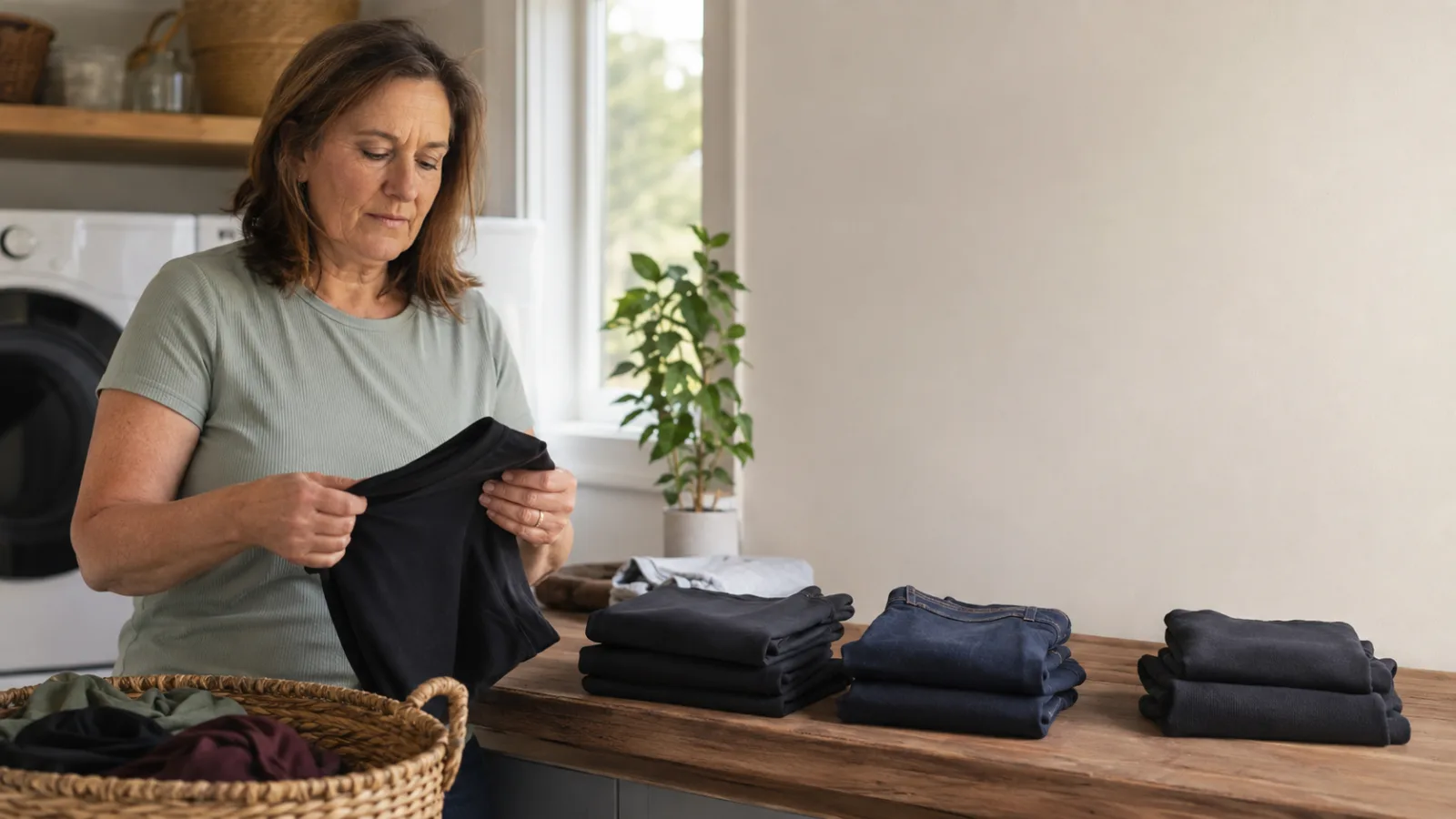
How often should leggings be washed?
The care standard gives a normal-use interval for stretch jeans: wash them after 4 to 6 wears. It does not give a separate leggings interval, so treat that range as the published reference point for stretch bottoms and follow the garment care label when it is…
CareReviewed September 5, 2026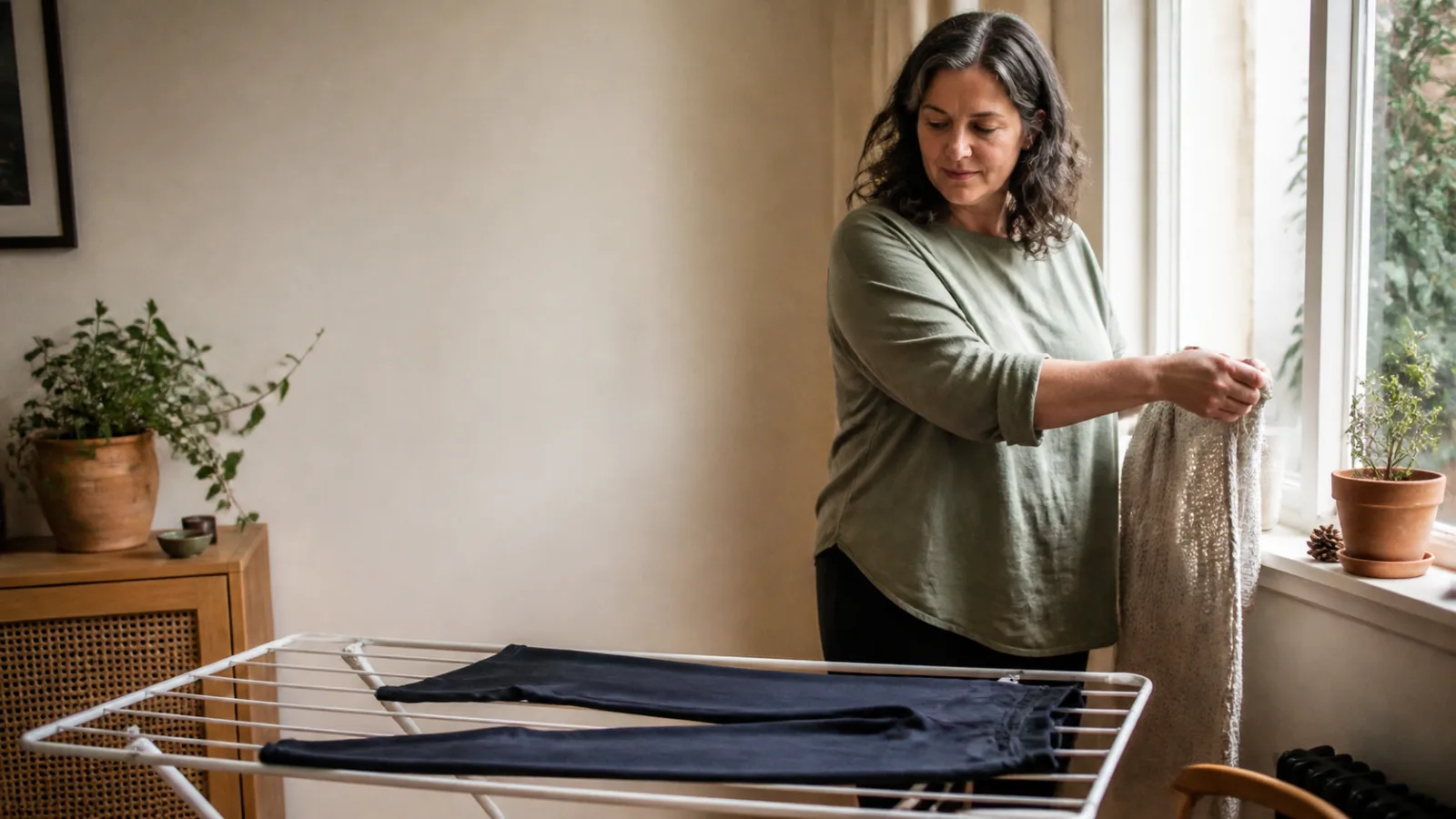
Should leggings go in the dryer?
Preferably not. Heat breaks down elastane, which is the fibre that makes leggings return to shape, so the dryer is the main cause of permanently stretched-out leggings and waistbands.
CareReviewed September 5, 2026
How to keep black leggings from fading
Wash cold, inside out, with dark colours only, and avoid detergents containing optical brighteners. Dry out of direct sunlight. Heat and surface abrasion cause most visible fading, and both are controlled by how you wash rather than by what you buy.
CareReviewed September 5, 2026
How to wash stretch jeans
Wash cold, inside out, on a gentle cycle, and air dry. Heat is what destroys elastane, and elastane is what makes the pair return to shape. Washing every four to six wears is enough; more frequent washing fades the denim without adding anything.
CareReviewed September 5, 2026
Fit problems
17 guides
Why pants bunch at the crotch
Bunching at the crotch has two common, separate causes that look similar but need different fixes: a rise that is too long for your body leaves excess fabric with nowhere to go but fold, while a waistband and rise combination that does not match your…
Fit problemsReviewed September 6, 2026
Why pant seams twist as you walk
Seam twist happens when the fabric panels of a pant leg are cut off the straight grain of the fabric, so the leg has a slight built-in spiral that shows up as the inseam rotating toward the front or back as you walk.
Fit problemsReviewed September 5, 2026
Why back pockets sit wrong on some jeans
Back pockets are placed against the back rise and the yoke — the shaped panel across the upper back of the jeans — so their position is set by the pattern, not by your body.
Fit problemsReviewed September 5, 2026
Why the same size fits differently between brands
There is no industry standard that ties a size number to a fixed body measurement, so every brand sets its own size chart against its own fit model and its own target customer.
Fit problemsReviewed September 5, 2026
Why pants ride up between the legs
Riding up almost always comes down to the rise — the distance from the waistband to the crotch seam — being short for your body, so there is not enough fabric to travel the distance between your waist and where your legs meet, and every step pulls the…
Fit problemsReviewed September 5, 2026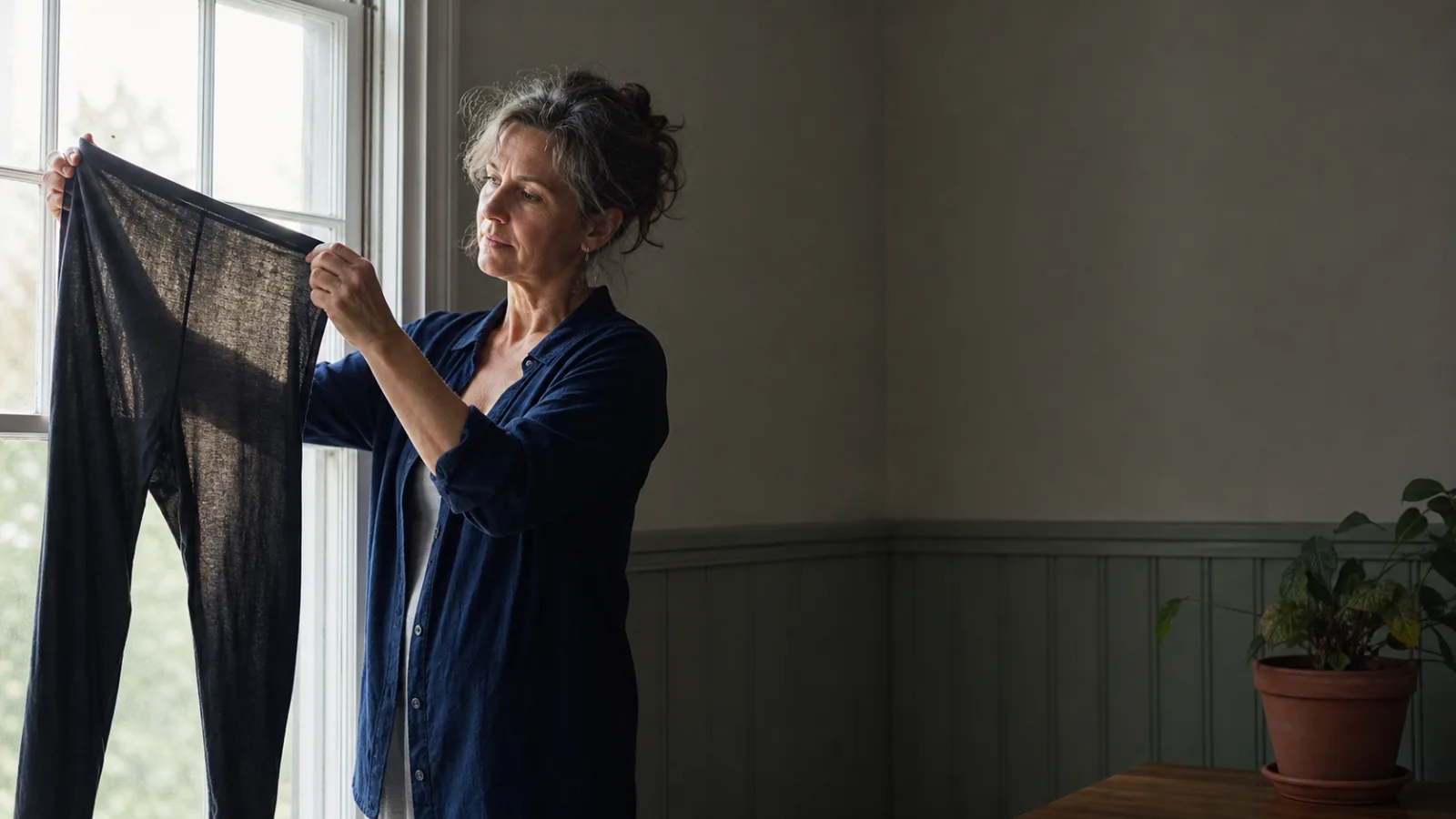
Why leggings go see-through when you bend
Knit fabric thins as it stretches, and bending puts the fabric across the seat at its maximum extension. Three things bring that point closer: a size that is already stretched to fit you, a low fabric weight, and a light or heathered colour.
Fit problemsReviewed September 5, 2026
Why does fabric get fuzzy at the crotch seam?
Fabric fuzzing at the crotch seam is usually a pilling issue, not a sign that the garment is dirty or that your body is doing something wrong. Pills form where fabric surfaces rub repeatedly.
Fit problemsReviewed September 5, 2026
Why jeans bag out after an hour
Stretch comes from elastane, but returning to shape depends on how much of it there is. Below roughly 2 percent elastane in stretch denim, visible bagging at the knee and seat by the end of the day is normal.
Fit problemsReviewed September 5, 2026
Can waistband construction cause crotch bunching?
Yes, waistband construction can contribute to crotch bunching when it does not allow enough room for the waist to expand while seated. Sitting increases waist measurement by at least 1 in and up to 2 in for most people.
Fit problemsReviewed September 5, 2026
Can waist-to-hip proportion cause crotch bunching?
Waist-to-hip proportion can be part of the diagnosis when crotch bunching appears along with waist trouble. A waist-to-hip difference of 11 in or more is where rigid waistbands reliably gap. Between 7 in and 10 in, most standard blocks work.
Fit problemsReviewed September 5, 2026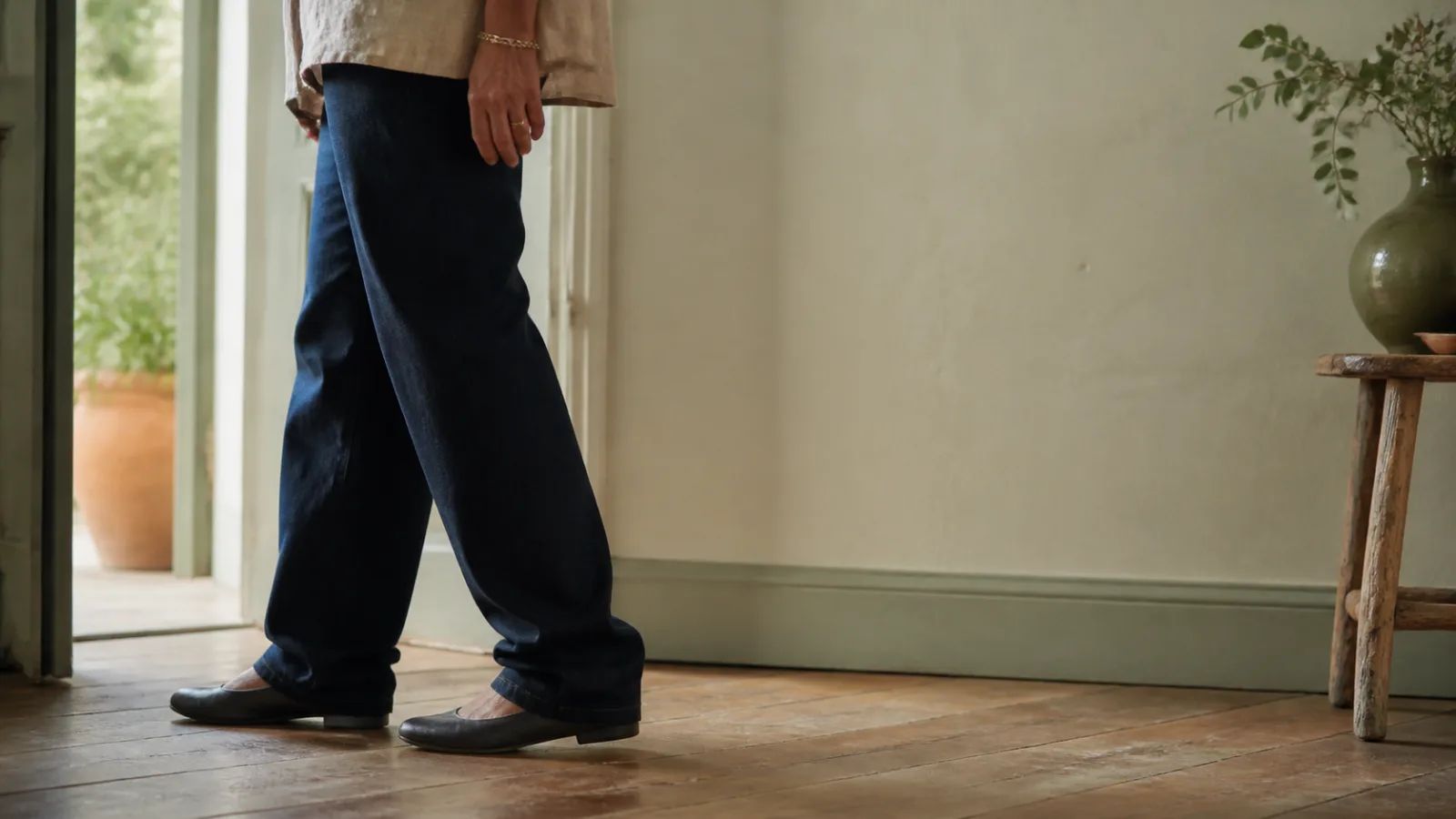
Why pants bunch at the ankles
Bunching at the ankle is excess inseam and nothing else. The leg is longer than the distance from your crotch to your ankle, so the surplus stacks. On a slim leg, one inch of excess is already visible; hemming or a shorter inseam removes it completely.
Fit problemsReviewed September 5, 2026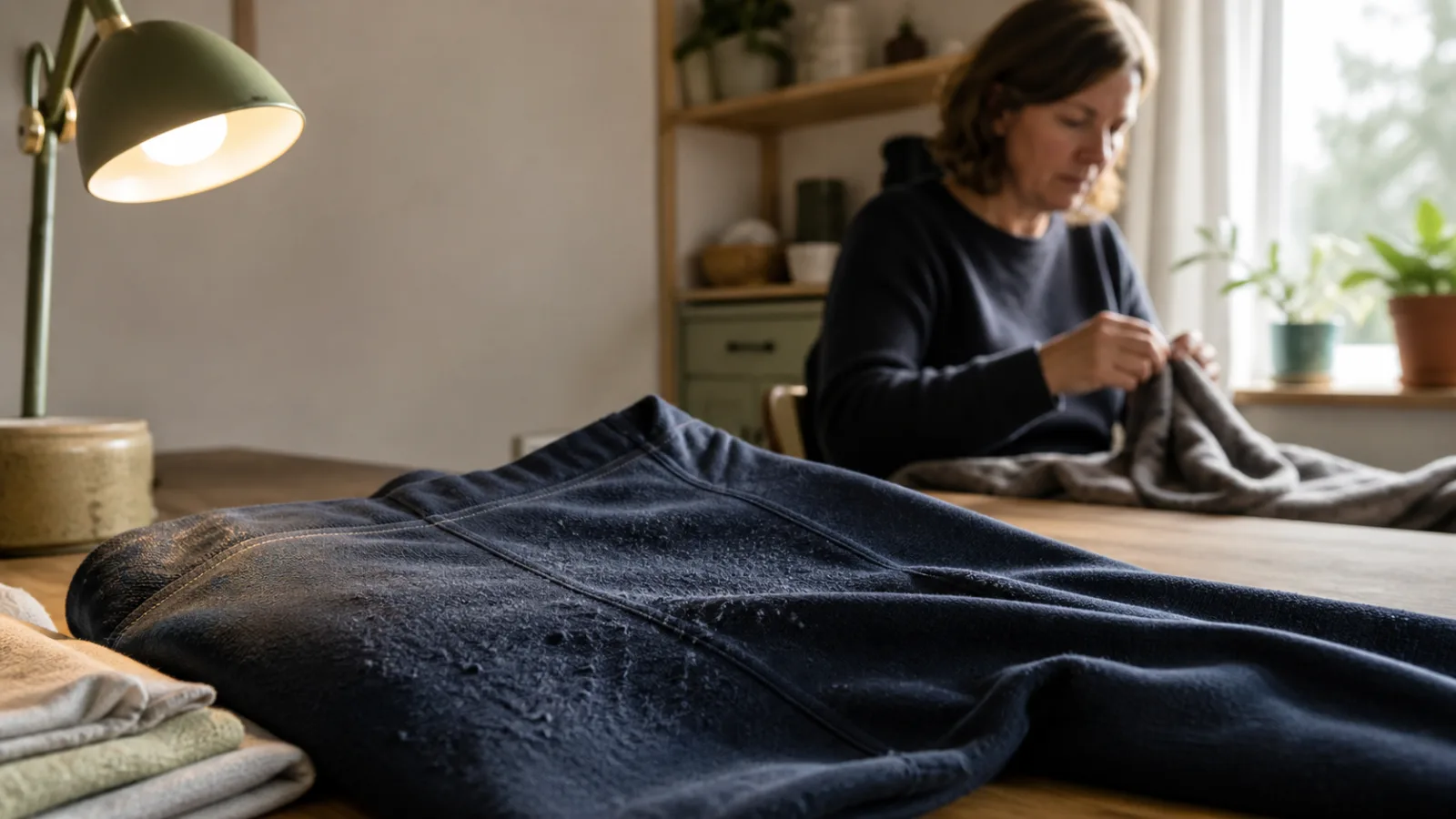
Why leggings pill between the thighs
Pills form where the legs rub against each other and short fibres work loose from the surface. Softer brushed finishes pill sooner, because the finish that makes the fabric feel good is loose fibre at the surface.
Fit problemsReviewed September 5, 2026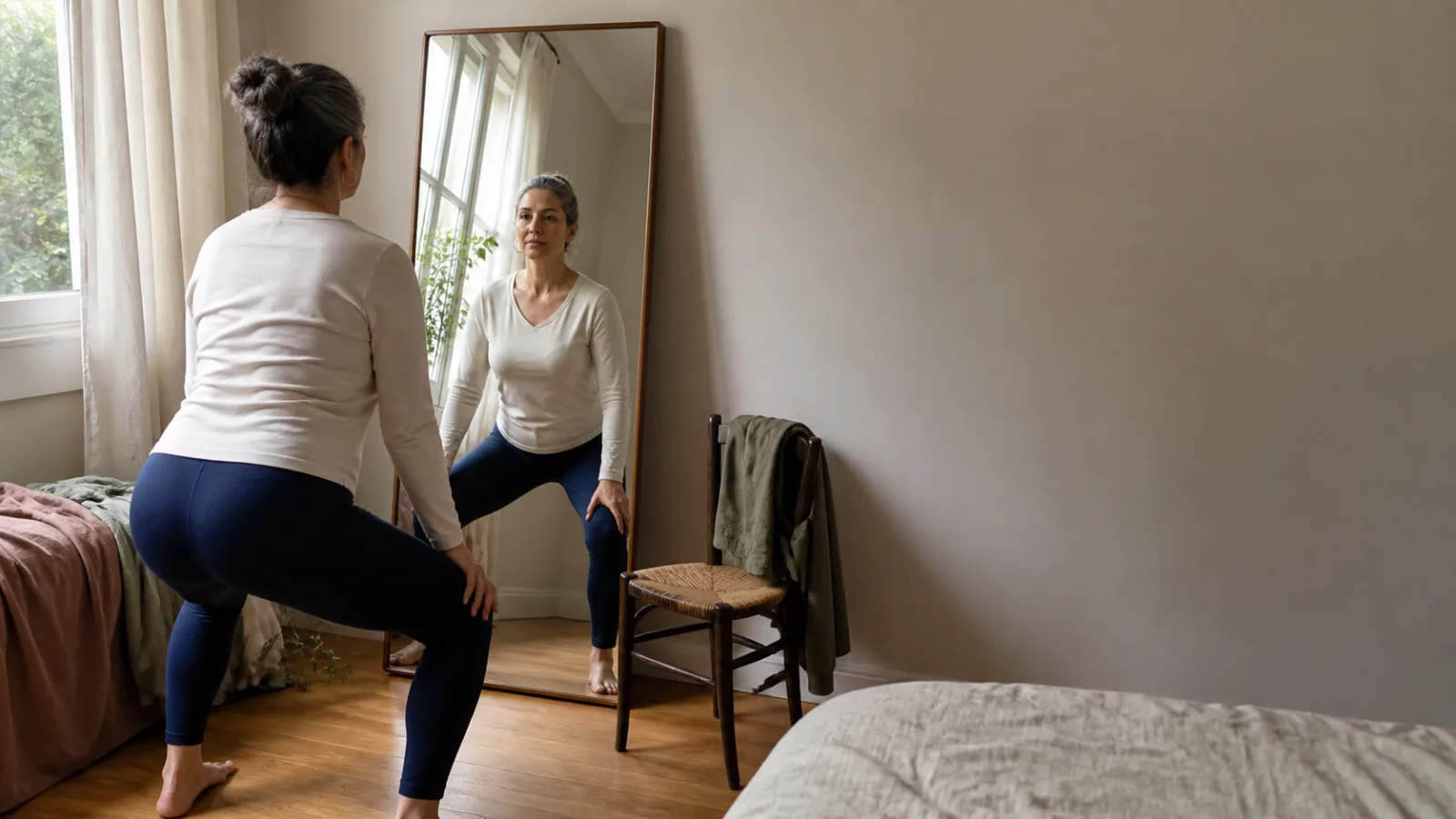
How to test whether leggings stay opaque when you squat
Put the leggings on in the size you actually wear, squat fully in daylight, and look in a mirror with a light source behind you. That is the whole test, and it is the only one that answers the question for your body.
Fit problemsReviewed September 5, 2026
Why a waistband digs in when you sit down
Sitting increases your waist measurement by one to two inches for most people. A band that is exactly at your standing measurement is therefore too tight seated, and a rigid band cannot grow with you.
Fit problemsReviewed September 5, 2026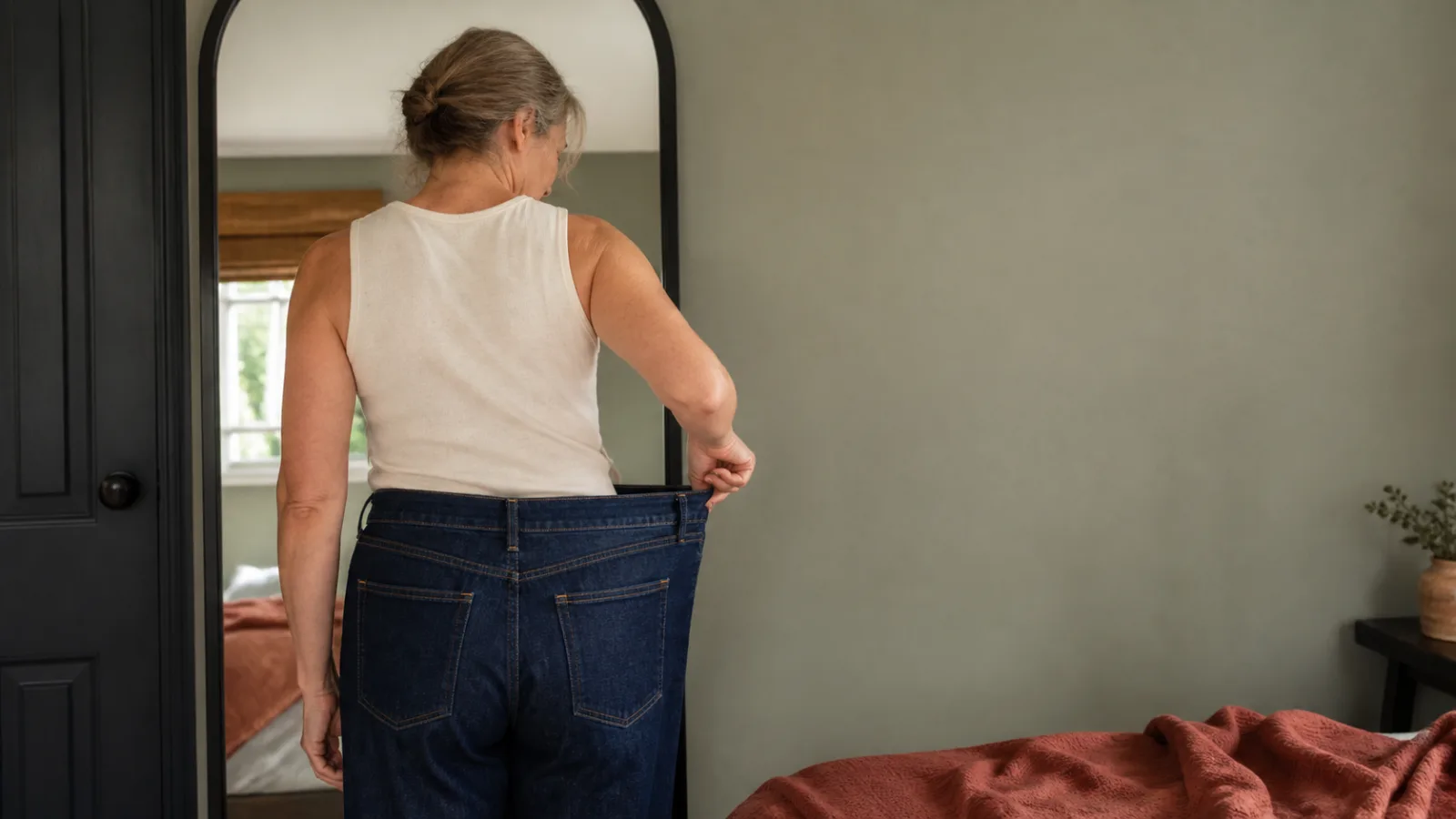
Jeans that fit the hips but gap at the waist
The pattern was drafted for a smaller waist-to-hip difference than yours. If your hip measures 11 or more inches above your waist, a straight rigid waistband will gap at the back at every size. A stretch or contoured waistband fixes it; a belt does not.
Fit problemsReviewed September 5, 2026
How to stop leggings sliding down
Sliding is a grip problem rather than a folding one. It happens when there is not enough hip shelf to hold the band, or when the band is too smooth to stay where it was put.
Fit problemsReviewed September 5, 2026
Why leggings roll down, and what stops it
A waistband rolls when it carries more pressure than its width can spread. The top edge folds outward, and once it has folded, movement walks it down.
Fit problemsReviewed September 5, 2026