Cotton vs polyester pants: which is more comfortable, and when
Key takeaways
- Cotton: breathes, feels soft, stretches out, holds a crease, dries slowly, shrinks.
- Polyester: holds shape, sheds creases, dries fast, warmer, less breathable.
- A blend with 4 to 8 percent elastane gets most of both.
- The elastane percentage matters as much as the base fibre for how a day ends.
What cotton does
Cotton is a natural fibre that absorbs moisture, which is why it breathes and feels cool and soft on the skin. The same property is why it holds a crease, takes a day to dry after a wash and shrinks when heated. Cotton fibre also stretches under load and does not pull back, so a cotton pair with little elastane bags at the knee and seat by evening. It is the better fibre for a hot day and a short wear.
What polyester does
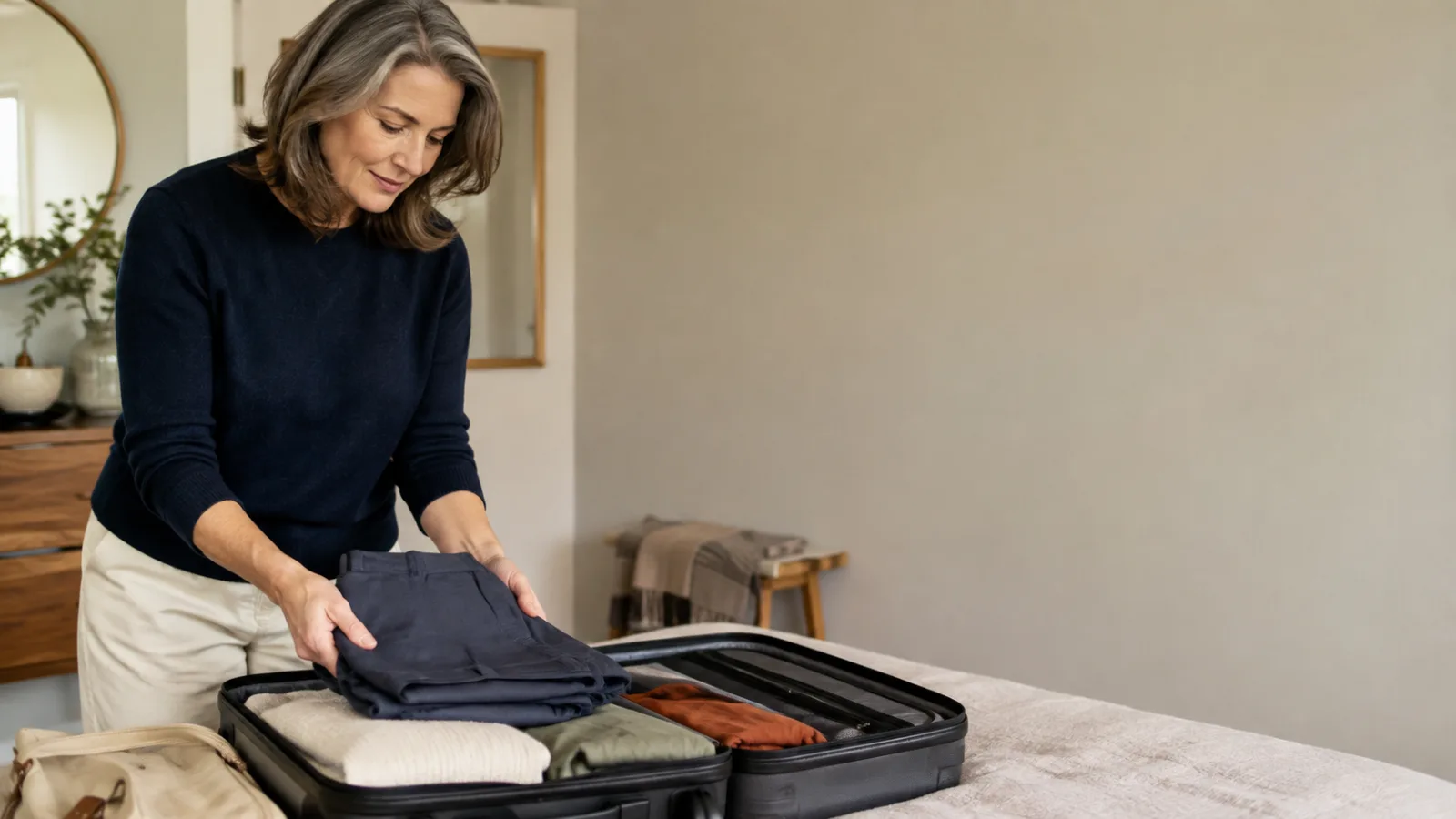
Polyester is a synthetic that absorbs almost no water. It holds its shape, sheds creases, dries in hours and comes out of the wash the size it went in. It is also warmer and less breathable than cotton, and a cheap polyester can feel slick. It is the better fibre for a long seated day, for travel and for anything that has to be washed in a hotel sink and worn the next morning.
Why most comfortable pants are a blend
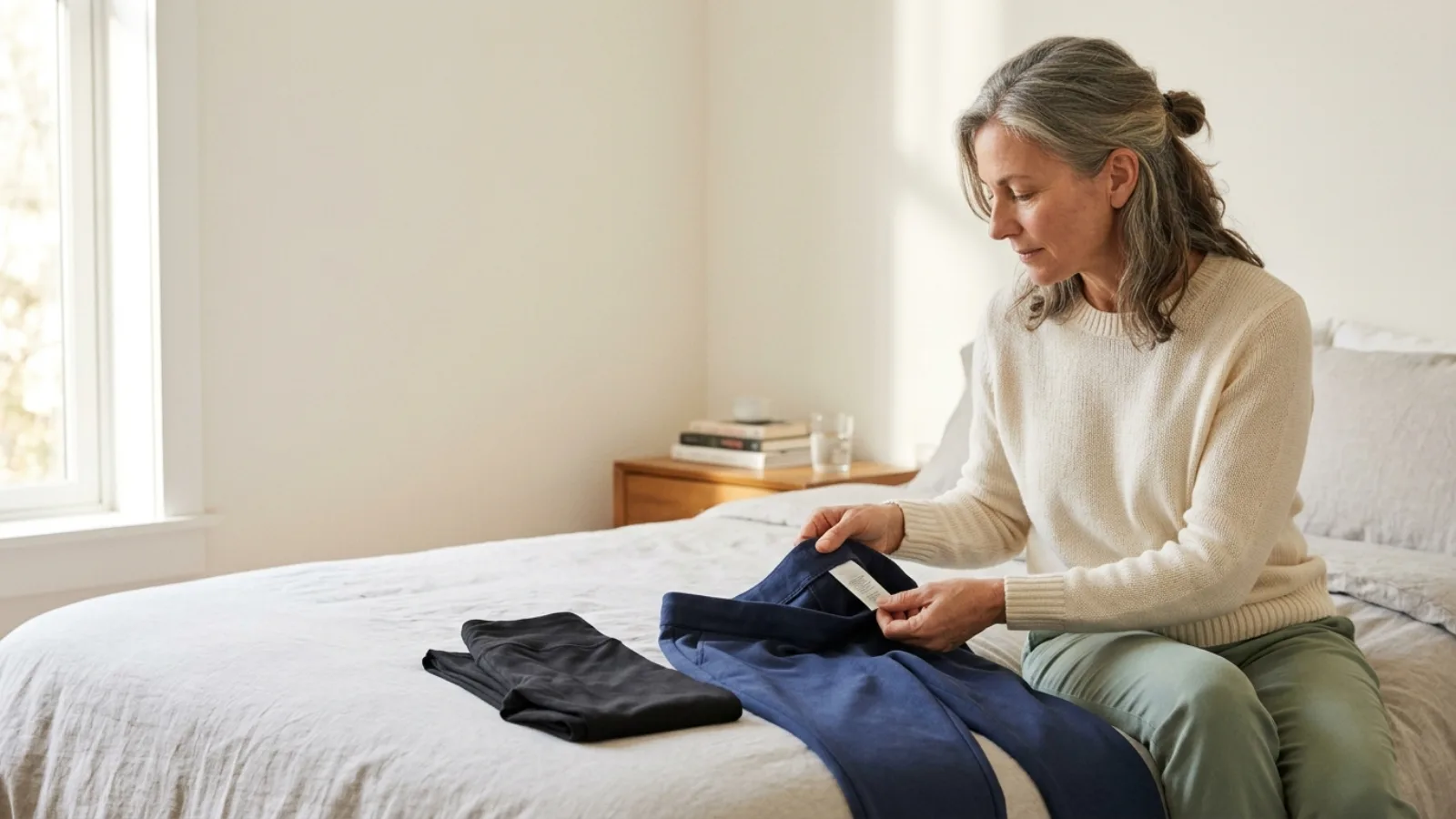
A blend takes cotton’s hand and polyester’s recovery, and elastane between 4 and 8 percent adds the stretch and return that makes a day of sitting comfortable. Ponte, most pull-on jeans and most travel pants are built this way. Read the label: a pair that is mostly cotton with 2 percent elastane will feel best in the shop and worst at the end of the day; a polyester-heavy blend with 6 percent will feel plainer at first and the same at six.
The figures below come from the sources listed at the end of this guide.
| What | Value | Source |
|---|---|---|
| elastane comfort lower bound | 4% | JEGINS Fit fabric standard |
| elastane comfort upper bound | 8% | JEGINS Fit fabric standard |
| elastane bagging threshold | 2% | JEGINS Fit fabric standard |
| example elastane | 6% | JEGINS Fit fabric standard |
Rayon, modal and nylon
Rayon and modal feel softer than cotton and drape better, and they go translucent sooner under stretch, so they need weight to stay opaque. Nylon behaves like polyester with a smoother hand and is common in leggings. None of these changes the rule: the base fibre predicts breathability and drape, and the elastane percentage predicts how the day ends.
How to choose by the day
Hot weather, a short wear, a pair you want to soften with age: cotton. A long seated day, a flight, a sink wash: polyester blend. Everyday pants that have to do a bit of both: a cotton and polyester blend with 4 to 8 percent elastane. On our product pages the fibre content is listed where the brand publishes it and reads "Not confirmed" where it does not.
Related questions
- cotton or polyester pants for summer
- polyester vs cotton comfort
- best fabric for comfortable pants
- are polyester pants uncomfortable
Related guides
Frequently asked questions
- Is 100 percent cotton more comfortable?
- Against the skin and in heat, yes. Over a long day, no: cotton stretches out and does not recover, so the pair is looser and creased by evening. A blend with elastane fixes that.
- Do polyester pants make you sweat?
- They breathe less than cotton, so they are warmer in heat. In an air-conditioned office or on a plane that is rarely a problem, and the shape-holding and quick drying are worth more there.
- What is the most comfortable fabric for pants?
- For a whole day, a cotton or rayon and polyester blend with 4 to 8 percent elastane. It gets cotton’s hand and polyester’s recovery. For an hour in the heat, cotton.
Sources
- Polyester - Wikipedia
Background reference for the definitions used in this guide.
Accessed September 2, 2026
- JEGINS Fit fabric standard
Our published editorial standard for the figures used in this guide.
JEGINS Fit · Accessed September 1, 2026
Scope and limits of this guide
This guide describes what we have measured or sourced. It does not cover every brand, and body measurements vary: use it as a starting point and check the specific product page for its evidence level before buying.
Fit glossary · How we test · Editorial policy · Affiliate disclosure