Which pants work on which body shape
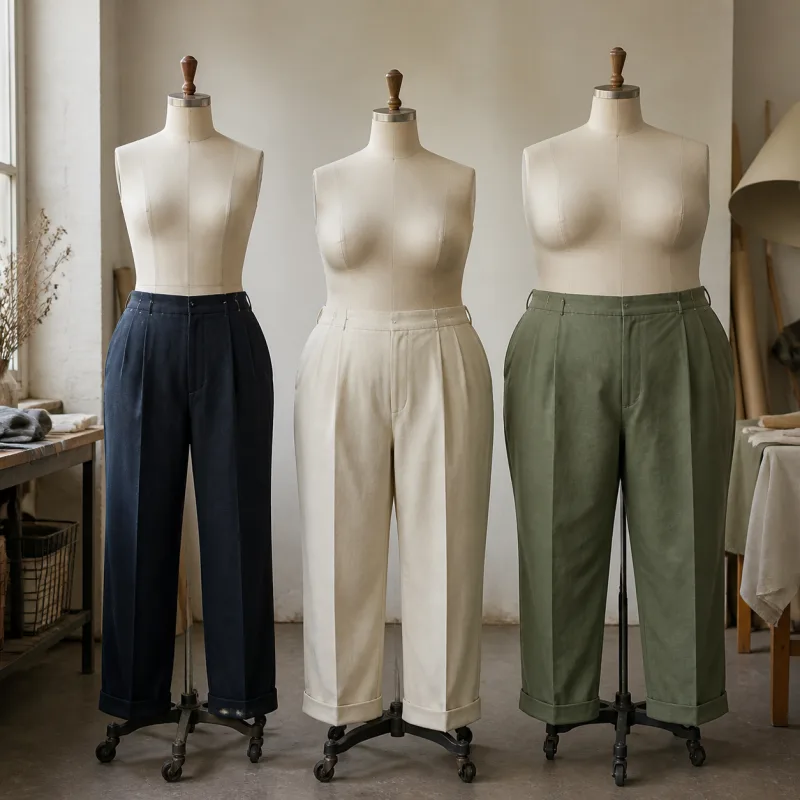
Key takeaways
- A waist-to-hip difference of 11 inches or more is where rigid waistbands gap. A stretch or knit waistband is the fix, not a smaller size.
- A difference of 6 inches or less means the waistband crosses the widest part of your torso, so width and softness of the band matter more than gap.
- Petite is a block change, not just a shorter hem. Plus ranges vary in whether they are graded or re-drafted, and that changes the hip-to-waist ratio.
- No shape rules out a category. It changes which features inside that category will work.
Last reviewed September 1, 2026 by JEGINS Fit editorial. Reviewed on a six-month cycle.
Start from the measurement, not the label
Shape labels are shorthand for a ratio. Subtract your waist from your hip and the number tells you more than the label does.
| Hip minus waist | Usual shape label | What the garment needs |
|---|---|---|
| 11" or more | Pear, curvy, hourglass | Stretch or knit waistband; contoured or curved waistband seam |
| 7" – 10" | Most standard blocks | Most waistbands work; rise becomes the deciding factor |
| 6" or less | Apple, rectangle | Wide, soft band; avoid a narrow band under tension |
Apple shape
Weight sits around the middle, and the waist measurement is close to or above the hip measurement. The failure mode is pressure: a narrow waistband crossing the fullest part of the torso, which digs in when seated and rolls down when standing.
- Look for: a wide knit waistband (2 inches or more), a mid rise rather than a super-high rise, and a fabric with 4-8% elastane so the band recovers rather than stretching out.
- Be careful with: rigid button-and-zip closures at a high rise. This is the combination most often reported as digging in at the stomach.
- Ignore the advice to size up. A larger size fixes the pressure but leaves the hip and leg too loose, which then produces the sagging problem instead.
Pear shape and small waist with larger hips
Hips measure considerably more than the waist. The pants that fit your hip gap at the back of the waist, sometimes by two or three inches.
- Look for: a full elastic or wide knit waistband, or a rigid waistband with a curved (contoured) seam rather than a straight one. Pull-on jeans and jeggings solve this by construction.
- Be careful with: a straight-cut rigid waistband. It is drafted for a smaller waist-to-hip difference and no size will close the gap.
- If you love a rigid pair: the gap is a tailoring job of about 20 minutes. It is cheaper than replacing them and it is the only reliable fix.
Rectangle and inverted triangle
Waist and hip are close together (rectangle), or the shoulders are the widest point and the hip is comparatively narrow (inverted triangle). Waistbands rarely gap. Instead the usual complaint is that the pants slide down, because there is less hip shelf to hold them up.
- Look for: a higher rise that sits at the natural waist where the torso is narrowest, and a waistband with real grip — a wide knit band or an internal silicone strip.
- Be careful with: low-rise fold-over waistbands, which have almost nothing to hold onto on this shape.
Petite: under 5′4″
Petite is not just a shorter hem. On a properly drafted petite block the rise is shorter, the knee shaping is higher, and the pocket placement moves up. That is why hemming a regular pair can still look wrong: the proportions above the hem are still for a taller frame.
- Look for: an inseam of 27-29 inches and a front rise under about 11 inches unless you have a long torso.
- Watch for: brands that offer “petite” as a shorter inseam only. Check whether the rise measurement also changes between the regular and petite listing — if it does not, it is a hem change with a petite label.
- Petite and plus together is the least served combination in the market. Where a brand does both properly we note it on the product page.
Plus size and curvy
Two brands can both offer a size 20 and produce completely different fits, because one graded the straight-size block upward and the other re-drafted it. A graded block usually adds width evenly, which leaves the waist too large relative to the hip on a curvy figure.
- Look for: a published size chart that shows the waist-to-hip difference growing with size. If the difference stays constant across the range, the block was graded rather than re-drafted.
- Look for: a gusset or a wider crotch panel in leggings and jeggings. It is the single feature that most reduces the seam pressure and the bunching problem at the crotch.
- Fabric matters more, not less. A fabric stretched close to its limit goes translucent. On larger sizes in the same fabric, the same garment is under more tension, so opacity that held at a size 12 may not hold at a size 22. We record opacity per product rather than per brand for this reason.
Our plus-available product list filters to brands whose range actually goes there.
Guides in this section
Each answers one question and names the date a human last checked it.
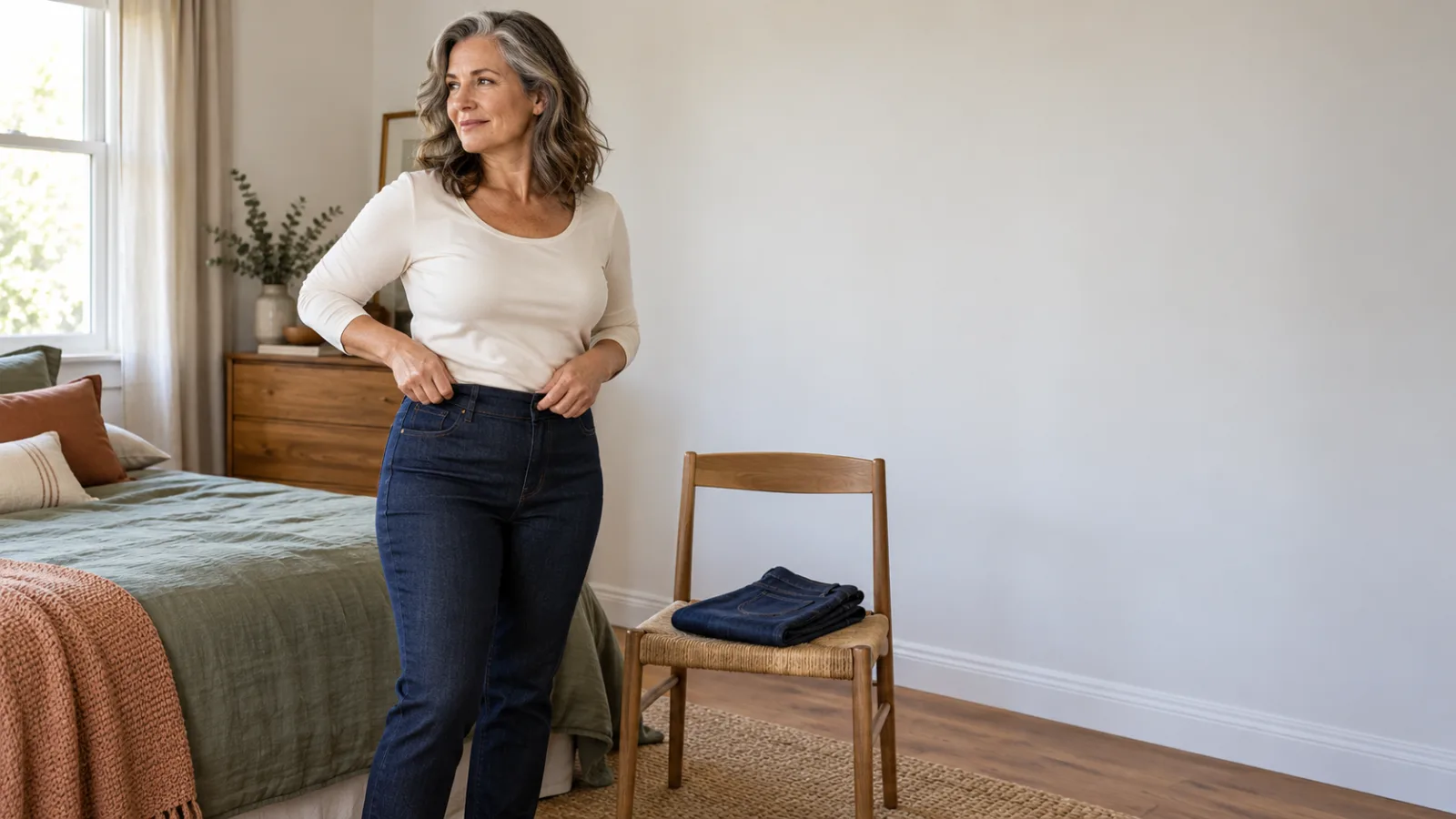
How deep should a waistband be if your size changes through the day?
Look for a waistband at least 2 inches deep, in fabric with 4 percent to 8 percent elastane. The deeper band spreads pressure across more of the waist, so it puts half the pressure per inch of a narrow band.
Body shapesReviewed October 2, 2026
What jeans stay up on a rectangle body shape?
Look at the fabric first. Jeans with 4 percent to 8 percent elastane tend to recover after a day of wear and still look like denim, so they are less likely to stretch out and slip.
Body shapesReviewed October 1, 2026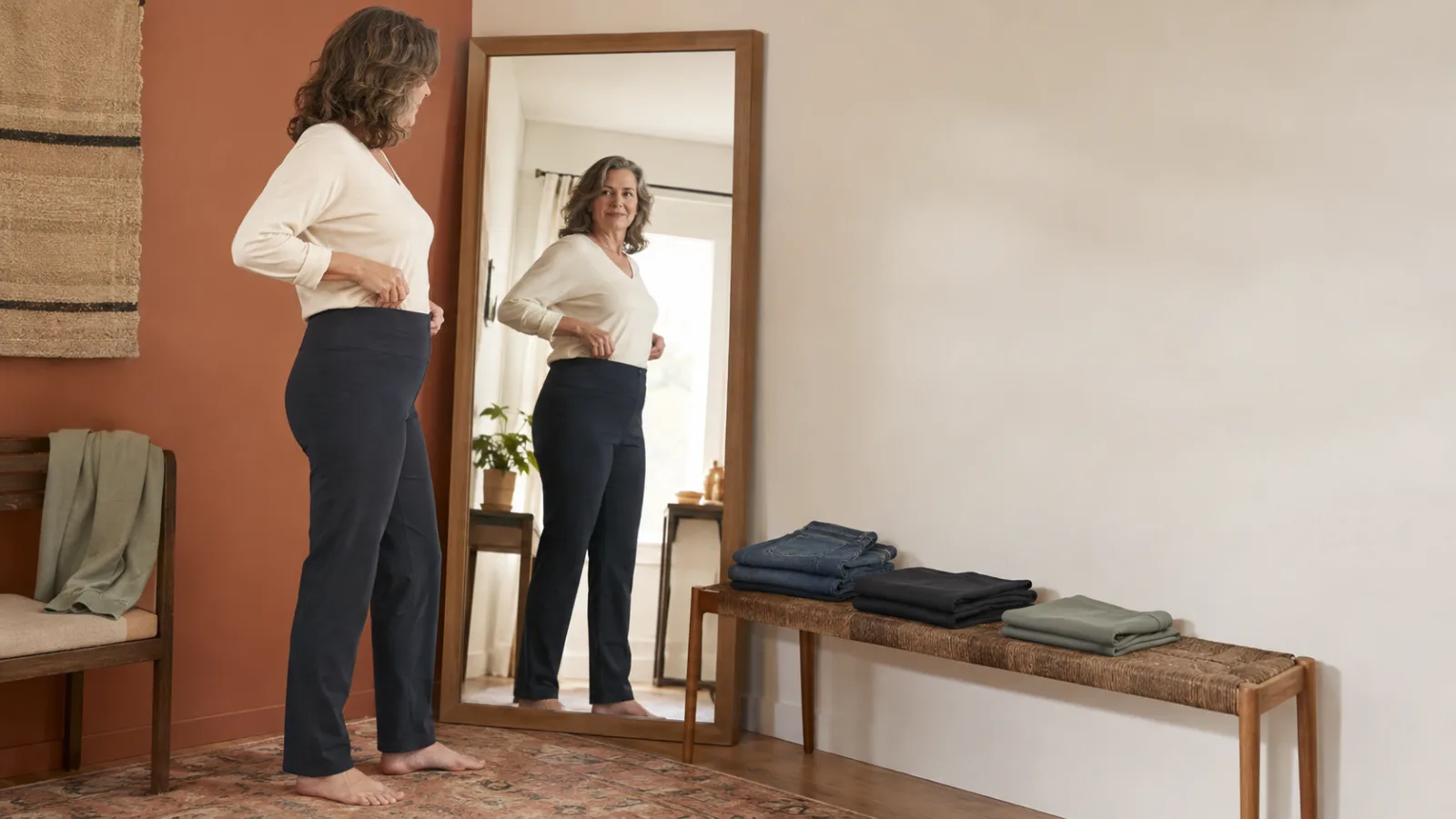
What pants work when your size changes through the day?
Look for pants with a knit waistband at least 2 in deep and fabric in the 4 percent to 8 percent elastane range. That combination gives the waistband more area to sit against the body and gives the fabric recovery after wear.
Body shapesReviewed September 6, 2026
What pants work through bloating and waist size changes
A waistband built from fabric with 4 to 8 percent elastane, at least 2 inches deep, has enough range to absorb a normal daily waist fluctuation without needing to be sized for the largest point of the day.
Body shapesReviewed September 6, 2026
What pants work for an inverted triangle shape
An inverted triangle shape has shoulders and bust wider than the hip, so the pants question is about adding visual width below the waist rather than about fit problems the way it is for most other shapes.
Body shapesReviewed September 6, 2026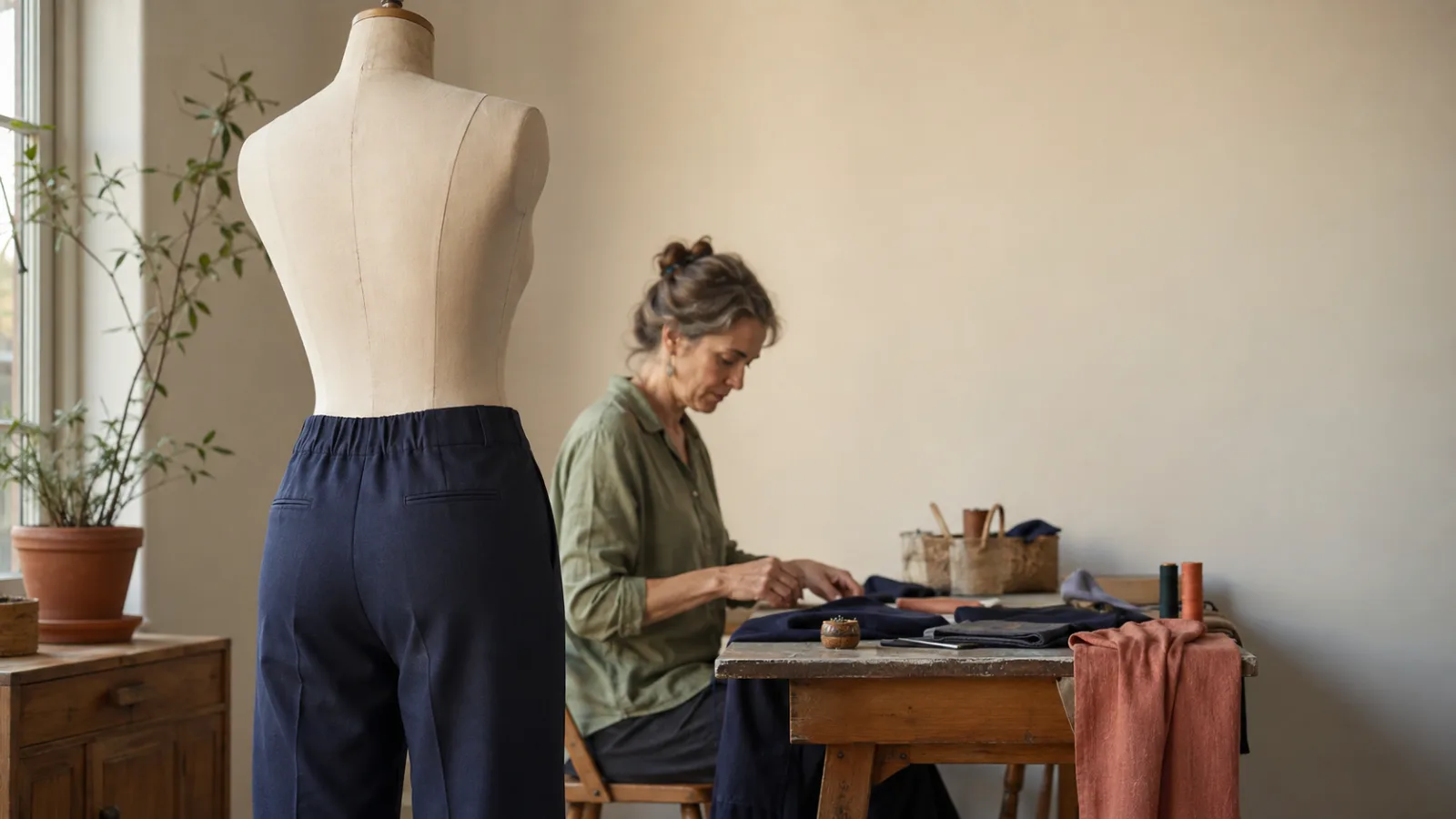
What pants work for a rectangle body shape
A rectangle shape means the waist-to-hip difference is close to or smaller than the roughly 10 inch difference most standard blocks are drafted for, so a pattern built for more curve leaves extra room at the waistband.
Body shapesReviewed September 6, 2026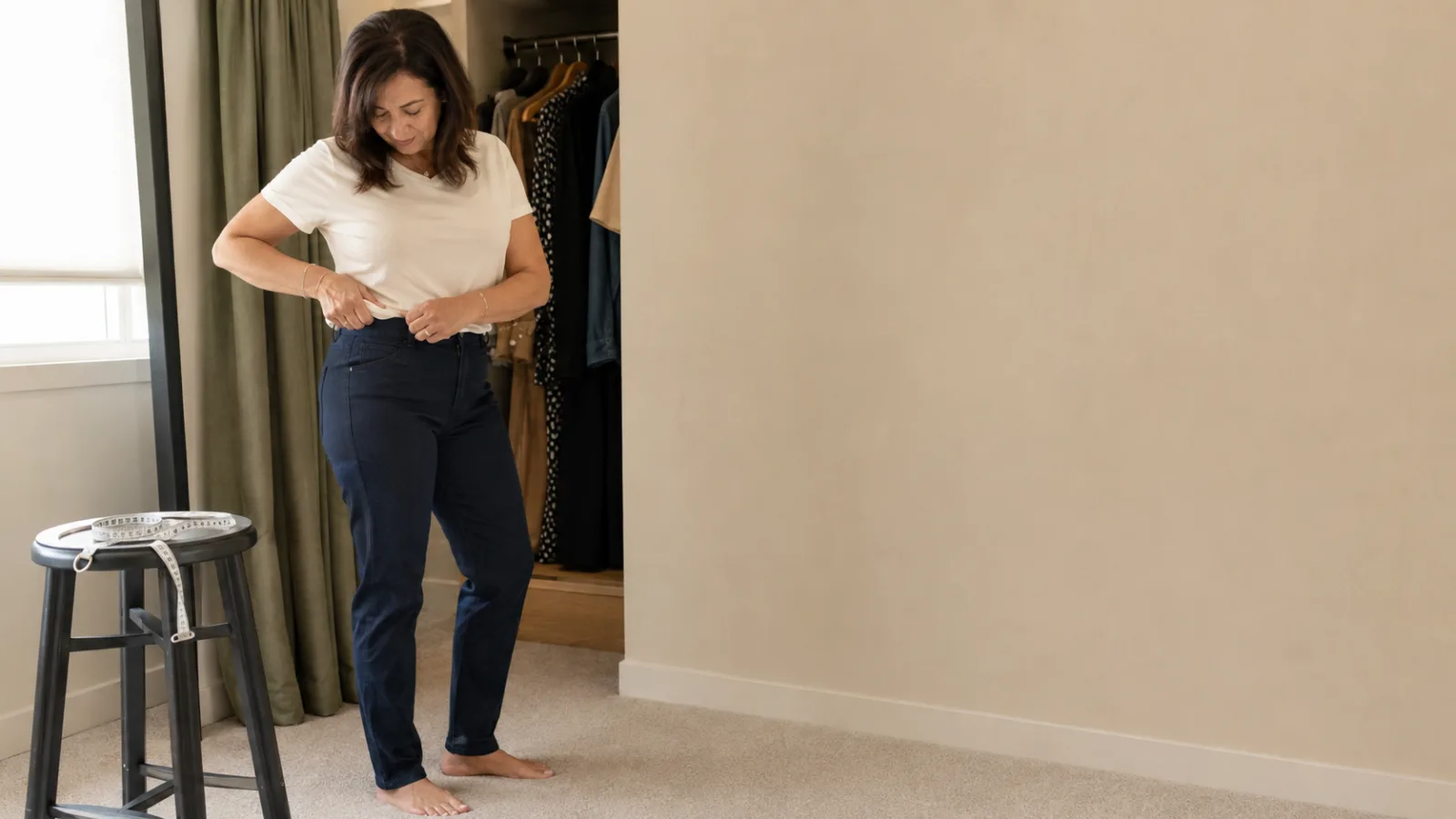
What pants work for a petite rectangle body shape?
For a petite rectangle body shape, start with the measurements that control length and waist placement. Petite ranges generally target heights under 64 in, and a petite full-length inseam usually runs from 27 in to 29 in.
Body shapesReviewed September 5, 2026
Jeans that do not dig in at the stomach
A waistband digs in at the stomach when it is narrow, rigid and sits below the fullest point, where the body pushes against it every time you sit.
Body shapesReviewed September 5, 2026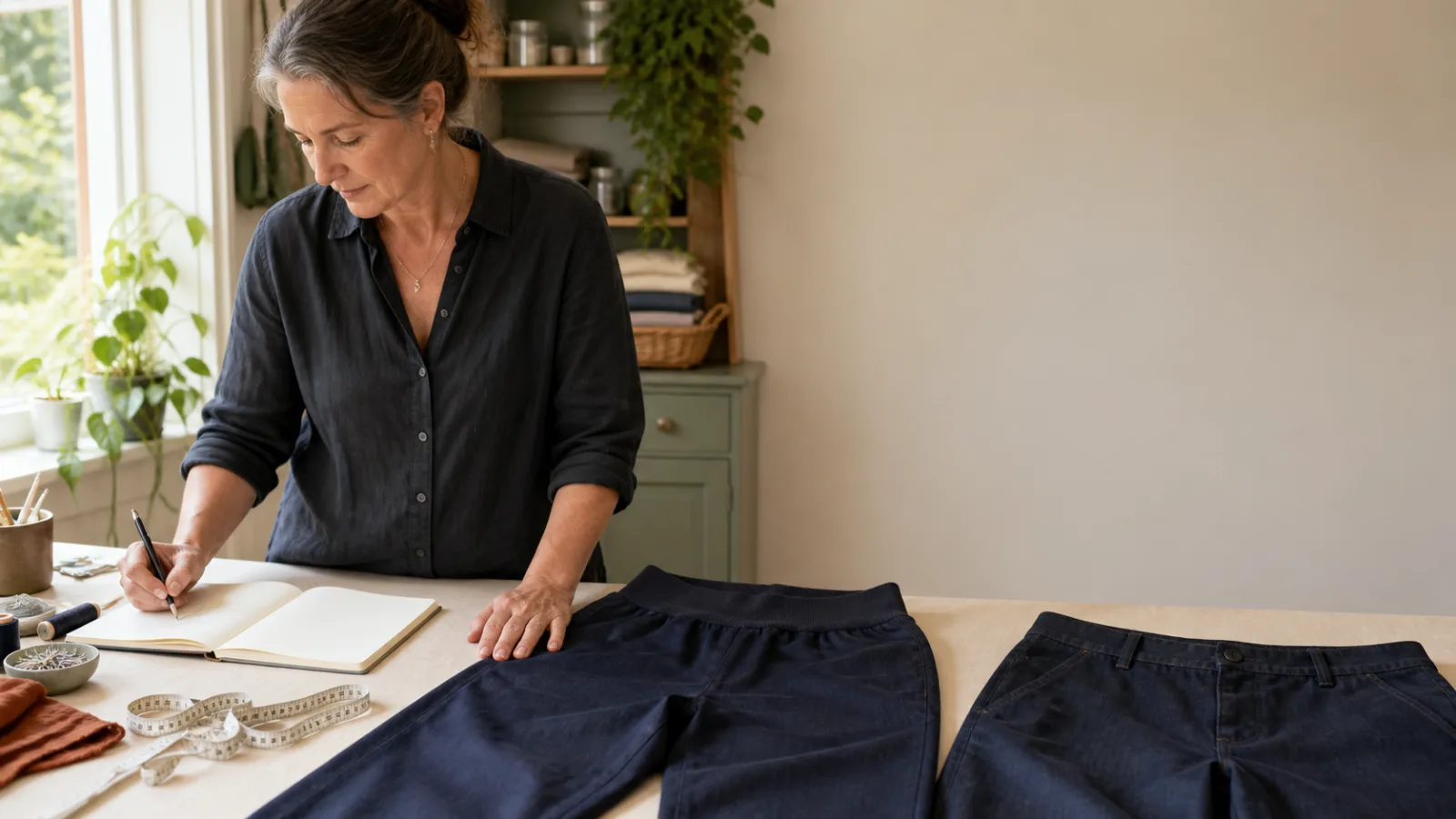
Pants for an apple shape: waistband first, then everything else
On an apple shape the waistband crosses the fullest part of the torso, so the band itself decides comfort.
Body shapesReviewed September 5, 2026
Pants for women over 60: comfort you can read off the label
The practical needs after sixty are the ones a label can answer: a pull-on or hidden-elastic waistband at least 2 inches deep so dressing and sitting are easy, a mid rise of roughly 9 to 10.5 inches that sits at the natural waist, 4 to 8 percent elastane so…
Body shapesReviewed September 5, 2026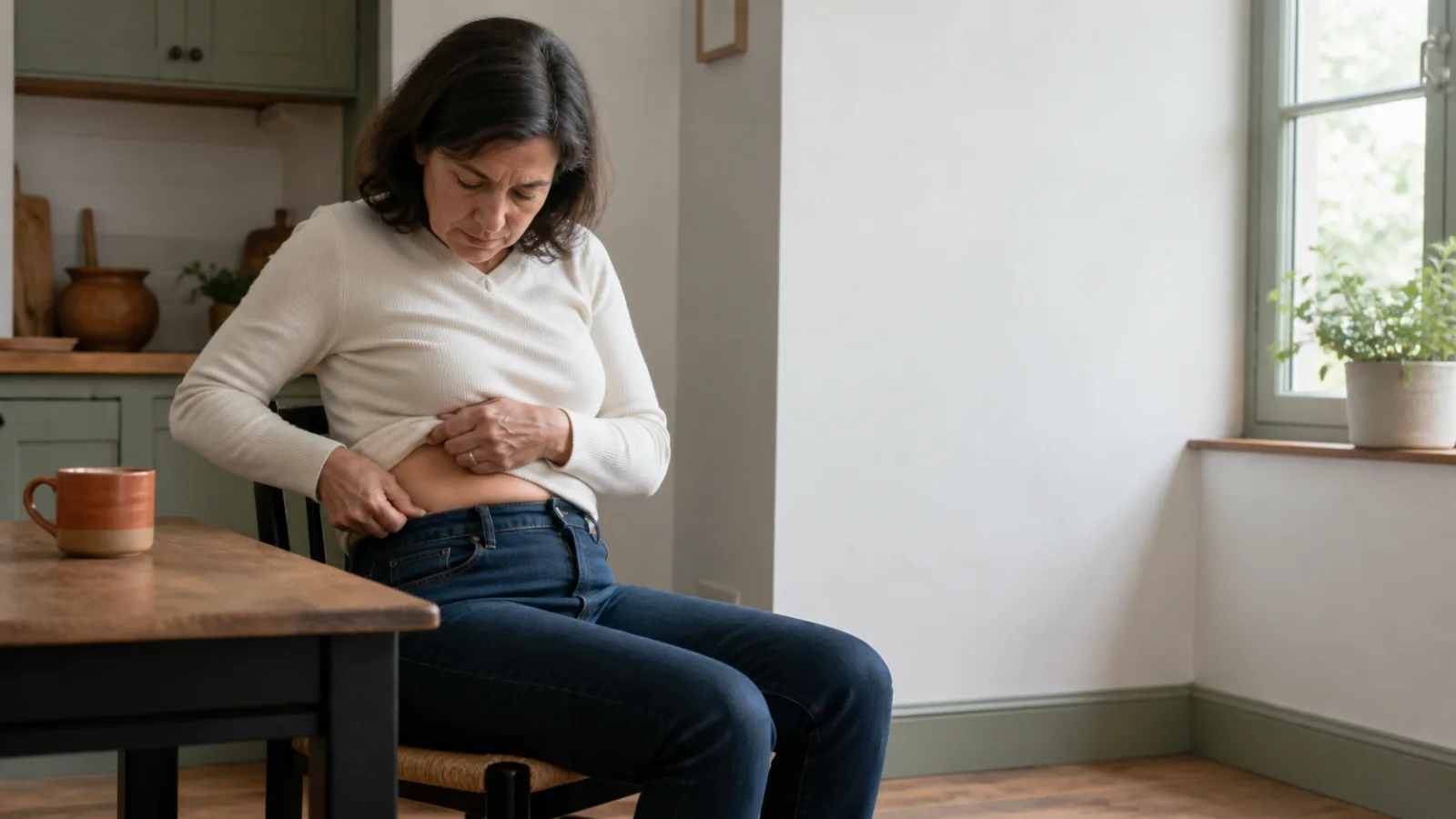
Pants for a petite frame with a short torso
A short torso has less distance between hip and ribs, so a front rise above about 11 inches sits on the ribs when you sit down.
Body shapesReviewed September 5, 2026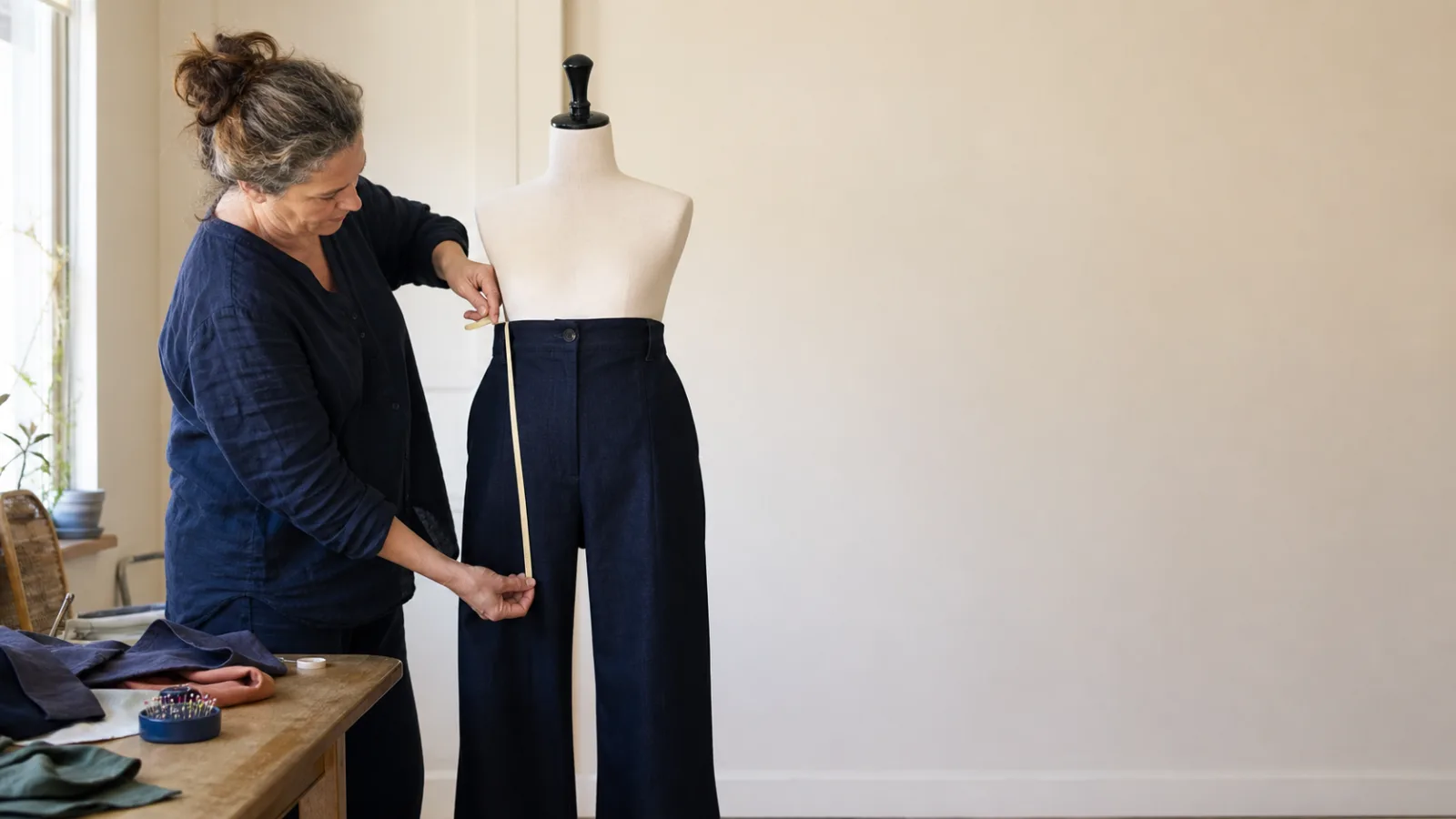
Pants for a longer torso: why mid rise slides and what to do
On a long torso the natural waist sits high, so a mid rise of 9 to 10.5 inches lands below it, on a part of the body that narrows upward, and slides down as you move. A front rise of 11 inches or more reaches the actual waist and stays put.
Body shapesReviewed September 5, 2026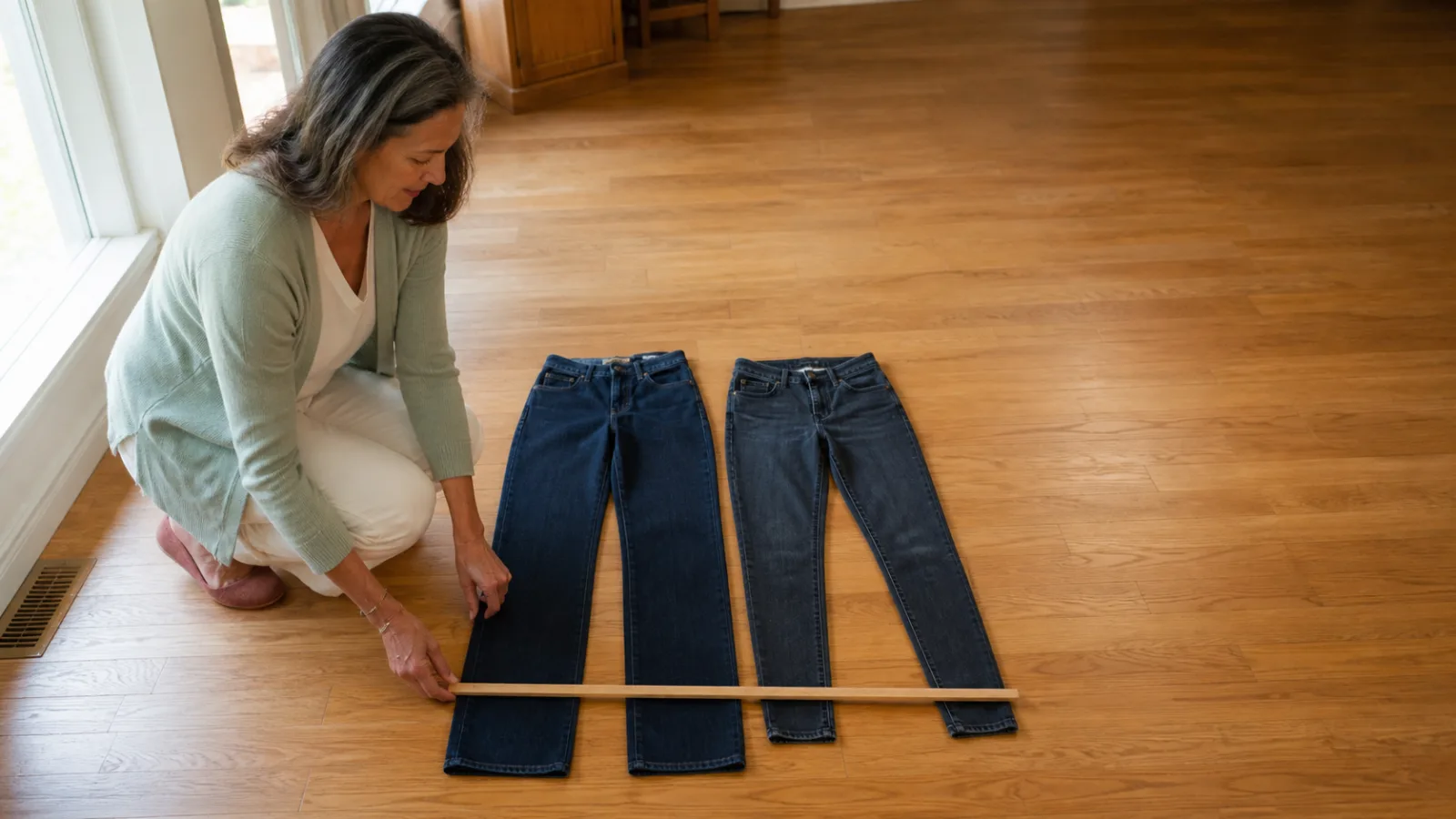
Jeans for short women with fuller legs
When the thigh decides the size, the rest of the pair is usually too long and too loose at the waist. Look for a petite inseam of 27 to 29 inches so you are not hemming a size you bought for the thigh, a straight or gently tapered leg that does not narrow…
Body shapesReviewed September 5, 2026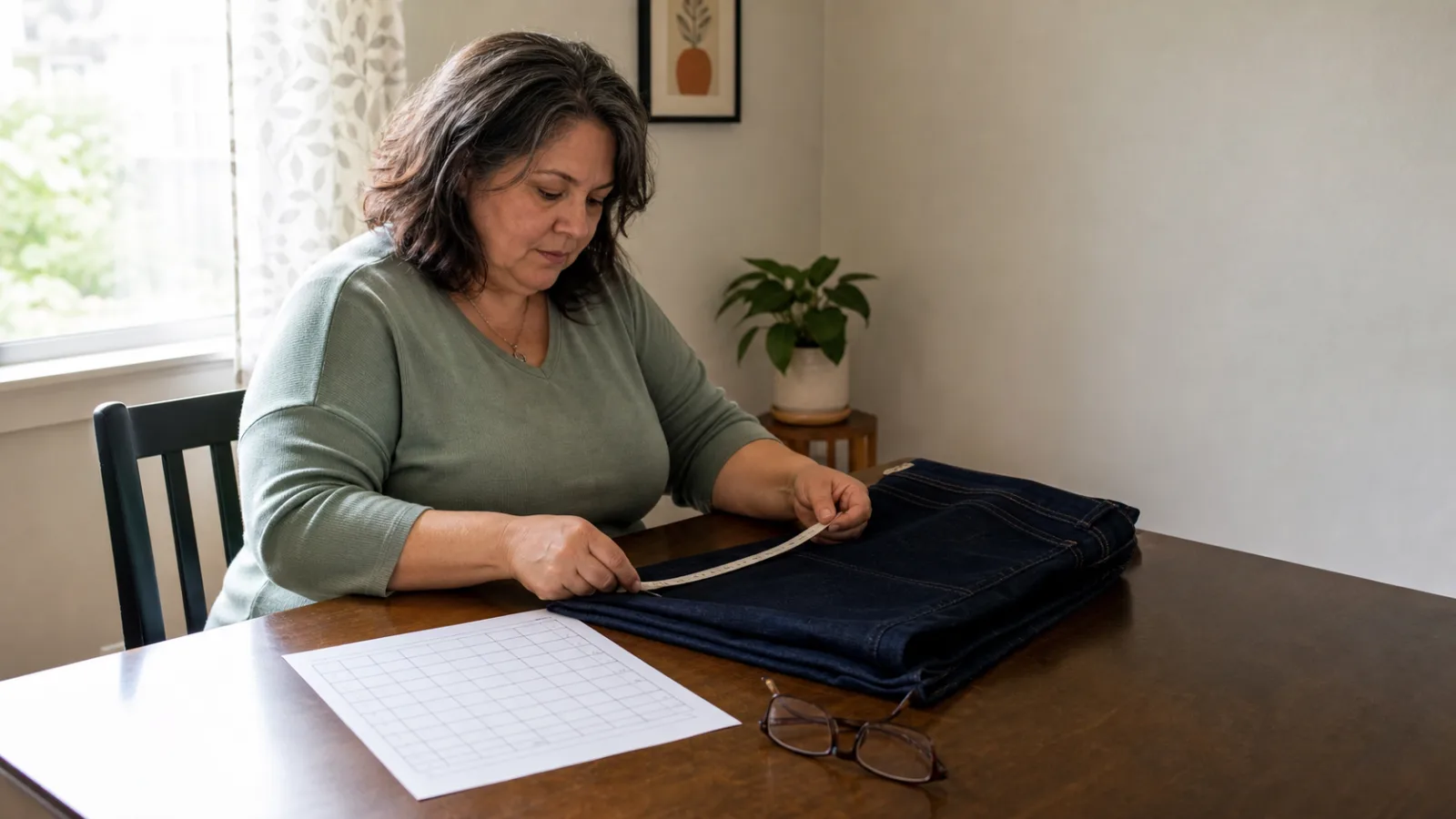
Pull-on jeans for plus-size petite women: what to check on the chart
The hard part is finding one size chart that covers both. Most brands grade plus sizes from a regular-height block, so a plus pair is usually long in the inseam and the rise.
Body shapesReviewed September 5, 2026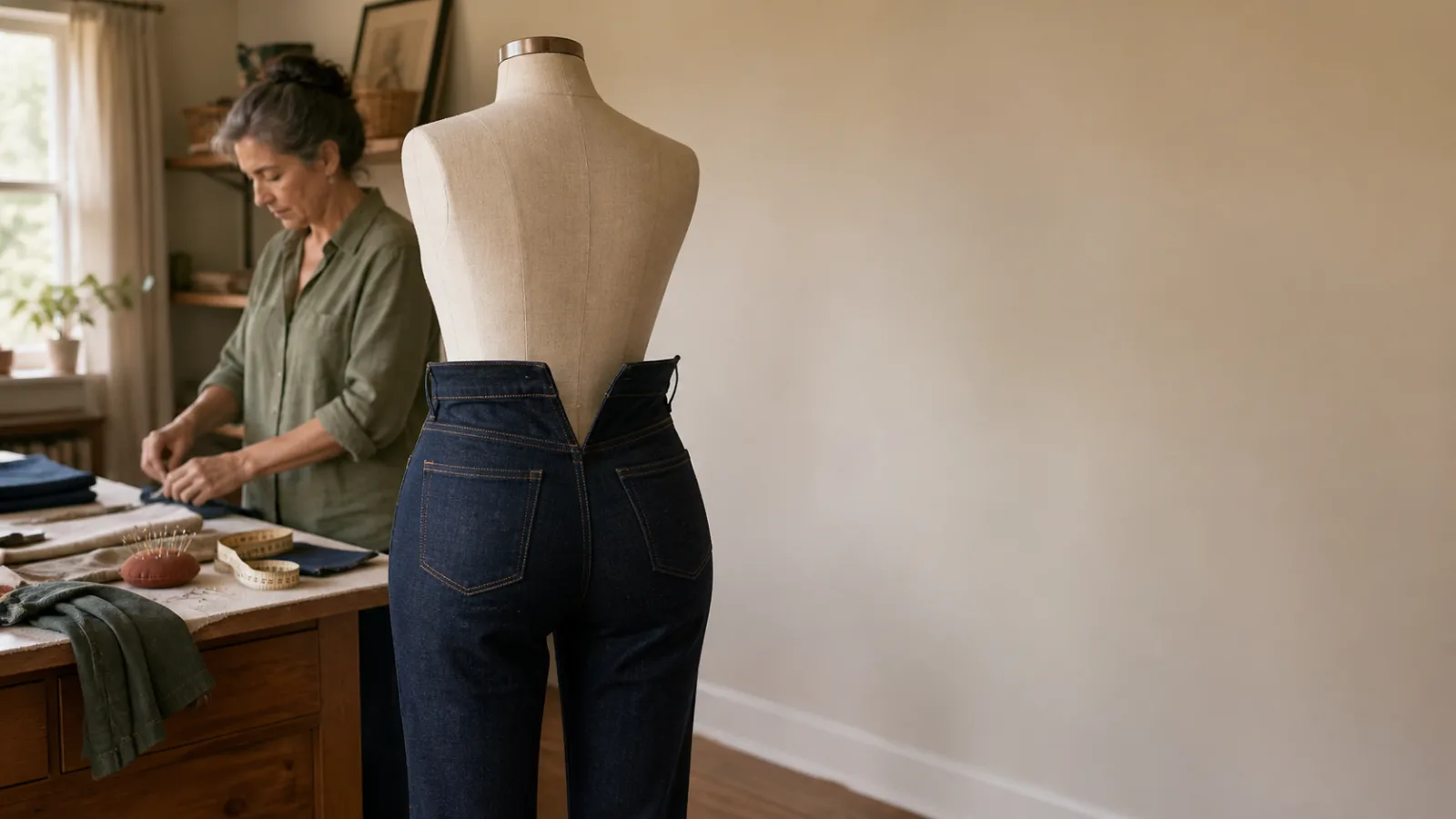
Jeans for a small waist and larger hips
Jeans gap at the waist when your hip measures more than the pattern was drafted for. Most standard women’s blocks assume a difference of around 10 inches between waist and hip; at 11 inches or more, a rigid waistband cannot close the gap in any size.
Body shapesReviewed September 5, 2026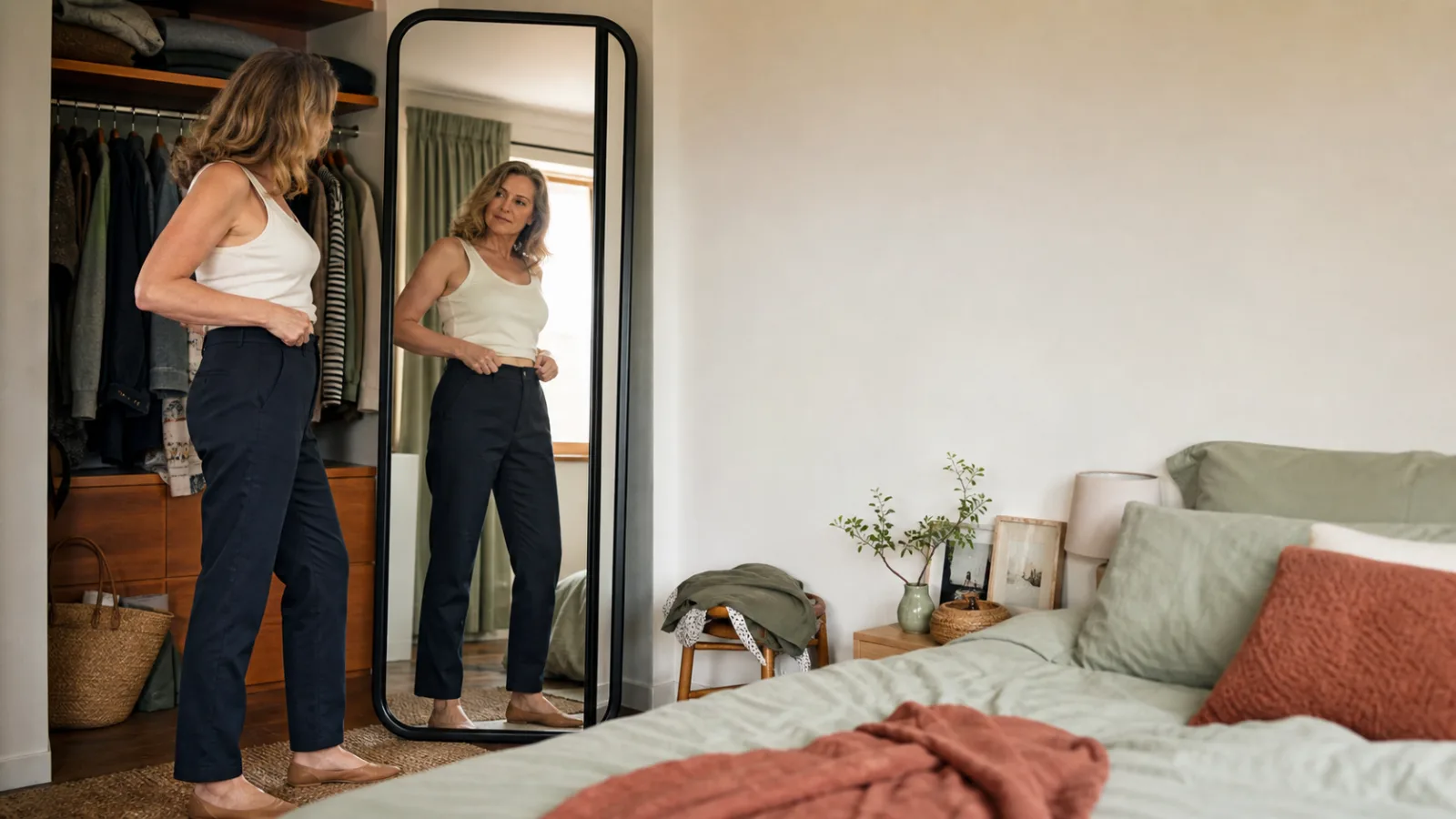
Pants for women over 50: what changes, and what to look for
After fifty, most fit problems come from three changes: the waist sits higher and carries more of the body, the torso carries weight differently through the day, and skin tolerates pressure less.
Body shapesReviewed September 5, 2026
Frequently asked questions
- What pants are best for an apple-shaped woman?
- Look for a wide knit waistband at least two inches deep, a mid rather than super-high rise, and 4 to 8% elastane so the band recovers. The combination that most often fails is a rigid button-and-zip closure at a high rise, which concentrates pressure exactly where the torso is fullest.
- Why do jeans fit my hips but gap at the waist?
- Because the pattern was drafted for a smaller waist-to-hip difference than yours. If your hip measures 11 or more inches above your waist, no size in a straight rigid waistband will close the gap. Either choose a stretch or contoured waistband, or have the waistband taken in.
- Is petite just a shorter inseam?
- On a properly drafted petite block, no: the rise, knee placement and pocket placement all move up as well. Some brands only shorten the inseam and still call it petite. Compare the rise measurement between the regular and petite listing to tell which you are looking at.
- Do leggings work for plus sizes?
- Yes, but opacity has to be checked at the specific size. The same fabric under more tension goes more translucent, so a legging that is opaque at a size 12 may not be at a size 22. Look for a gusseted crotch panel too, which reduces seam pressure and bunching.
Scope and limits
These are general fit principles drawn from garment measurements and our own testing notes. Bodies vary, and so does the same nominal size between brands. Always check the specific product page for the measurements and the evidence level behind them.