Pants for women over 50: what changes, and what to look for
Key takeaways
- The problem is rarely the size; it is the waistband, the rise and the recovery of the fabric.
- A knit or contoured waistband at least 2 inches deep spreads pressure that a narrow rigid band concentrates.
- A mid rise, roughly 9 to 10.5 inches at the front, sits at the natural waist for most bodies; a rise above 11 inches climbs into the ribs when seated.
- Fabric with 4 to 8 percent elastane recovers after a day; below 2 percent it bags at the knee and seat.
What actually changes after fifty
Three things move, and none of them is a dress size. The natural waist tends to sit a little higher and to carry more of the body, so a waistband drafted to sit low on a hip bone now crosses the fullest part of the torso. Weight redistributes through the day - the same waist is smaller at breakfast than after dinner - so a band that fits perfectly in the morning digs in by evening. And skin and connective tissue simply tolerate concentrated pressure less well than they did, so a narrow rigid band that was merely snug at forty is uncomfortable at fifty-five. A pant that works answers all three.
The waistband decides most of it
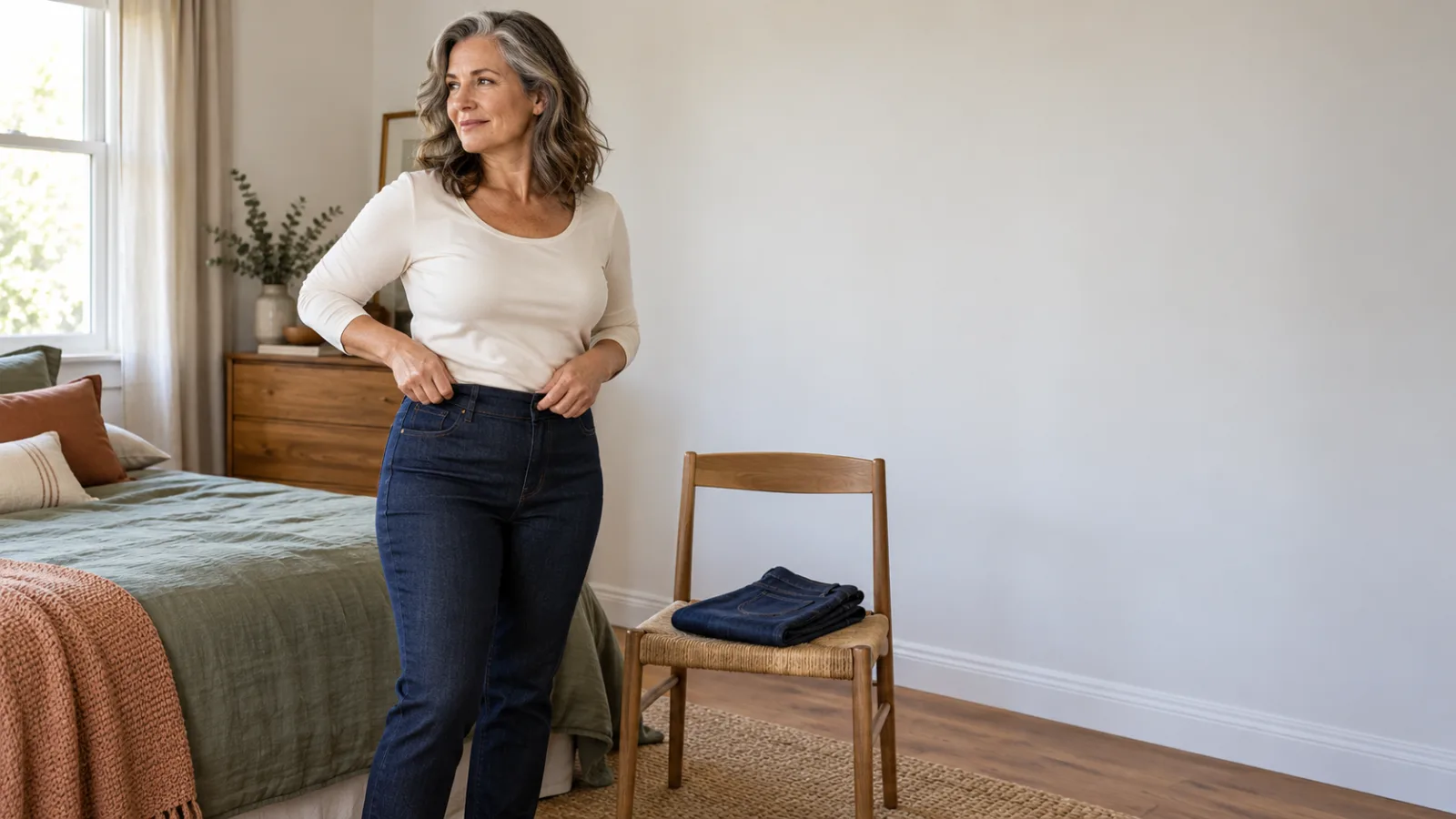
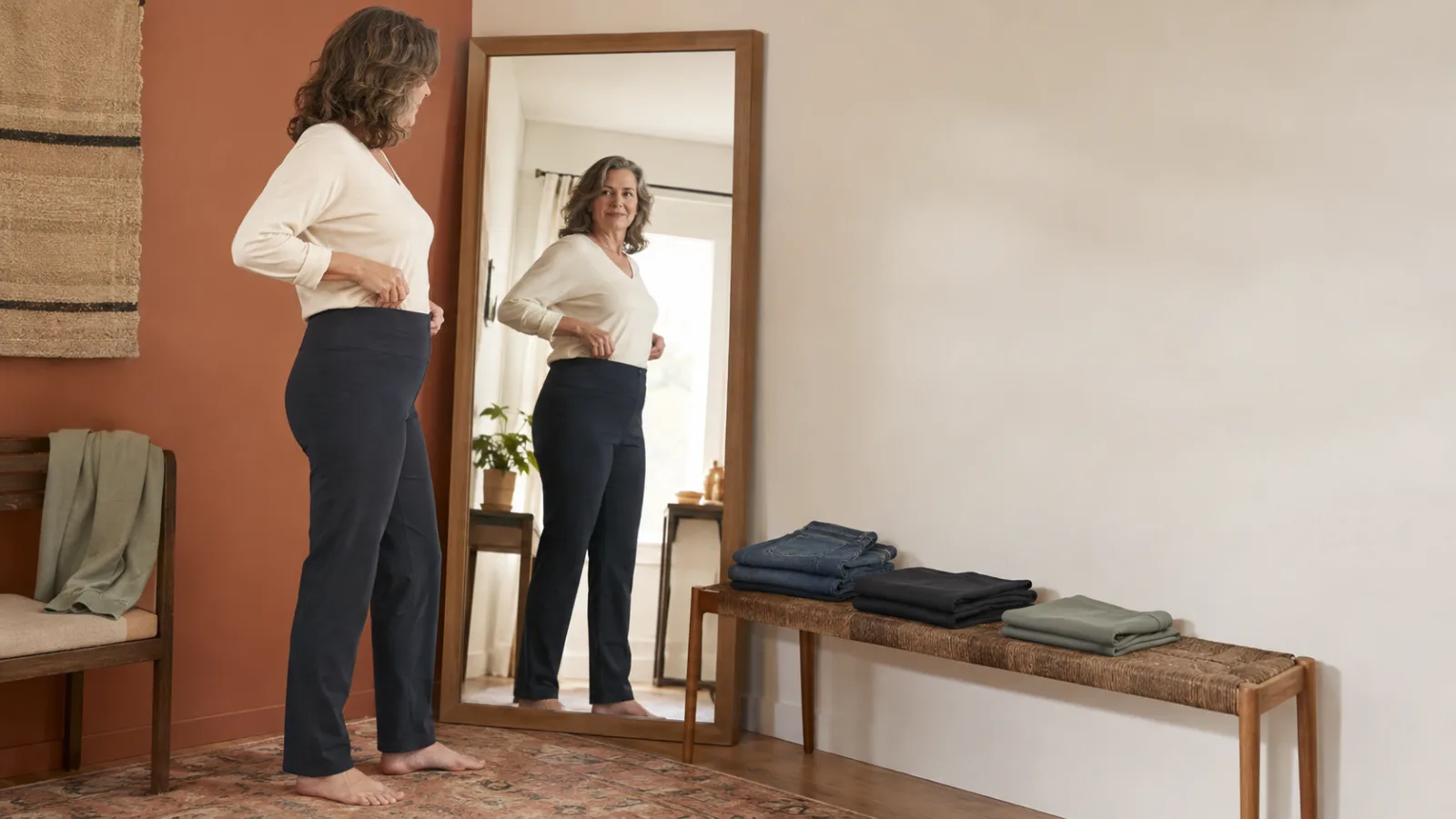
Look for a band at least 2 inches deep, ideally a knit or a contoured elastic rather than a flat woven band with a button. Depth matters because pressure is spread across the whole band; a 2 inch band puts half the pressure per inch that a one-inch band does at the same tension. Contoured bands are cut on a curve so they follow the change in shape between waist and hip instead of standing away at the back. Pull-on jeans and ponte trousers are built this way; so are a growing number of woven jeans with a hidden elastic panel behind a conventional-looking front.
The figures below come from the sources listed at the end of this guide.
| What | Value | Source |
|---|---|---|
| minimum waistband depth | 2" | JEGINS Fit body shape standard |
Choose the rise by where your waist is now
Measure the front rise on a pair that sits comfortably when you are seated: from the crotch seam straight up to the top of the waistband. Most women in this age group land in the mid-rise band of roughly 9 to 10.5 inches, which sits at the natural waist. A rise of 11 inches or more reads as high-rise on most blocks and, on a shorter torso, arrives at the ribs when you sit. If high-rise pants leave a red line under your ribs by lunchtime, the rise is the cause, not the size.
The figures below come from the sources listed at the end of this guide.
| What | Value | Source |
|---|---|---|
| mid rise front rise lower bound | 9" | JEGINS Fit body shape standard |
| mid rise front rise upper bound | 10.5" | JEGINS Fit body shape standard |
| high rise threshold | 11" | JEGINS Fit body shape standard |
Fabric that comes back
Elastane content on the label predicts the day, not the first hour. Below 2 percent, woven denim stretches out at the knee and seat and does not return; by evening the pants are a size looser than they were at breakfast. Between 4 and 8 percent the fabric recovers after sitting and still looks like denim. Above 12 percent it behaves like a legging, which is fine if that is what you want and a surprise if it is not. Cotton feels best against the skin but stretches out fastest; polyester and nylon blends hold their shape and dry quickly.
The figures below come from the sources listed at the end of this guide.
| What | Value | Source |
|---|---|---|
| elastane comfort lower bound | 4% | JEGINS Fit body shape standard |
| elastane comfort upper bound | 8% | JEGINS Fit body shape standard |
| elastane bagging threshold | 2% | JEGINS Fit body shape standard |
| elastane legging threshold | 12% | JEGINS Fit body shape standard |
Leg shape is a preference, not a rule
A straight or slightly tapered leg from a wider hip is the cut that asks least of the fit, because it skims the thigh without gripping it and leaves room for a shoe. Wide legs work when the rise sits at the waist and the fabric has some weight; on a thin knit they collapse. Skinny cuts are not off the table, but they show every inch of surplus length, so they need the inseam exactly right. None of this is about hiding anything. It is about where the fabric touches you and where it does not.
A checklist for the size chart
Before ordering, find four numbers on the product page: waistband construction, front rise, elastane percentage and inseam. If the page does not publish the rise, assume it is drafted for a younger block and expect it to sit low. If the elastane is under 2 percent, expect bagging. If the inseam is only listed as regular, check whether a petite or tall length exists before buying and hemming. A page that publishes none of these is a page to leave.
Related questions
- comfortable jeans for women over 50
- what jeans should a woman in her fifties wear
- pants for older women that fit well
- best style of pants for older women
Related guides
Frequently asked questions
- Should women over 50 wear high-rise or mid-rise pants?
- Mid rise, roughly 9 to 10.5 inches at the front, suits most bodies in this group because it sits at the natural waist. High rise, 11 inches and above, works for a long torso and tends to climb into the ribs on a short one.
- Are pull-on pants the only comfortable option after 50?
- No. What makes pull-on pants comfortable is the deep knit waistband and the recovering fabric, and both now appear in woven jeans with a hidden elastic panel and a conventional front. Look for the waistband depth and the elastane percentage rather than the closure.
- Why do my jeans fit in the morning and dig in by evening?
- The waist changes through the day, and a narrow rigid waistband has no way to follow it. A band at least 2 inches deep, in a knit or a contoured elastic, spreads the pressure and moves with you.
Sources
- Waistband - Wikipedia
Background reference for the definitions used in this guide.
Accessed September 2, 2026
- JEGINS Fit body shape standard
Our published editorial standard for the figures used in this guide.
JEGINS Fit · Accessed September 1, 2026
Scope and limits of this guide
This guide describes what we have measured or sourced. It does not cover every brand, and body measurements vary: use it as a starting point and check the specific product page for its evidence level before buying.
Fit glossary · How we test · Editorial policy · Affiliate disclosure