Fit glossary
Measurements
- Inseam
The inside leg of the garment, measured from the crotch seam straight down to the hem.
It is a garment measurement, not a body one. Measuring a pair that already fits is more reliable than measuring your own leg, because on the body you have to guess where the crotch seam would sit. A full-length inseam sits at roughly 45 percent of height, which is the fastest way to sanity-check a listing.
- Outseam
The outside leg, measured from the top of the waistband down the side seam to the hem.
Outseam equals inseam plus rise, so two pairs with the same outseam can sit at completely different heights on you. When a listing gives only the outseam, ask for the rise before you read anything into the length.
- Front rise
The distance from the crotch seam up to the top of the waistband at the centre front.
This is the number that decides where the waistband lands on you. A mid rise starts at a front rise of roughly 9 inches and runs up to roughly 10.5 inches; a front rise of 11 inches or more is a high rise on most women’s blocks. Rise, not the size on the tag, is what makes a pair sit at the navel or below it.
- Back rise
The same measurement taken at the centre back, from crotch seam to waistband.
Back rise is always longer than front rise, because sitting needs the extra length. It usually runs 4–5 inches longer: a conventional block pairs a 10 inch front rise with a 15 inch back rise. A pair that gaps at the back when you stand and pulls down when you sit is short in the back rise, and no size change fixes it.
- Natural waist
The narrowest part of the torso, usually just above the navel and level with the bottom of the ribcage.
Bend sideways and the crease that forms is your natural waist. Charts measure there even when the garment is designed to sit lower, so measuring at the hip bone instead is the most common reason a chart and a body disagree. Measure standing, without pulling the tape tight, and note that sitting increases the measurement by 1–2 inches for most people.
How to measure your waist for pantsWhere the waistband digs in
- Hip measurement
The circumference at the fullest part of the seat, taken level all the way round.
The hip is measured 7–9 inches below the natural waist. If you carry weight at the upper thigh, take a second hip measurement 2 inches lower, because that is often the point the garment actually has to clear.
How to read a jeans size chartJeans for a small waist and larger hips
- Waist-to-hip difference
Your hip measurement minus your waist measurement, in inches.
It predicts waistband behaviour better than either number on its own. Most standard women’s blocks are drafted for a difference of about 10 inches; a difference of 11 inches or more is where rigid waistbands reliably gap, and at 6 inches or less the waistband presses rather than gaps.
Jeans that fit the hips and gap at the waistPants for apple-shaped women
- Flat measurement
A measurement taken across a garment lying flat, so it is half the circumference.
Flat measurements have to be doubled before they can be compared with a body measurement: a flat garment waist of 16 inches doubles to a 32 inch circumference. Listings mix the two conventions without saying which they used, which is where a size looks two sizes off.
- Leg opening
The width of the hem, measured flat across the bottom of the leg.
It is the difference between a straight leg and a taper on a chart that calls both "slim". Read it together with the knee measurement: a narrow opening under a wide knee is a taper, and a taper is what makes surplus length stack at the ankle instead of hanging.
Cut and construction
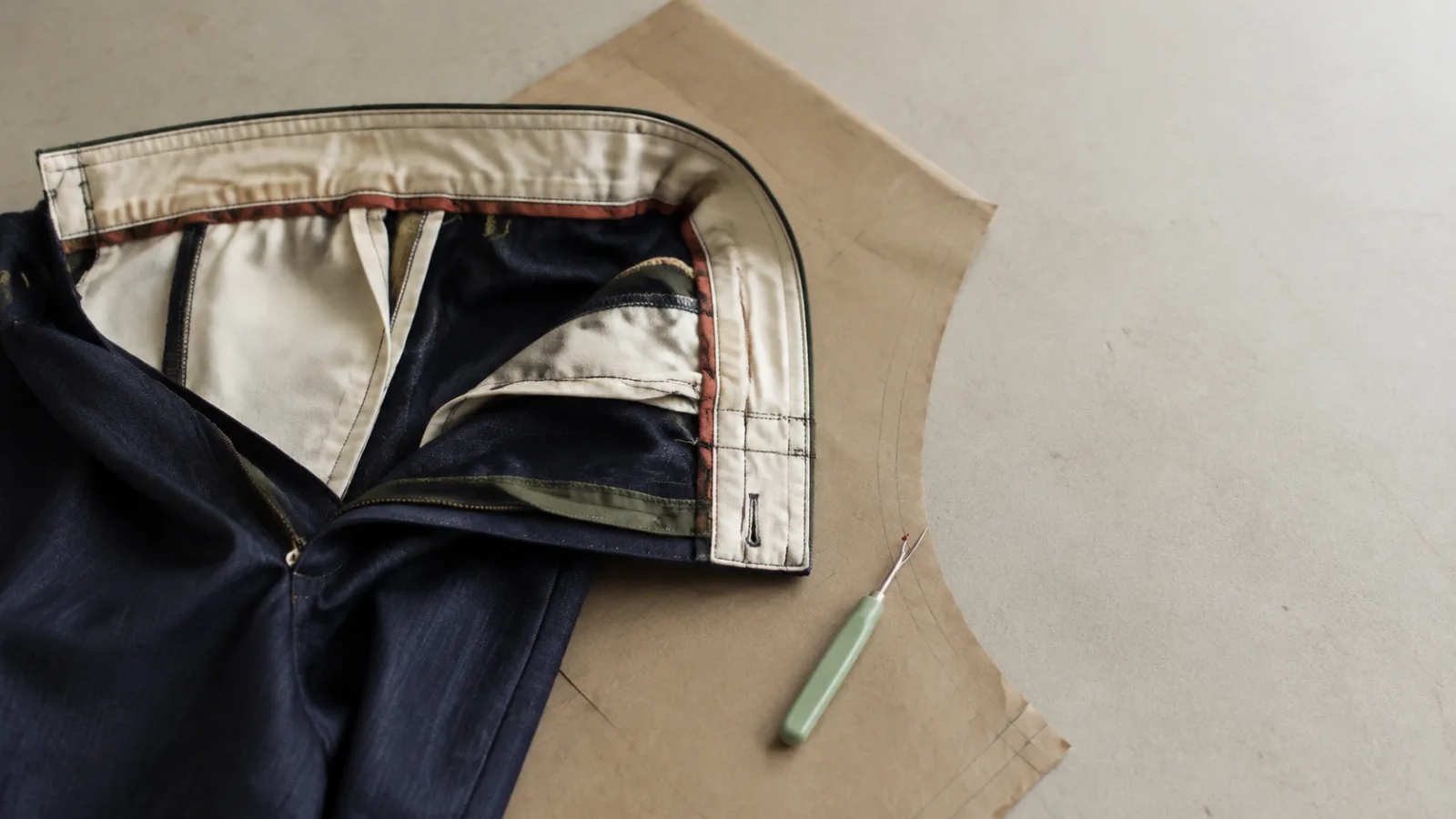
- Block
The base pattern a brand grades every size from — the shape of the body it assumes.
Two brands can print identical waist and hip numbers and still fit differently, because their blocks distribute those numbers differently. This is why "what size am I" has no answer across brands, and why the measurements on the chart matter more than the letter or number on the tag.
How to read a jeans size chartPetite and short are not the same thing
- Grading
The rule a brand uses to scale one block up and down through its size range.
Most ranges grade the waist and hip together at a fixed ratio, so going up a size to clear the hip also adds waist you did not need. Grading is also why a plus size and a petite size drawn from the same block can both miss: the range was scaled, not redrawn.
Pull-on jeans for plus-size petite womenJeans for a small waist and larger hips
- Waistband depth
How tall the waistband is, from its top edge to the seam below it.
Depth decides whether a band grips or cuts. A waistband at least 2 inches deep spreads pressure over hours seated; a narrower band under the same tension digs in, and loosened enough to stop digging in it slides.
- Contour waistband
A waistband cut on a curve so it follows the body inward above the hip, rather than as a straight strip.
A straight band has to be as wide as the widest point it crosses, which is what leaves the gap at the back on a defined waist. A contoured band is the structural answer to that gap, and an elasticated one is the elastic answer.
- Pull-on
A pair with no button or zip, held up by an elasticated or knit waistband.
Because the band replaces the closure, snug at the band is correct and loose is wrong. Buy pull-on pairs for the hip and the rise: the band stretches, the rise does not.
How pull-on jeans should fitJeggings and pull-on jeans compared
- Taper
A leg that narrows from the knee to the hem.
A taper holds surplus length in place instead of letting it hang, so length that would be invisible on a straight leg becomes a stack of folds above the shoe. One inch of excess inseam is visible as stacking on a slim leg.
Fabric
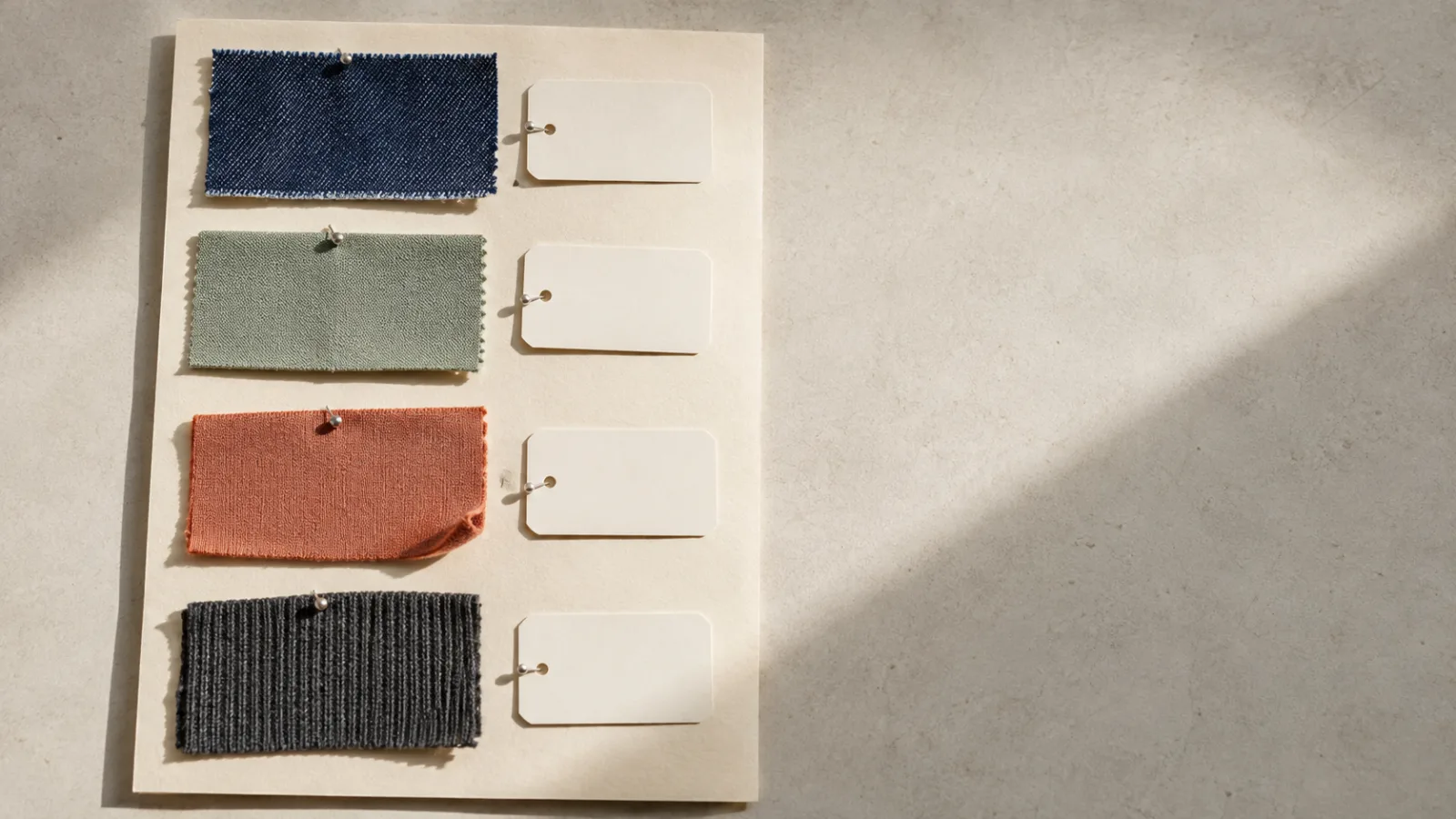
- Elastane
The stretch fibre in a blend, sold as spandex in the United States and under the Lycra brand name.
The percentage on the label is the single most useful number on a garment. At 0–1 percent a jean is effectively rigid; comfort stretch starts at 2 percent and runs to 3 percent; from 4 to 8 percent the fabric recovers after a day of sitting; above roughly 12 percent it behaves like a legging.
What the elastane percentage meansHow much elastane jeans should have
- Recovery
Whether a stretched fabric returns to its shape, as distinct from how far it stretches.
Stretch and recovery are separate properties, and recovery is the one you notice by evening. From 4 percent elastane recovery is strong, and up to 8 percent it stays strong through a full day. Below 2 percent elastane the knee gives and stays given.
Why jeans sag after wearingStretch jeans and traditional denim
- Rigid denim
Denim with little or no elastane, which does not stretch to fit.
Rigid denim has 0–1 percent elastane. It holds its shape longest of any denim because there is no elastic to fatigue, and it never gives: it has to fit at the fitting-room stage, at the widest point it crosses.
- Ponte
A dense double knit, usually a polyester, rayon and elastane blend, used for knit trousers.
It is thick enough to hold a clean line and resist creasing, which is why it reads as a trouser rather than a legging while still being a knit. That density is also what makes it warmer than a woven trouser of the same weight.
Ponte pants and woven trousers for workPonte pants and leggings compared
- Fabric weight
How much a square metre of the fabric weighs, quoted in GSM, or how much a square yard of denim weighs, quoted in ounces.
Weight is the closest thing to a published opacity figure, because a heavier knit puts more yarn between the light and the skin. It is not a guarantee on its own — colour and how far the fabric has to stretch over you both change the result — but between two otherwise similar pairs, the heavier one is the safer one.
Fabric weight and legging opacityHow to test legging opacity
- Opacity
Whether the fabric stays solid when it is stretched over the body.
Opacity is a property of the fabric under tension, not at rest, so the test that matters is done bent over in daylight rather than held up to a window. A pair that passes flat can still fail across the seat, where the knit is stretched furthest.
How to test legging opacityWhy leggings go see-through when you bend
- Pilling
The small balls of fibre that form where a fabric rubs against itself or against another surface.
On pants it appears first between the thighs, because that is where the friction is. It is a wear pattern rather than a fault, and it comes sooner on softer, loosely spun fibres than on tightly spun ones.
Why leggings pill between the thighsHow to wash stretch jeans
- Cotton
The natural fibre most denim and chino is built on.
Cotton breathes and takes dye well, and it has no recovery of its own: 100 percent cotton is the reference for a pure cotton fabric, and under 2 percent elastane it stretches at the knee and seat and stays stretched. It is also slow to dry, which is what rules it out for travel.
Cotton and polyester pants comparedTravel pants and regular pants
- Polyester
The synthetic fibre used where a fabric has to dry fast and hold a crease.
It dries faster than cotton, resists creasing and holds colour, and it holds odour more readily. In a trouser it usually appears as the base of a blend rather than on its own.
Cotton and polyester pants comparedTravel pants and regular pants
Sizing systems
- Petite
A size range redrawn for a shorter frame, not the same garment shortened at the hem.
Petite ranges generally target heights under 5 foot 4 inches, which is 64 inches, and a petite full-length inseam usually runs 27–29 inches. The rise and the knee move up with the length, which is the part a hem alteration cannot reproduce.
Petite and short are not the same thingPants for a petite, short torso
- Regular length
The default length a brand cuts when a listing names no length at all.
A regular-length inseam usually runs 30–32 inches. At 5 foot 2 inches that is 3–5 inches too long, which is why an unlabelled listing is a length gamble rather than a neutral choice.
- Tall length
A range cut longer in the leg and, on a well-drafted range, in the rise as well.
A tall-length inseam usually runs 33–35 inches. A tall range that adds length only at the hem still pulls the crotch and the knee out of position, so check the rise before you check the inseam.
- Cropped
A length deliberately cut to end above the ankle.
On a regular block a cropped listing usually runs a 26–28 inch inseam, which lands at full length on a shorter frame. Cropped is a length label, not a length: read the inseam.
Petite and short are not the same thingInseam for a 5 foot 2 woman
- Size chart
The table mapping a brand’s size labels to body or garment measurements in inches or centimetres.
Read which of the two it lists before you read the numbers, then compare its waist-to-hip difference with yours: if the chart’s difference is smaller than yours by 2 inches or more, expect a gap at the waist when the hip fits.
How to read a jeans size chartHow to measure your waist for pants
- Vanity sizing
The practice of attaching a smaller size label to a garment cut to larger measurements.
It is why the same number covers different bodies across brands and across decades. The defence is simple: ignore the label and read the chart, which is measured in inches and cannot drift.
- "True to size"
A review phrase meaning the garment matched the size the reviewer expected from other brands.
It describes the reviewer’s reference point, not the garment, so it carries no information unless you know their usual brand and their measurements. We do not use it as a finding: our pages report the measurements and the chart, and let you compare them with yours.
Fit problems
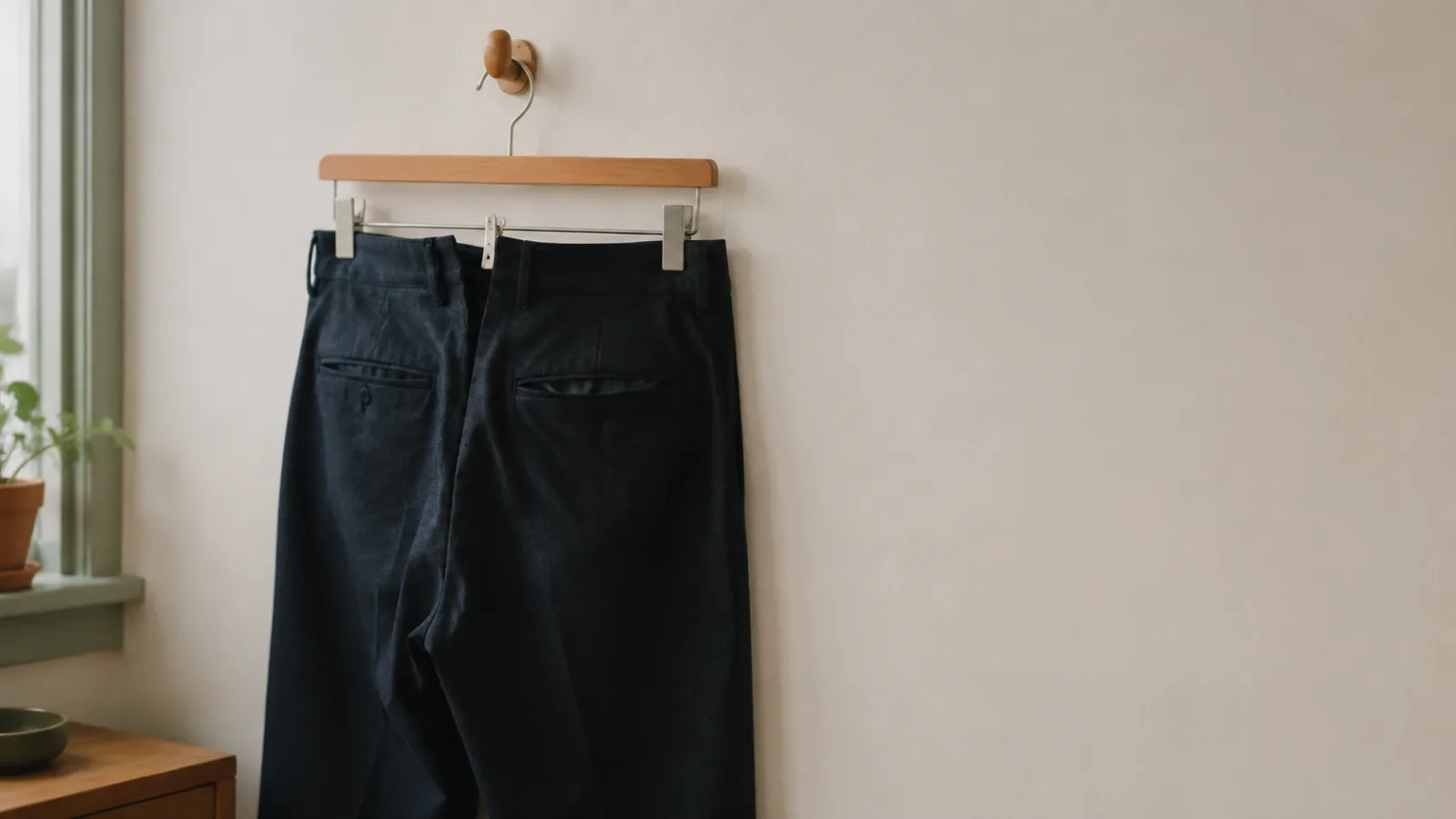
- Waist gap
The space that stands open at the back of the waistband when the pair fits at the hip.
It is a drafting mismatch rather than a wrong size: a straight band has to clear the hip, so anything narrower than the hip leaves a gap. A difference of 11 inches or more between hip and waist is where rigid waistbands reliably gap.
Jeans that fit the hips and gap at the waistJeans for a small waist and larger hips
- Bagging
Fabric that has stretched at the knee or seat during wear and has not returned when you stand.
It is failed recovery, not stretch. A mostly cotton pair with 2 percent elastane bags by evening; from 4 percent elastane the fabric recovers after a day of sitting.
Why jeans sag after wearingHow much elastane jeans should have
- Rolling
A waistband that folds over on itself during wear.
The band rolls when it is too narrow for the tension it is under, or when it is sitting where the body is still widening. A knit needs a waistband at least 2 inches deep to stay up without rolling.
- Stacking
Folds of surplus length gathering above the shoe instead of hanging.
It is a length problem made visible by the leg shape: one inch of excess inseam is visible as stacking on a slim leg, while the same inch disappears on a straight one.
When pants bunch at the anklesHow to measure inseam for women
- Short torso
A frame where the distance from ribcage to hip bone is small, independent of overall height.
Torso length decides how a rise behaves on you, and it does not follow height: a tall woman can have a short torso and a petite woman a long one. On a short torso the natural waist sits close to the ribs, which is what makes a high rise press.
How to tell whether you have a short torsoHigh rise or mid rise for a short torso
Every figure quoted here is one of our published standards, with the reasoning on the linked guide and the source on that guide’s evidence list. If a definition and a guide ever disagree, the guide is the one that was reviewed — tell us and we will fix the entry.