Jeans for a small waist and larger hips
Key takeaways
- A waist-to-hip difference of 11 inches or more is where a rigid waistband gaps regardless of size.
- Sizing down closes the waist and stops the jeans going over the hip; the answer is the block, not the size.
- Curvy-fit ranges are drafted for a larger difference; the label is worth checking on the size chart.
- A knit or contoured waistband follows the curve; a flat woven band stands away from it.
Why the gap exists
A pair of jeans is cut to one waist and one hip measurement per size, with a fixed difference between them. On most standard women’s blocks that difference is about 10 inches. If your own difference is larger, the waistband is too big for your waist in every size that fits your hip, and the surplus stands away at the back. This is not a fault in your body or in the jeans. It is two different geometries, and the size chart cannot reconcile them by moving up or down a size.
The figures below come from the sources listed at the end of this guide.
| What | Value | Source |
|---|---|---|
| waist gap threshold | 11" | JEGINS Fit body shape standard |
Read the size chart for the difference, not the size
Take your waist and hip measurements, subtract, and write the difference down. Then find the same difference on the brand’s chart: subtract the waist column from the hip column for the size that matches your hip. If the chart’s difference is smaller than yours by 2 inches or more, expect a gap. Some brands publish a curvy fit whose chart shows a larger difference; that is the number to compare, not the word curvy on the label.
Waistbands that follow the curve
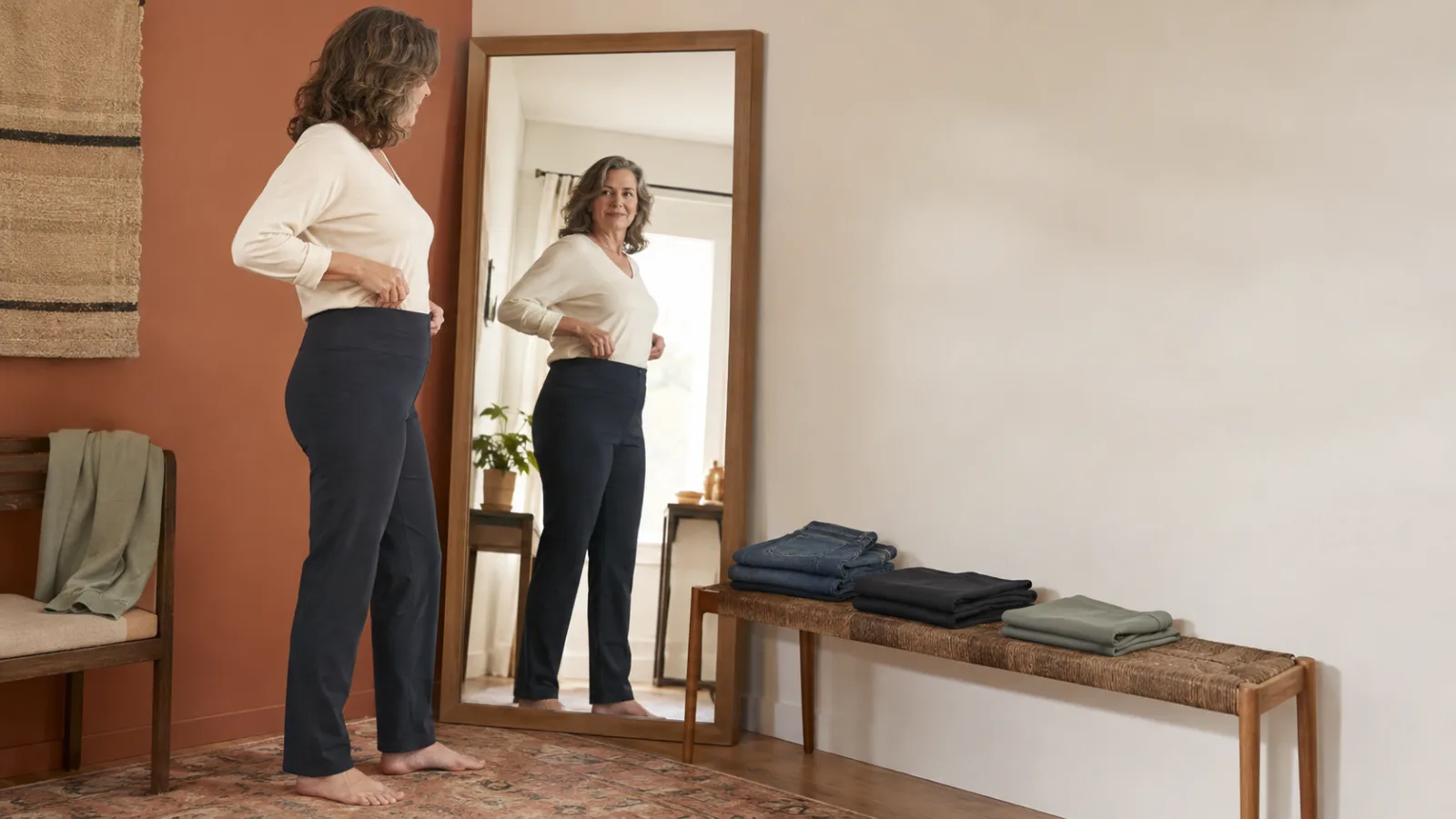
A contoured waistband is cut as a curve rather than a straight strip, so it rises at the back and sits flat against a body that narrows above the hip. A knit or elastic waistband at least 2 inches deep does the same job by stretching over the hip and relaxing at the waist. Both are common in pull-on jeans and jeggings and increasingly in woven jeans with a hidden elastic panel behind a conventional front. A flat, straight-cut woven band with a single button is the construction most likely to gap.
The figures below come from the sources listed at the end of this guide.
| What | Value | Source |
|---|---|---|
| minimum waistband depth | 2" | JEGINS Fit body shape standard |
Stretch helps, but only so far
Fabric with 4 to 8 percent elastane lets a pair stretch over the hip and recover at the waist, which narrows the gap without closing it. It cannot make up an 11 inch difference on its own. Treat elastane as the thing that makes the right block comfortable rather than the thing that fixes the wrong one.
The figures below come from the sources listed at the end of this guide.
| What | Value | Source |
|---|---|---|
| elastane comfort lower bound | 4% | JEGINS Fit body shape standard |
| elastane comfort upper bound | 8% | JEGINS Fit body shape standard |
When to involve a tailor
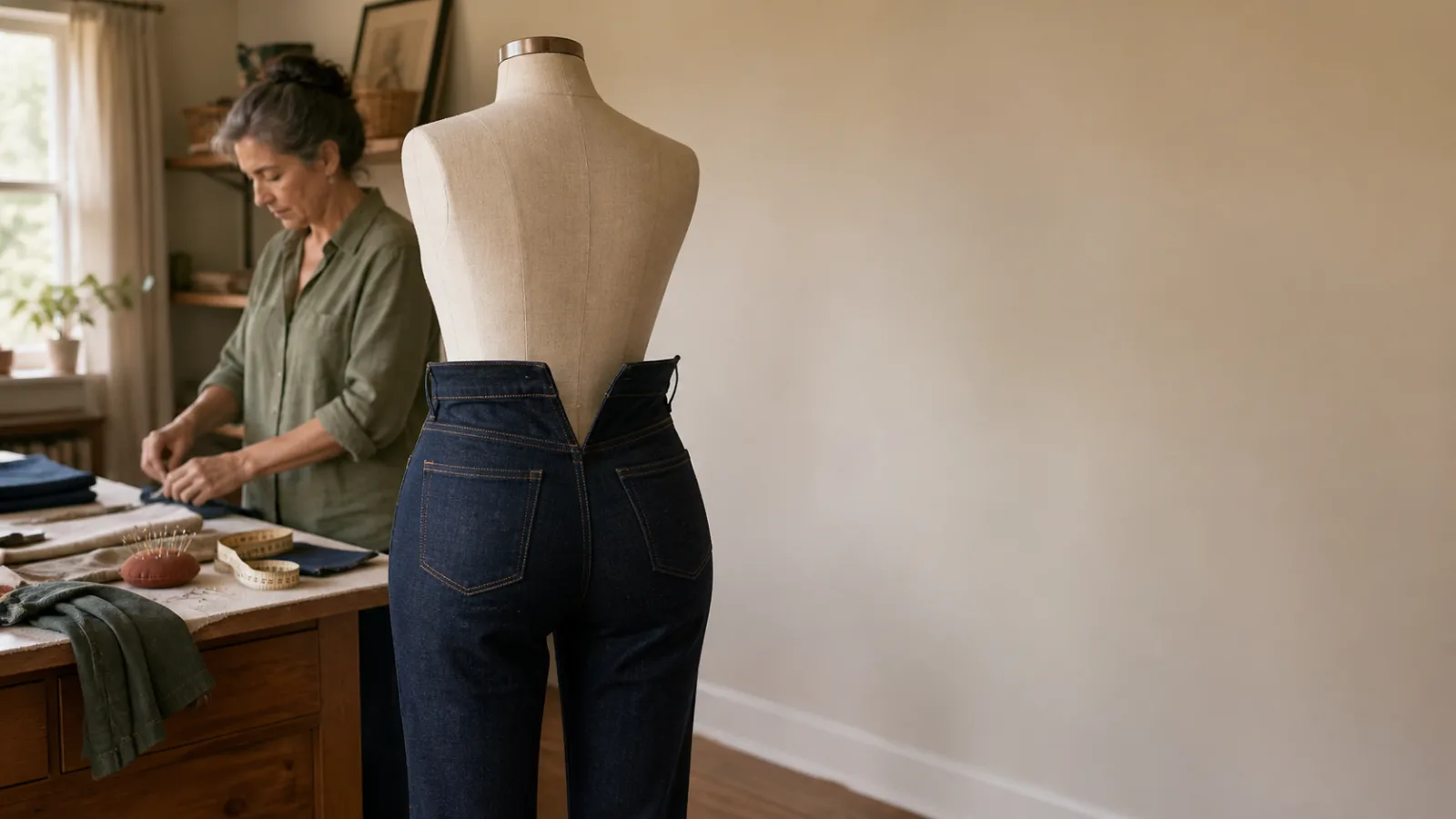
If you have found a pair whose hip, rise and leg are right and only the waistband gaps, taking in the waistband is a routine alteration. The tailor opens the band at the centre back, removes the surplus and re-attaches it. It costs a fraction of the return shipping on three wrong sizes and gives you a pair that fits in a way no size on the chart could.
Related questions
- jeans that fit hips but gap at waist
- curvy fit jeans explained
- jeans for pear shaped women
- how to stop jeans gaping at the back
Related guides
Frequently asked questions
- Should I size down to stop the waist gap?
- No. Sizing down closes the waist by making the hip too tight, and the pair will not go on or will pull across the seat. Choose a contoured or stretch waistband, a curvy-fit block, or have the waistband taken in.
- How much waist-to-hip difference causes a gap?
- On most standard blocks, a difference of 11 inches or more between waist and hip is where a rigid waistband gaps regardless of size.
- Does curvy fit actually mean anything?
- It should mean the block is drafted for a larger waist-to-hip difference. Check the size chart: subtract waist from hip for your size and compare it to the same subtraction on the regular fit. If the numbers are the same, the label is marketing.
Sources
- JEGINS Fit body shape standard
Our published editorial standard for the figures used in this guide.
JEGINS Fit · Accessed September 1, 2026
- Waist–hip ratio - Wikipedia
Background reference for the definitions used in this guide.
Accessed September 1, 2026
Scope and limits of this guide
This guide describes what we have measured or sourced. It does not cover every brand, and body measurements vary: use it as a starting point and check the specific product page for its evidence level before buying.
Fit glossary · How we test · Editorial policy · Affiliate disclosure