What the fabric content tells you before you buy
Key takeaways
- Stretch and recovery are different properties. A fabric can have plenty of one and little of the other.
- Opacity is a function of fabric weight and how far the fabric has to stretch on your body, not of the brand.
- Ponte is a double knit: it holds structure, resists wrinkling and is the usual answer for office wear that has to feel like a legging.
- For a long flight, breathability and recovery matter more than compression. Firm compression is uncomfortable after four hours.
Last reviewed September 1, 2026 by JEGINS Fit editorial. Reviewed on a six-month cycle.
How much elastane should a pair of jeans have?
Elastane (also sold as spandex or Lycra) is the fibre that provides stretch and, more importantly, the pull back to shape. The percentage on the label is a reliable predictor of behaviour.
| Elastane | Behaviour | Best for |
|---|---|---|
| 0-1% | Rigid or barely stretchy; bags at knee and seat within a day | Traditional denim look, if you accept the bagging |
| 2-3% | Comfort stretch; moves with you, recovers moderately | Everyday jeans that should still read as denim |
| 4-8% | Strong stretch with good recovery | Pull-on jeans, jeggings, travel, long wear days |
| 10-20% | Legging behaviour; high stretch, compression possible | Leggings, workout, layering |
The trade-off: more elastane means better recovery but usually less breathability and a shinier surface. In the 4-8% band, most people get the comfort without the garment looking like activewear.
What the base fibre changes
- Cotton. Breathable, absorbs moisture, and stretches out as you wear it. Cotton-rich stretch denim gives the most authentic denim look and the most bagging.
- Polyester. Holds shape, dries fast, resists wrinkles. Less breathable, and it holds odour more than cotton. Most travel pants are polyester-led for exactly these reasons.
- Nylon (polyamide). Stronger and softer than polyester with better abrasion resistance, which is why premium leggings use it. More expensive.
- Rayon, viscose, modal, Tencel. Very soft with excellent drape. They are weaker when wet, and they thin under stretch sooner, which is a common cause of unexpected translucency.
Categories, by construction rather than marketing
| Category | What it actually is | Typical waistband |
|---|---|---|
| Jeggings | A knit fabric printed or woven to read as denim; legging construction | Elastic or knit, often with faux front pockets |
| Pull-on jeans | Woven stretch denim with the fly and button removed | Full elastic or elastic back only |
| Stretch jeans | Woven denim with 1-3% elastane and a conventional closure | Button and zip |
| Ponte pants | Double-knit fabric, thick and stable, holds a crease-free line | Wide knit or elastic |
| Leggings | Single or double-layer knit, high elastane | Wide knit band, sometimes with a drawcord |
| Travel pants | Woven technical fabric, wrinkle-resistant, fast-drying | Elastic or drawstring, usually with real pockets |
The distinction that matters most in practice is knit versus woven. Knits stretch in all directions and are forgiving of a waist-to-hip mismatch; wovens hold their shape and need the pattern to match your proportions.
Predicting opacity
Three factors decide whether a fabric stays opaque under tension: fabric weight (heavier is more opaque), the amount of stretch required on your body (the closer to its limit, the thinner it gets), and colour (black is the most forgiving; light and heathered colours the least).
A brand claim of “squat proof” is not verifiable from a product page. We record an opacity level per product, and we only use testing language when an opacity test was recorded in a session. See how we test.
Choosing by what you will do in them
- Long flight. Mid-weight knit, light compression at most, breathable, with a wide soft waistband. Firm compression is uncomfortable past about four hours.
- Office. Ponte or a structured woven. Look for wrinkle resistance and a matte surface; high-elastane knits read as activewear under office lighting.
- Walking and travel. Woven technical fabric with 4-8% elastane and real pockets. Fast drying matters more than softness.
- Cold weather. Fleece lining adds warmth but also bulk at the waistband. Check the rise measurement, because lined pants often feel a size tighter at the waist than the same brand unlined.
Guides in this section
Each answers one question and names the date a human last checked it.
How to compare a ponte fabric's stretch with a legging
The JEGINS Fit fabric standard puts leggings usually at 10 percent elastane or more, and usually at up to 20 percent elastane. That range is the reference point.
FabricsReviewed October 7, 2026
What elastane content suits pants for a long flight?
On the JEGINS Fit fabric standard, the band from 4 percent to 8 percent elastane is the one to look at for a long flight. From 4 percent elastane the fabric recovers after a day, and up to 8 percent it still looks like denim.
FabricsReviewed October 2, 2026
What fabric works best for long flights
A knit fabric with 4 to 8 percent elastane and a waistband at least 2 inches deep is the general standard for sustained sitting comfort, which is exactly the condition a long flight puts a garment under for hours at a stretch.
FabricsReviewed September 6, 2026
Do fleece-lined pants run small?
Fleece-lined pants often fit snugger than the same size in an unlined style, because the brushed lining adds bulk inside the garment that takes up some of the room the outer shell's measurements suggest is available.
FabricsReviewed September 6, 2026
What Tencel and modal do in stretch pants
Tencel and modal are both regenerated cellulose fibres — made by dissolving wood pulp and reforming it into thread — which puts them between cotton and polyester on feel: softer and more fluid than cotton, but still a plant-derived fibre rather than a…
FabricsReviewed September 5, 2026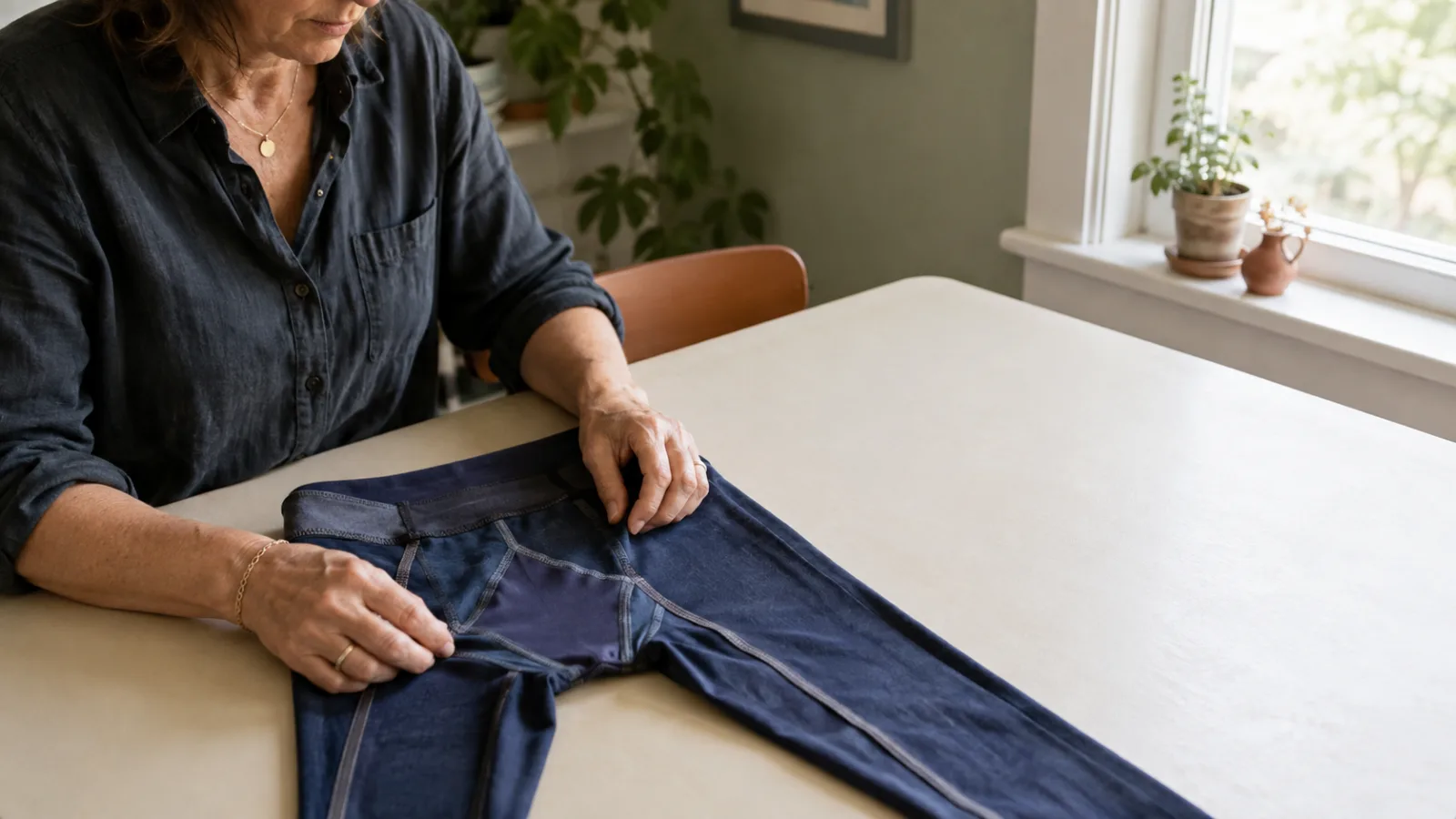
What a gusseted crotch is and why it matters
A gusset is a small extra piece of fabric — usually diamond or triangle shaped — set into the crotch seam where the front and back panels meet.
FabricsReviewed September 5, 2026
What ponte fabric is and where it works
Ponte is a double-knit fabric — two layers of interlocking loops knitted together — which is what gives it more body than a single-knit legging fabric while still stretching.
FabricsReviewed September 5, 2026
Cotton vs polyester pants: which is more comfortable, and when
Cotton feels better against the skin and breathes, which is why it is more comfortable for the first hour and in heat. Polyester holds its shape, sheds creases and dries fast, which is why it is more comfortable at the end of a long day and after a wash.
FabricsReviewed September 5, 2026
How much elastane jeans should have
For everyday jeans that should still look like denim, 2 to 3 percent elastane gives comfort stretch. For pull-on jeans, jeggings or long wear days, 4 to 8 percent recovers much better and resists bagging.
FabricsReviewed September 5, 2026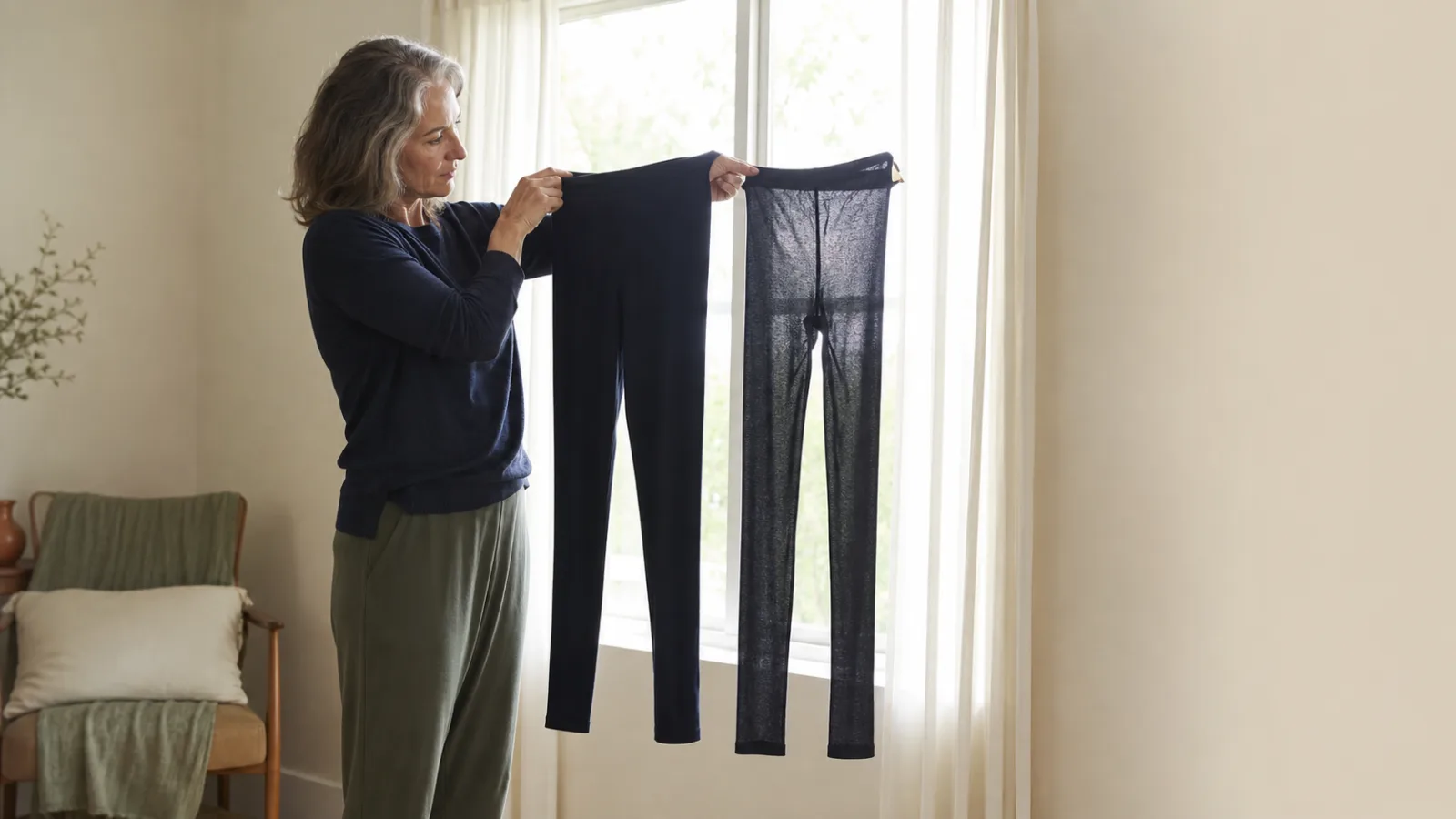
What makes leggings opaque: weight, knit and colour
A legging stays opaque when the knit is dense and heavy enough that stretching it over the seat does not open the loops. Three things decide that: fabric weight, knit density and colour.
FabricsReviewed September 5, 2026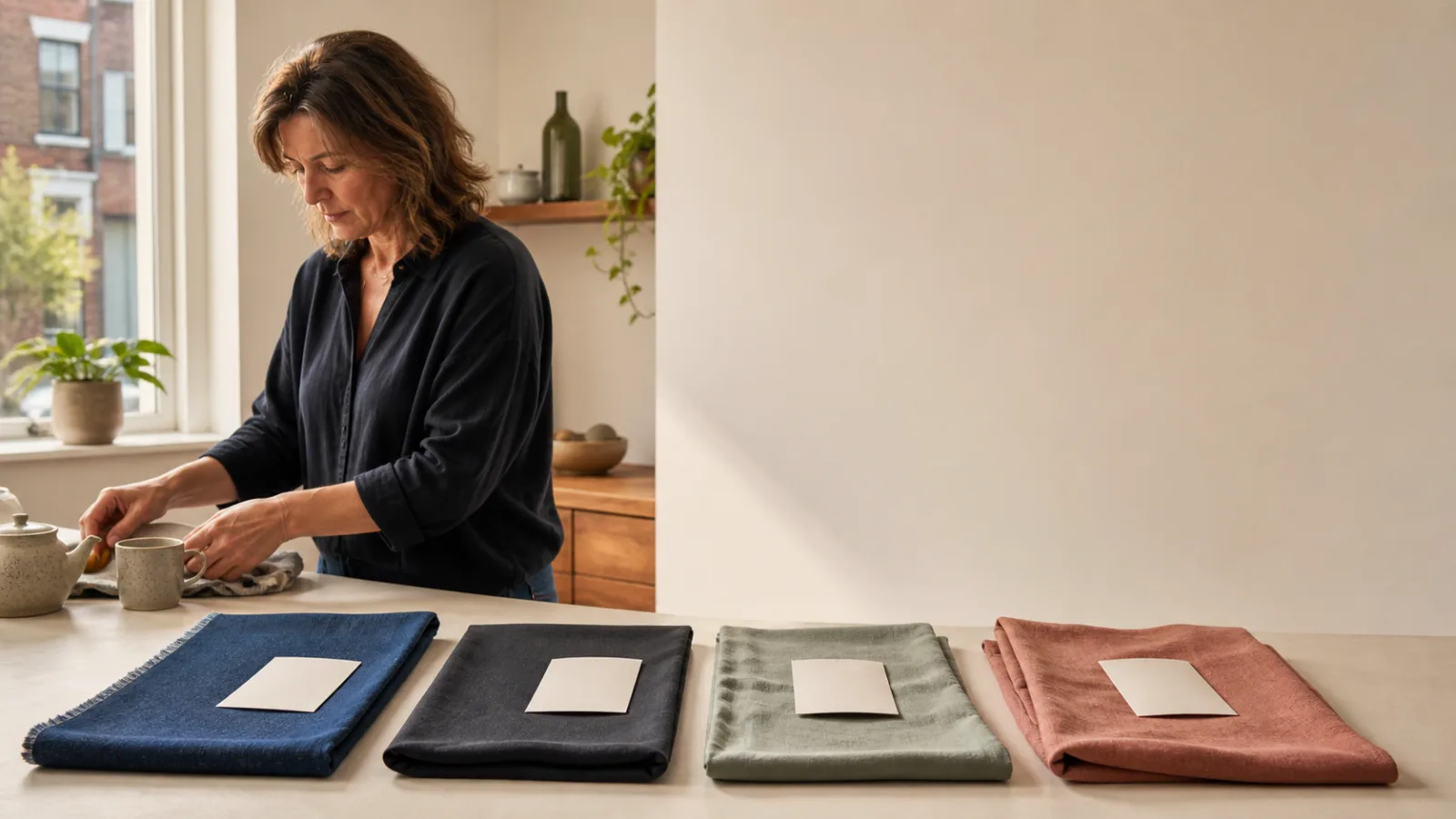
Elastane percentage explained: what each band on the label means
The elastane percentage predicts stretch and, more importantly, recovery. At 0 to 1 percent the fabric is rigid and moulds slowly. At 2 to 3 percent it gives a little and still looks like denim.
FabricsReviewed September 5, 2026
Frequently asked questions
- How much elastane should jeans have?
- For everyday jeans that still look like denim, 2 to 3% gives comfort stretch. For pull-on jeans, jeggings or long wear days, 4 to 8% recovers much better and resists bagging. Below 2%, expect visible bagging at the knee and seat by the end of the day.
- What is the difference between jeggings and pull-on jeans?
- Jeggings are a knit fabric made to look like denim, built like a legging, usually with faux front pockets. Pull-on jeans are woven stretch denim with the fly and button replaced by an elastic waistband. Pull-on jeans look more like conventional jeans; jeggings feel closer to leggings.
- Are ponte pants the same as leggings?
- No. Ponte is a thick double-knit that holds structure and a clean line, which is why it works for office wear. Leggings are a lighter, higher-stretch knit that follows the leg closely. Ponte is far more opaque at the same colour.
- Which fabric is best for a long flight?
- A breathable mid-weight knit with a wide soft waistband and no more than light compression. Firm compression becomes uncomfortable after a few hours in a seated position, and a rigid waistband is the most common complaint on long flights.
Scope and limits
These are general fit principles drawn from garment measurements and our own testing notes. Bodies vary, and so does the same nominal size between brands. Always check the specific product page for the measurements and the evidence level behind them.