What makes leggings opaque: weight, knit and colour
Key takeaways
- Opacity is weight and knit density, not elastane percentage or brand.
- Dark solids hide what a knit lets through; pale colours and heathers show it.
- A light knit stretched over the seat opens its loops. Stretch is where sheerness happens.
- Test in daylight, squatting, before the tags come off.
Why a knit goes see-through
A knit is loops of yarn. At rest the loops overlap and the fabric is opaque. Stretched over the seat in a squat, the loops pull apart and light passes between them. Whether enough passes to see through depends on how much yarn there is per square inch - the weight - and how tightly the loops are packed - the density. A heavy, dense knit keeps its loops overlapping under stretch. A light, open one does not.
Weight and density
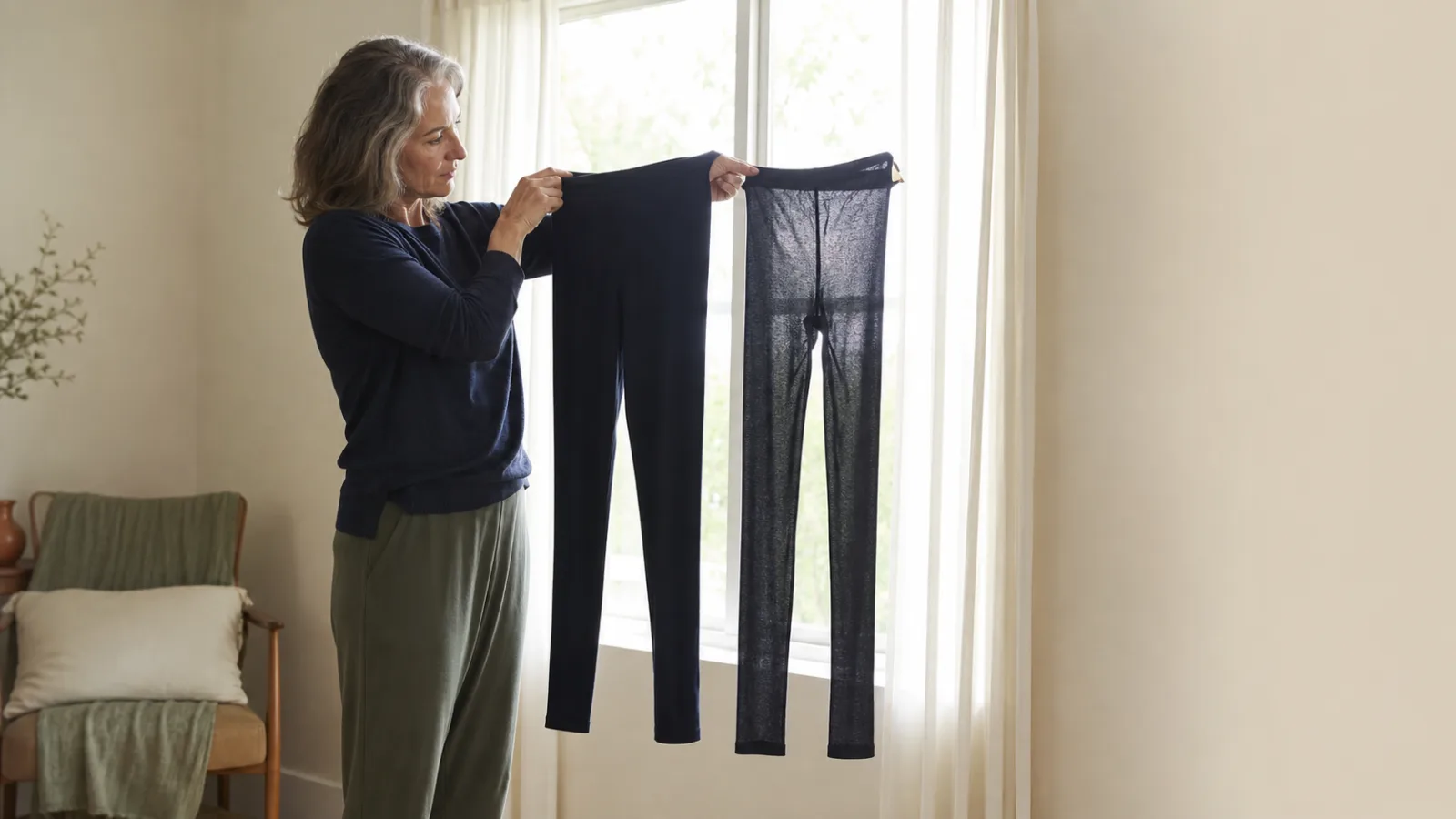
Fabric weight is grams per square metre and most brands do not publish it, so you are usually reading it by hand: a legging you can feel the weight of in the packet is heavier than one that feels like tights. Density you can see: hold the fabric up to a window unstretched, then stretch it a little. A dense knit stays even; an open one shows a grid. The pairs that stay opaque in a squat are the ones that pass both checks.
Colour and pattern
Colour does not change the knit, but it changes what you see through it. A dark solid hides skin tone and underwear that a pale colour shows through the same fabric. Heathers and marls are often knitted from a finer yarn and read as translucent sooner. A dark solid is the safest colour in a lighter knit; a pale or heathered legging needs a heavier knit to stay opaque.
Elastane is not the answer
It is tempting to read a high elastane percentage as a promise of coverage. It is not. Elastane decides how the fabric stretches and recovers; it does not decide how much yarn is between you and the light. A legging at 20 percent elastane can be sheer if it is light, and one at 10 percent can be opaque if it is heavy. Read the percentage for recovery and the weight, or your own test, for opacity.
The figures below come from the sources listed at the end of this guide.
| What | Value | Source |
|---|---|---|
| legging elastane lower bound | 10% | JEGINS Fit fabric standard |
| legging elastane upper bound | 20% | JEGINS Fit fabric standard |
The test we use
Put the leggings on in the size you actually wear. Stand in daylight, squat fully, and look in a mirror or have someone look. Then bend at the waist. If skin tone or underwear shows at the seat, the pair is not opaque in that size, whatever the listing says. We record the result on a product page only when a tester has done exactly this, and the page reads "Not measured" until then.
Related questions
- why are my leggings see through when i squat
- how to tell if leggings are opaque
- thick leggings that are not see through
- legging fabric weight gsm
Related guides
Frequently asked questions
- Does more elastane mean more opaque?
- No. Elastane decides stretch and recovery. Opacity is decided by fabric weight and knit density; a heavy dense knit stays opaque under stretch and a light open one does not, at any elastane percentage.
- What colour leggings are least see-through?
- Dark solids, because they hide what the knit lets through. Pale colours and heathers show skin tone and underwear through the same fabric and need a heavier knit.
- How do I test leggings for opacity?
- In your size, in daylight, squat fully and bend at the waist, and look at the seat in a mirror. If skin tone or underwear shows, the pair is not opaque in that size.
Sources
- Knitted fabric - Wikipedia
Background reference for the definitions used in this guide.
Accessed September 2, 2026
- JEGINS Fit fabric standard
Our published editorial standard for the figures used in this guide.
JEGINS Fit · Accessed September 1, 2026
Scope and limits of this guide
This guide describes what we have measured or sourced. It does not cover every brand, and body measurements vary: use it as a starting point and check the specific product page for its evidence level before buying.
Fit glossary · How we test · Editorial policy · Affiliate disclosure