Why pants fail, and what actually fixes each failure
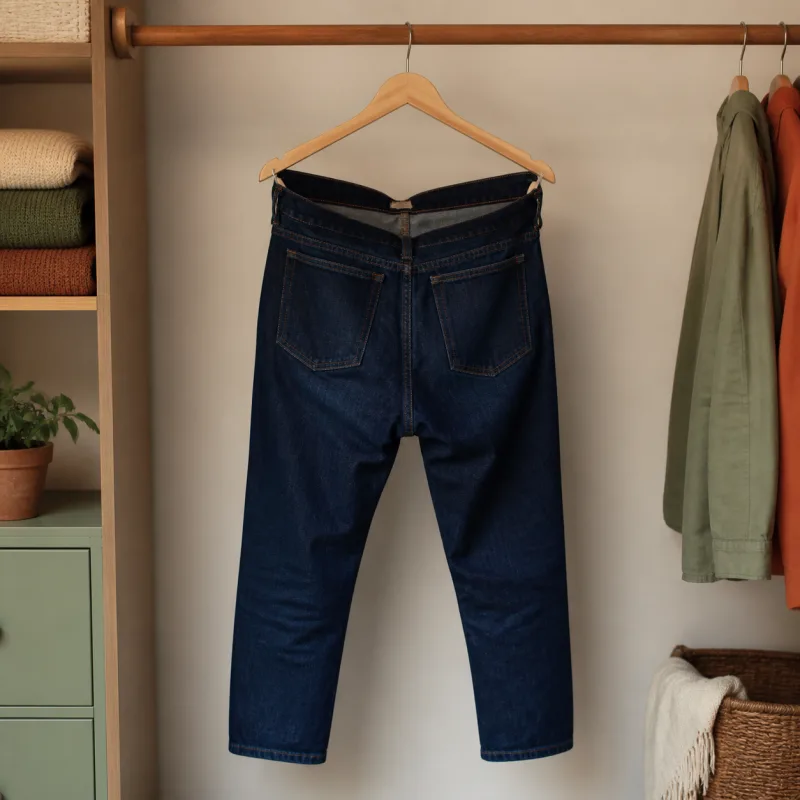
Key takeaways
- A rolling waistband is a pressure problem, not a size problem. Going up a size usually makes it worse, not better.
- Fabric that goes see-through when you bend is at the limit of its stretch. That is a fabric and size interaction, not a manufacturing defect.
- Bagging at the knee and seat after an hour is poor recovery, which is a fibre content problem you can predict before buying.
- Bunching at the ankle is almost always excess inseam; bunching at the crotch is almost always a rise mismatch.
Last reviewed September 1, 2026 by JEGINS Fit editorial. Reviewed on a six-month cycle.
Leggings roll down or slide down at the waist
Cause. The waistband is carrying more pressure than its width can spread. A narrow band sitting across the fullest part of the torso folds outward at the top edge, and once it has folded, body movement walks it downwards.
What does not fix it. Sizing up. A larger band has less grip and slides sooner. Sizing down increases the pressure and rolls faster.
What does fix it. A wider band, ideally 2 inches or more, or a band that is a different construction from the leg fabric (a knit band on a smooth leg). A high rise sitting at the natural waist, above the fullest point rather than across it, also helps because the torso narrows there.
Self-check. Stand up and pinch the top edge of the band. If it comes away from your body easily and you can see daylight, the band is not gripping and it will roll.
Jeans fit the hips but gap at the back of the waist
Cause. Your waist-to-hip difference is larger than the difference the pattern was drafted for. If your hip measures 11 or more inches above your waist and the waistband is a straight rigid band, the gap is built in.
What does not fix it. A belt. It closes the gap visually while creating the bunching it was meant to hide.
What does fix it. Pull-on jeans, jeggings or any garment with a full elastic or wide knit waistband. In rigid denim, look for a contoured waistband, where the seam curves rather than running straight. Failing that, taking in the centre back seam by the size of the gap is a routine alteration.
The waistband digs in when I sit down
Cause. Sitting increases your waist measurement by one to two inches for most people. A band that is exactly at your measurement standing is therefore too tight seated. A high rise makes this worse because it sits where the torso compresses most.
What does fix it. Test seated, not standing. A band that can be pulled an inch away from your body while you are seated will be comfortable through a long day. Prefer a knit or elastic band, which grows with you; a rigid band cannot.
For office or long-flight wear specifically, a wide knit band with light compression is more comfortable over eight hours than a firm band that feels supportive in the first ten minutes.
Leggings go see-through when I bend
Cause. Fabric thins as it stretches. Every knit has a point where the yarns separate enough to let light through, and bending over is where the fabric across the seat reaches maximum extension. Two things push a garment towards that point: a size that is already stretched to fit, and a low fabric weight.
What predicts it before buying. Fabric weight where it is published, the size you would need relative to the size chart, and whether the brand uses a heavier panel at the seat. Colour matters too: light and heathered colours show it sooner than solid black.
The honest test. Put them on, bend over in daylight and have someone look, or squat in front of a mirror with a phone light behind you. We record this as a measured opacity level per product rather than repeating a brand claim.
We do not use the phrase “squat proof” unless an opacity test was actually recorded in a test session — see our methodology.
Fabric bunches at the ankle or at the crotch
At the ankle. This is excess inseam, nothing else. The leg is longer than the distance from your crotch to your ankle, so the surplus stacks. A hem or a shorter inseam fixes it completely. On a slim leg, one inch of excess is already visible.
At the crotch. This is a rise mismatch. If the rise is longer than your body rise, the crotch seam sits below where your body needs it and the excess gathers in front. It is often mistaken for the pants being too big overall, but sizing down usually creates pressure at the hip while leaving the same excess rise.
Self-check. Pull the waistband up until the crotch seam sits against you. If the waistband is now above your natural waist, the rise is too long for you.
They bag out at the knee and seat after an hour
Cause. Poor recovery. Stretch comes from elastane, but recovery - the return to shape — depends on how much elastane there is and how it is knitted or woven in. A fabric with 1% elastane stretches when you sit and does not fully come back.
What predicts it. Fibre content. Below roughly 2% elastane in a stretch denim, expect visible bagging by the end of a day. In the 3-8% range, recovery is usually good. Above about 12%, the garment behaves like a legging. Cotton-rich blends stretch more and recover less than blends with more polyester or nylon.
What partially fixes it. Washing restores much of the original shape, which is why the effect resets. It does not fix the behaviour, so if you need pants that hold their shape through a full day, choose the fibre content for it.
See the fabrics guide for the numbers.
Pilling between the thighs
Cause. Abrasion where the legs contact each other, combined with short staple fibres working loose. It is more common on softer, brushed finishes, because the finish that makes the fabric feel good is loose fibre at the surface.
What reduces it. Washing inside out on cold, in a mesh bag, and skipping the dryer. Heat and tumbling accelerate it substantially.
What removes existing pills. A fabric shaver used flat, not a razor which cuts into the knit. Removing pills does not stop new ones forming.
Guides in this section
Each answers one question and names the date a human last checked it.

Why pants bunch at the crotch
Bunching at the crotch has two common, separate causes that look similar but need different fixes: a rise that is too long for your body leaves excess fabric with nowhere to go but fold, while a waistband and rise combination that does not match your…
Fit problemsReviewed September 6, 2026
Why pant seams twist as you walk
Seam twist happens when the fabric panels of a pant leg are cut off the straight grain of the fabric, so the leg has a slight built-in spiral that shows up as the inseam rotating toward the front or back as you walk.
Fit problemsReviewed September 5, 2026
Why back pockets sit wrong on some jeans
Back pockets are placed against the back rise and the yoke — the shaped panel across the upper back of the jeans — so their position is set by the pattern, not by your body.
Fit problemsReviewed September 5, 2026
Why the same size fits differently between brands
There is no industry standard that ties a size number to a fixed body measurement, so every brand sets its own size chart against its own fit model and its own target customer.
Fit problemsReviewed September 5, 2026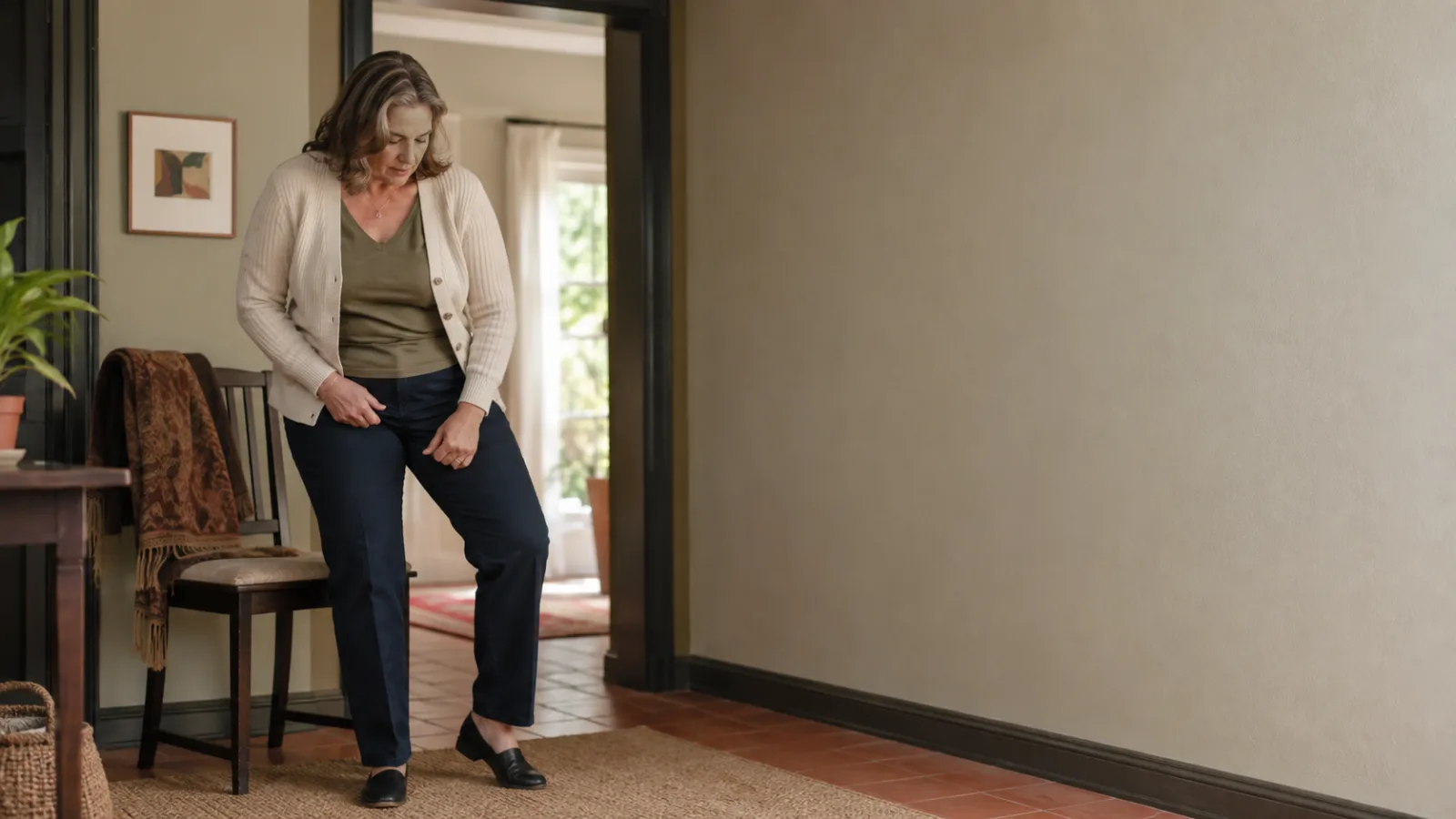
Why pants ride up between the legs
Riding up almost always comes down to the rise — the distance from the waistband to the crotch seam — being short for your body, so there is not enough fabric to travel the distance between your waist and where your legs meet, and every step pulls the…
Fit problemsReviewed September 5, 2026
Why leggings go see-through when you bend
Knit fabric thins as it stretches, and bending puts the fabric across the seat at its maximum extension. Three things bring that point closer: a size that is already stretched to fit you, a low fabric weight, and a light or heathered colour.
Fit problemsReviewed September 5, 2026
Why does fabric get fuzzy at the crotch seam?
Fabric fuzzing at the crotch seam is usually a pilling issue, not a sign that the garment is dirty or that your body is doing something wrong. Pills form where fabric surfaces rub repeatedly.
Fit problemsReviewed September 5, 2026
Why jeans bag out after an hour
Stretch comes from elastane, but returning to shape depends on how much of it there is. Below roughly 2 percent elastane in stretch denim, visible bagging at the knee and seat by the end of the day is normal.
Fit problemsReviewed September 5, 2026
Can waistband construction cause crotch bunching?
Yes, waistband construction can contribute to crotch bunching when it does not allow enough room for the waist to expand while seated. Sitting increases waist measurement by at least 1 in and up to 2 in for most people.
Fit problemsReviewed September 5, 2026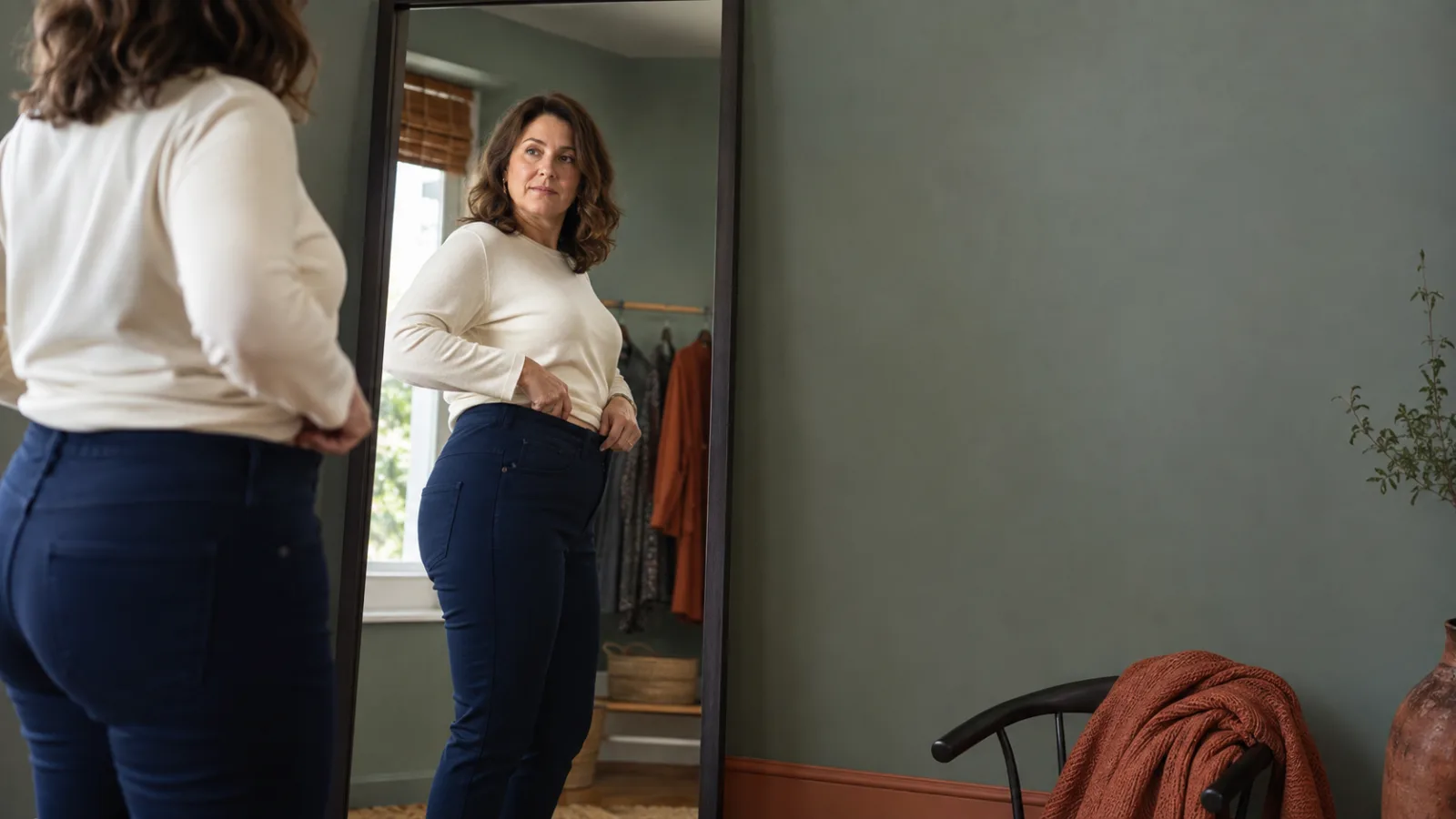
Can waist-to-hip proportion cause crotch bunching?
Waist-to-hip proportion can be part of the diagnosis when crotch bunching appears along with waist trouble. A waist-to-hip difference of 11 in or more is where rigid waistbands reliably gap. Between 7 in and 10 in, most standard blocks work.
Fit problemsReviewed September 5, 2026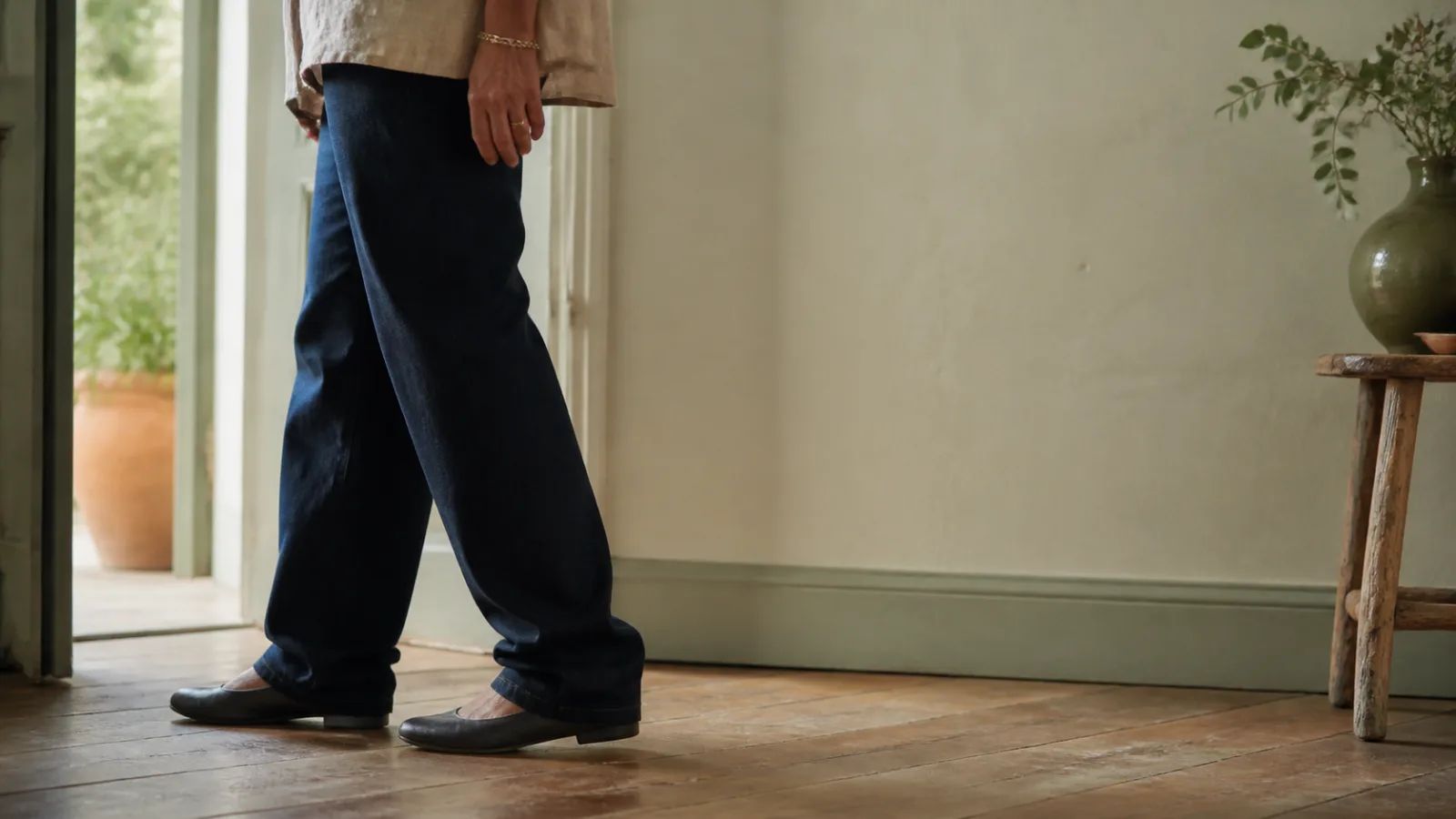
Why pants bunch at the ankles
Bunching at the ankle is excess inseam and nothing else. The leg is longer than the distance from your crotch to your ankle, so the surplus stacks. On a slim leg, one inch of excess is already visible; hemming or a shorter inseam removes it completely.
Fit problemsReviewed September 5, 2026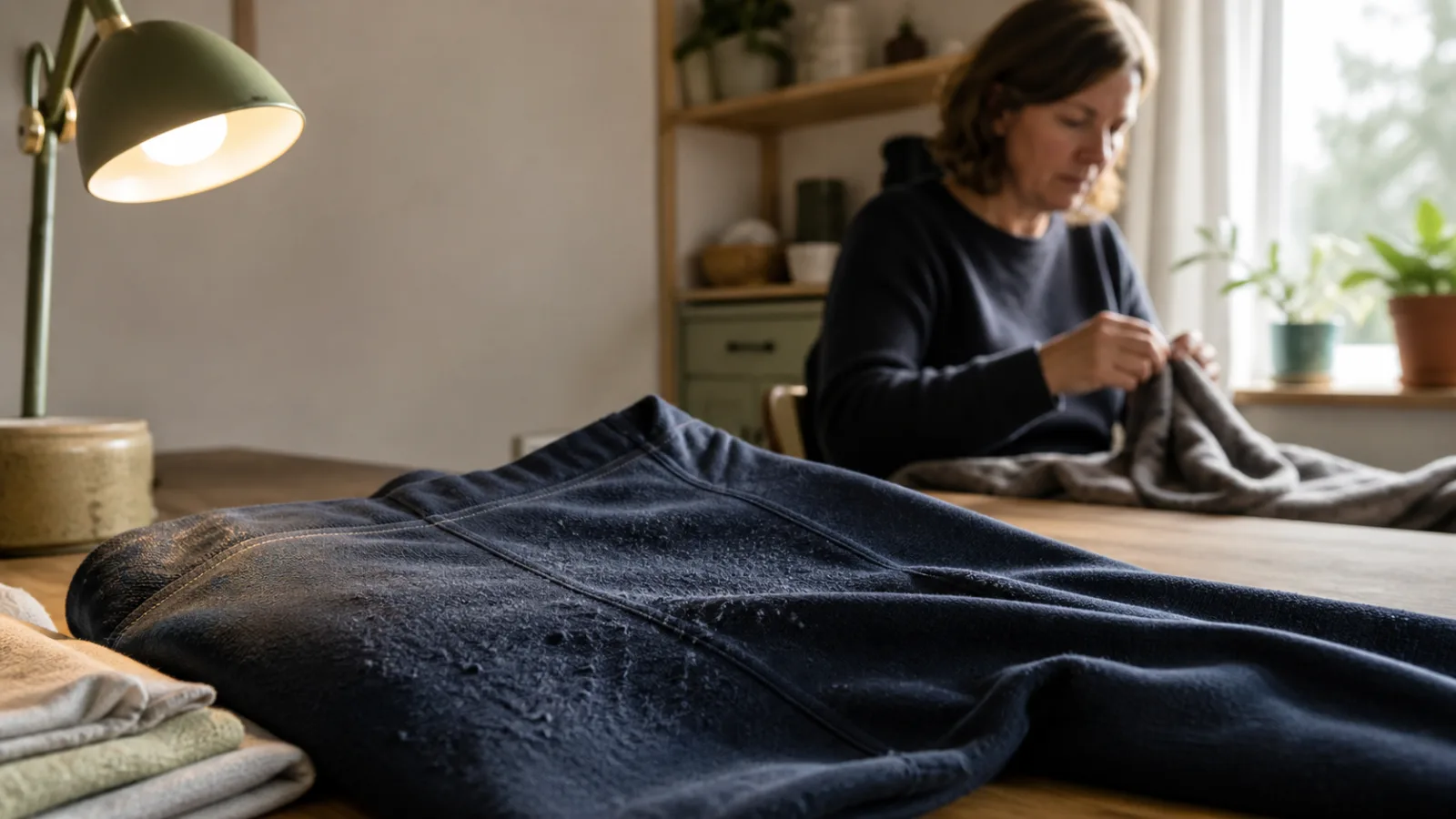
Why leggings pill between the thighs
Pills form where the legs rub against each other and short fibres work loose from the surface. Softer brushed finishes pill sooner, because the finish that makes the fabric feel good is loose fibre at the surface.
Fit problemsReviewed September 5, 2026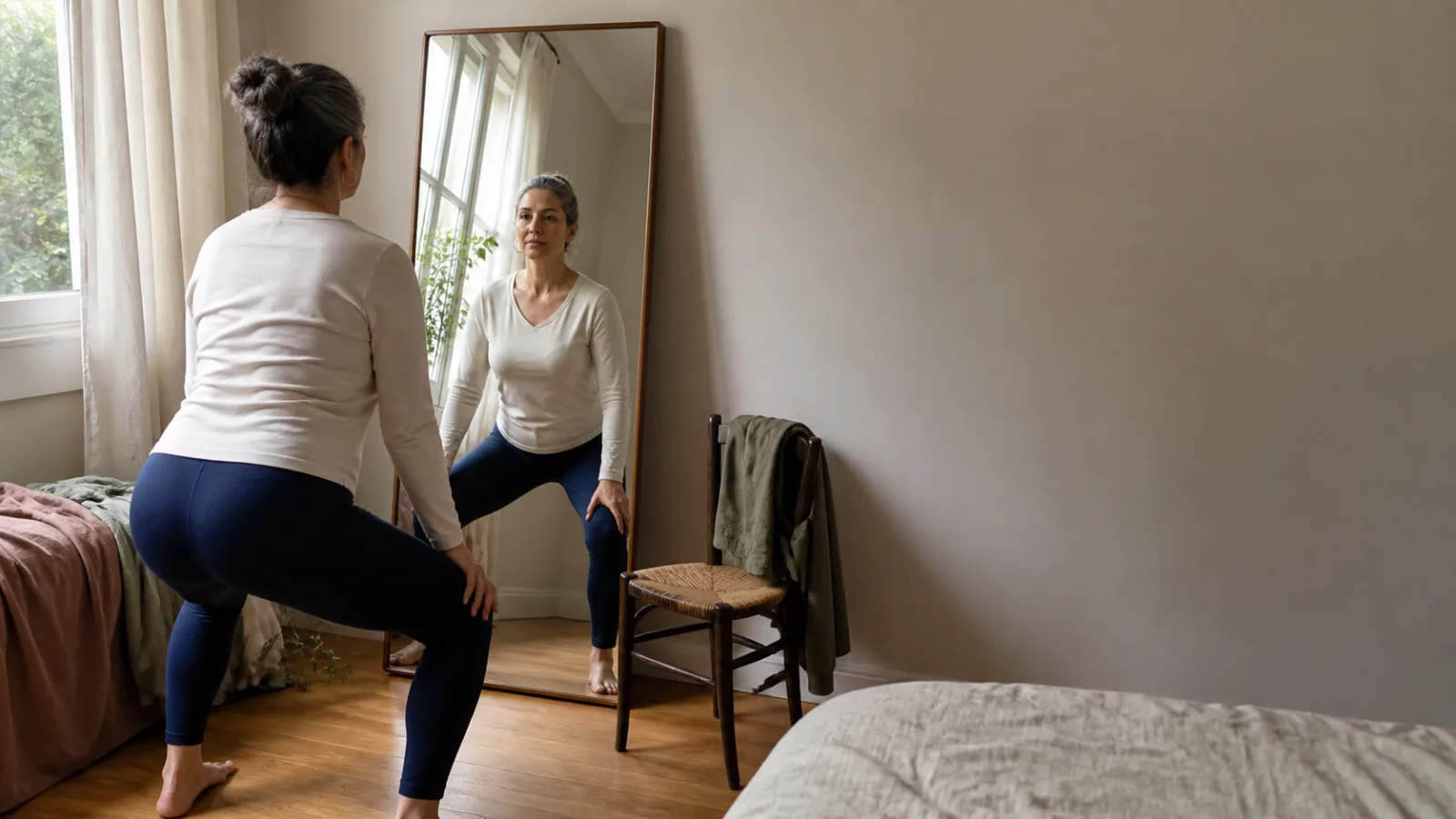
How to test whether leggings stay opaque when you squat
Put the leggings on in the size you actually wear, squat fully in daylight, and look in a mirror with a light source behind you. That is the whole test, and it is the only one that answers the question for your body.
Fit problemsReviewed September 5, 2026
Why a waistband digs in when you sit down
Sitting increases your waist measurement by one to two inches for most people. A band that is exactly at your standing measurement is therefore too tight seated, and a rigid band cannot grow with you.
Fit problemsReviewed September 5, 2026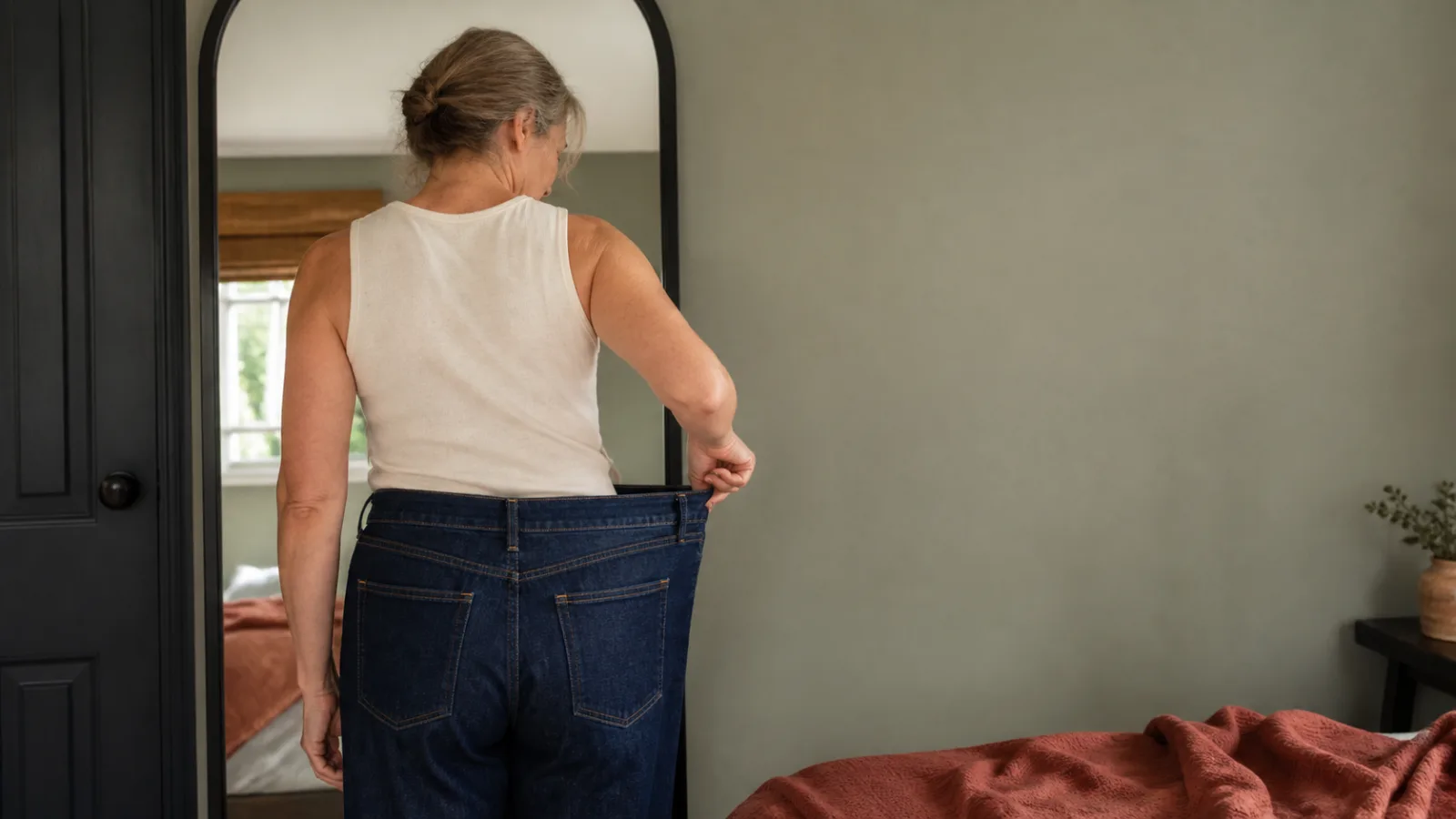
Jeans that fit the hips but gap at the waist
The pattern was drafted for a smaller waist-to-hip difference than yours. If your hip measures 11 or more inches above your waist, a straight rigid waistband will gap at the back at every size. A stretch or contoured waistband fixes it; a belt does not.
Fit problemsReviewed September 5, 2026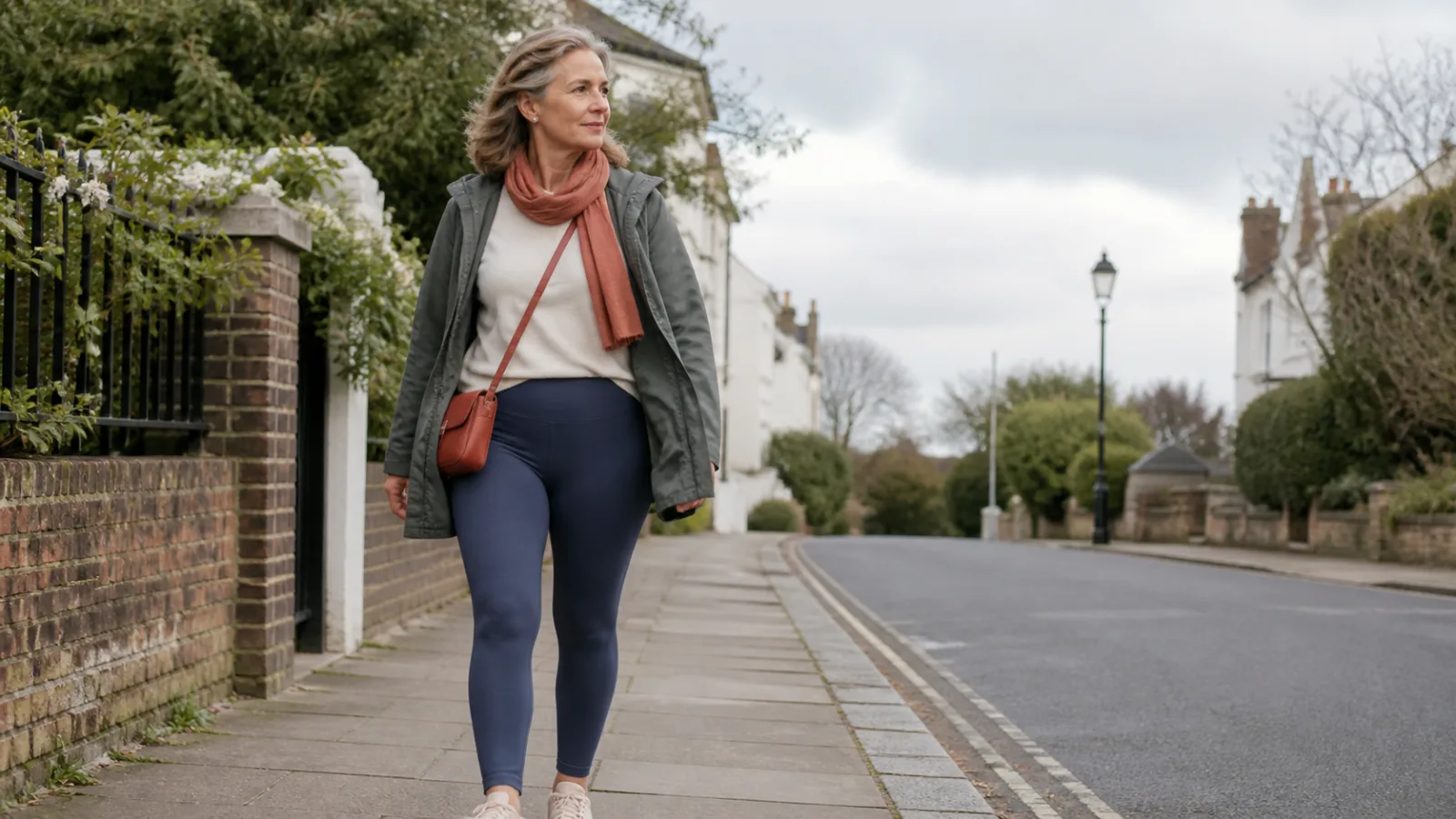
How to stop leggings sliding down
Sliding is a grip problem rather than a folding one. It happens when there is not enough hip shelf to hold the band, or when the band is too smooth to stay where it was put.
Fit problemsReviewed September 5, 2026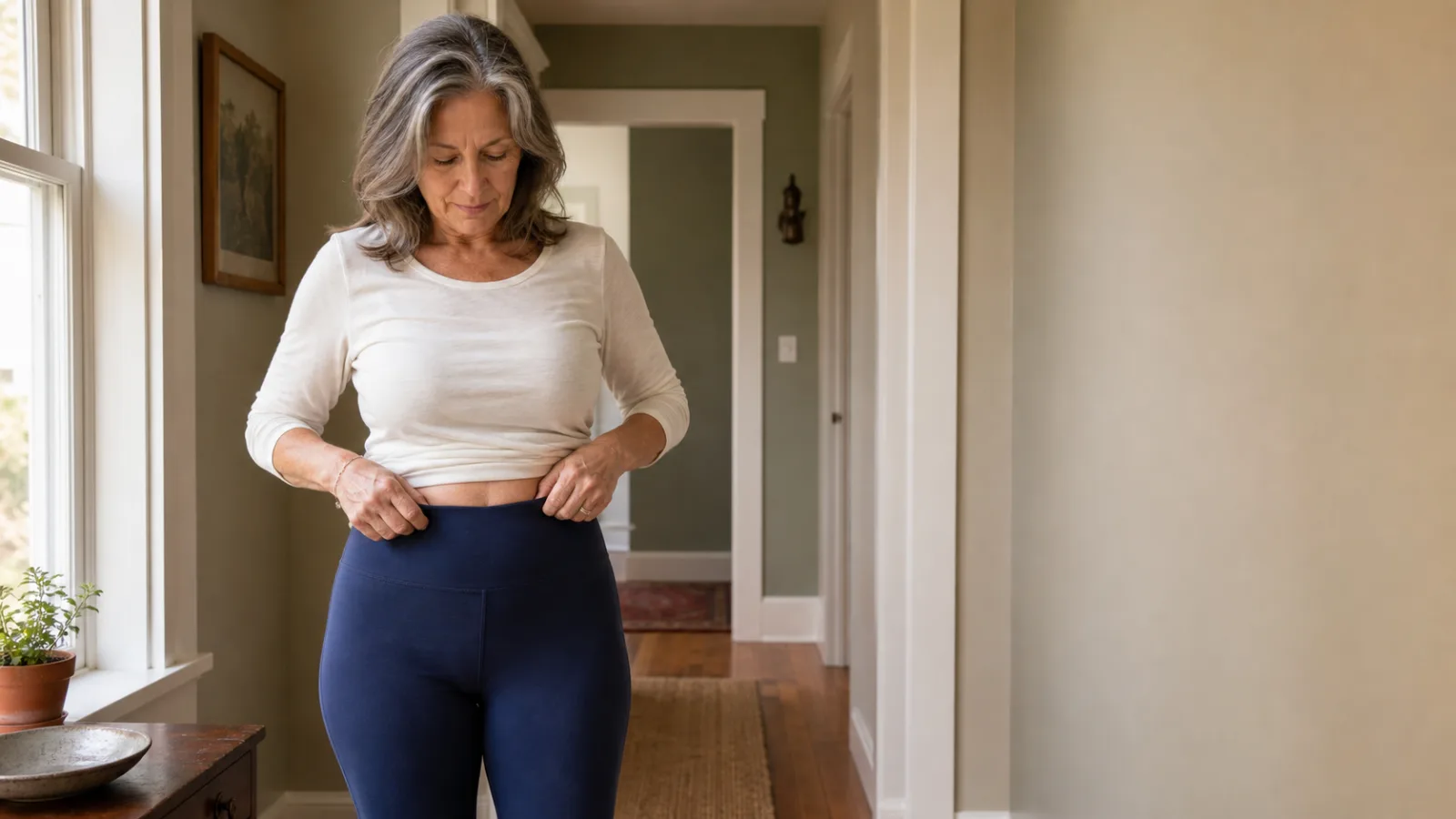
Why leggings roll down, and what stops it
A waistband rolls when it carries more pressure than its width can spread. The top edge folds outward, and once it has folded, movement walks it down.
Fit problemsReviewed September 5, 2026
Frequently asked questions
- Why do my leggings roll down at the waist?
- The waistband is too narrow for the pressure it is carrying, so its top edge folds outward and then walks down as you move. A wider band, two inches or more, or a higher rise that sits at the narrowest part of your torso rather than across the fullest part, is the fix. Sizing up makes it worse because the band grips less.
- Why are my leggings see-through when I bend over?
- Knit fabric thins as it stretches, and bending puts the fabric across the seat at maximum extension. A size that is already stretched to fit, a low fabric weight, or a light or heathered colour all bring that point closer. It is a fabric-and-size interaction rather than a defect.
- Why do my jeans sag after an hour of wearing them?
- Low recovery. Stretch comes from elastane but recovery depends on how much of it there is. Below about 2% elastane in stretch denim, visible bagging at the knee and seat by the end of the day is normal. The 3 to 8% range recovers much better.
- Does a belt fix a waist gap?
- No. It closes the gap visually and creates bunching at the waistband instead. The durable fixes are a stretch or contoured waistband, or taking in the centre back seam by the width of the gap.
Scope and limits
These are general fit principles drawn from garment measurements and our own testing notes. Bodies vary, and so does the same nominal size between brands. Always check the specific product page for the measurements and the evidence level behind them.