Can waist-to-hip proportion cause crotch bunching?
Key takeaways
- Look at the waistband and crotch area together, not as separate problems.
- A larger waist-to-hip difference is more likely to show as waist gapping in rigid waistbands.
- A smaller waist-to-hip difference is more likely to show as waistband pressure.
- The standard block range sits between 7 in and 10 in.
Start with the waistband clue
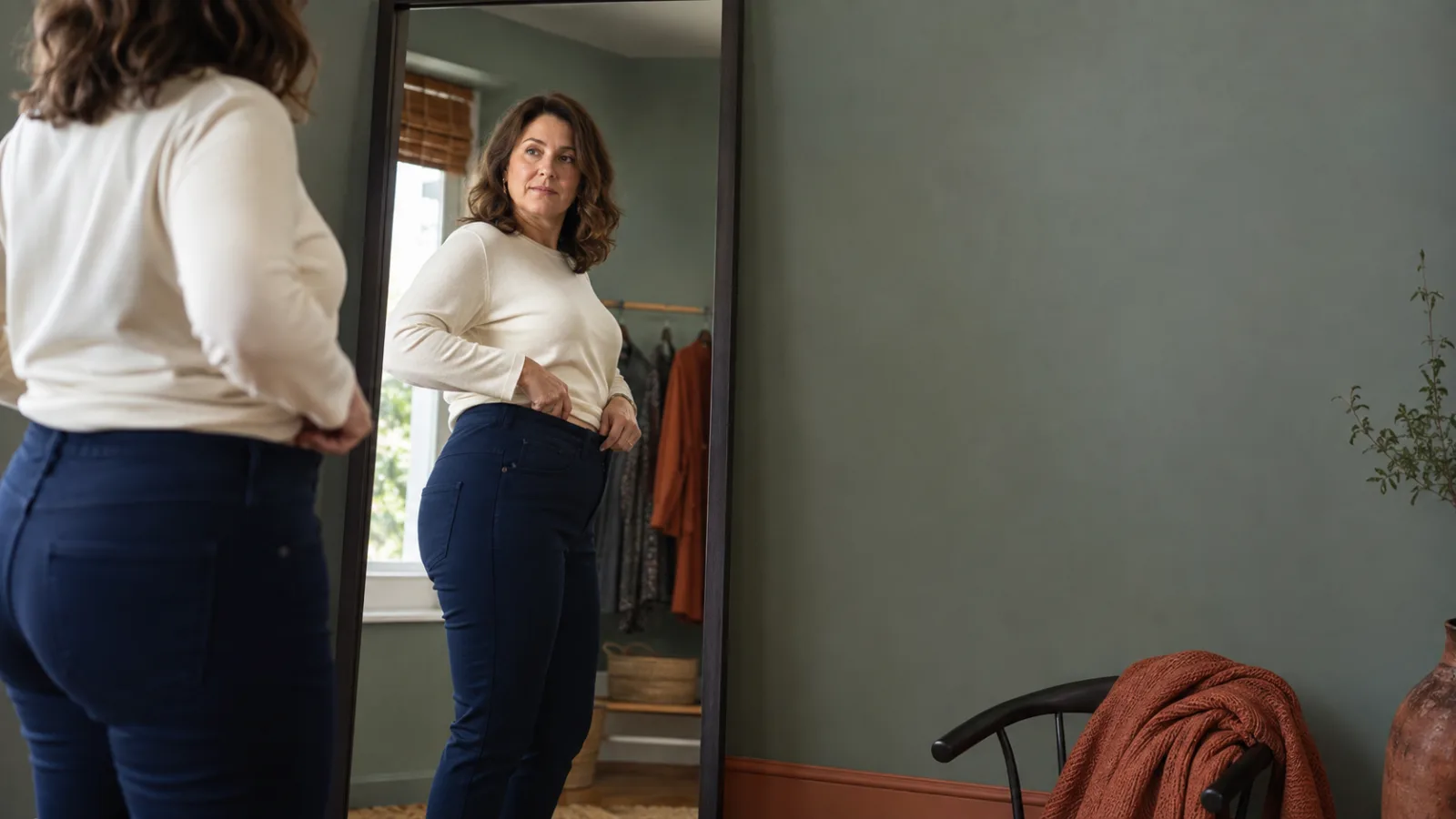
Crotch bunching can draw your attention downward, but the waistband often gives the cleaner clue. If the waist gaps while the hips feel held, the waist-to-hip proportion may not match the block of the garment. A difference of 11 in or more is where rigid waistbands reliably gap.
Compare it with the standard block range
Between 7 in and 10 in, most standard blocks work. If your waist-to-hip difference sits in that range, the crotch bunching may not be explained by waist-to-hip proportion alone. If the waistband also sits unevenly, the proportion is still worth checking against the size chart.
Watch for pressure instead of gapping
At 6 in or less, the waistband presses rather than gaps. In that case, the fit issue may feel tight at the waist even if the crotch area also looks bunched. That is a different clue from a pair that fits the hips but opens at the back waist.
Related questions
- Can waist gapping and crotch bunching come from the same fit mismatch?
- What does waist pressure say about waist-to-hip proportion?
- When is crotch bunching not explained by waist-to-hip proportion?
- How do I use waist and hip measurements to read a pants fit problem?
Related guides
Frequently asked questions
- Does crotch bunching always mean the waist-to-hip proportion is wrong?
- No. From this standard, waist-to-hip proportion is most useful when crotch bunching appears with waistband clues. A difference of 11 in or more points toward reliable gapping in rigid waistbands, while 6 in or less points toward waistband pressure.
- What waist-to-hip difference usually works with standard blocks?
- Between 7 in and 10 in, most standard blocks work. If your measurements sit there, look carefully at whether the waistband is actually gapping or pressing before blaming waist-to-hip proportion.
- What is the difference between gapping and pressure at the waistband?
- Gapping is more likely when the waist-to-hip difference is 11 in or more in a rigid waistband. Pressure is more likely at 6 in or less. Those clues point in different fit directions.
Sources
- Waist–hip ratio - Wikipedia
Background reference for the definitions used in this guide.
Accessed September 1, 2026
- JEGINS Fit problem diagnosis standard
Our published editorial standard for the figures used in this guide.
JEGINS Fit · Accessed September 1, 2026
Scope and limits of this guide
This guide describes what we have measured or sourced. It does not cover every brand, and body measurements vary: use it as a starting point and check the specific product page for its evidence level before buying.
Fit glossary · How we test · Editorial policy · Affiliate disclosure