How pull-on jeans should fit, and how to tell before the tags come off
Key takeaways
- Snug at the band, skimming below it. The band replaces the closure, so it has to grip.
- A band at least 2 inches deep grips without digging in; a narrow one rolls or cuts.
- Fabric with 4 to 8 percent elastane recovers after sitting; below 2 percent it bags by evening.
- Buy for the hip and the rise. The waistband stretches; the rise does not.
What the band is doing
A pull-on pair has no button, so the waistband alone keeps the jeans up. It does that by being smaller than your waist and stretching to fit, which means snug is correct and loose is wrong. The trick is the depth: a band at least 2 inches deep spreads that grip across enough skin that you feel held rather than cut. A narrow band under the same tension digs in, and when it is loosened to stop digging in, it slides.
The figures below come from the sources listed at the end of this guide.
| What | Value | Source |
|---|---|---|
| minimum waistband depth | 2" | JEGINS Fit measurement standard |
The standing check
Pull them on and stand. The band should sit flat against you all the way round with no gap at the back and no fold at the front. The seat should be smooth, not pulled into horizontal lines. The thigh should touch the fabric without stretching the weave into a lighter colour. If any of those three shows strain, the pair is too small in that place, and stretch will not fix it - it will just wear out faster there.
The seated check
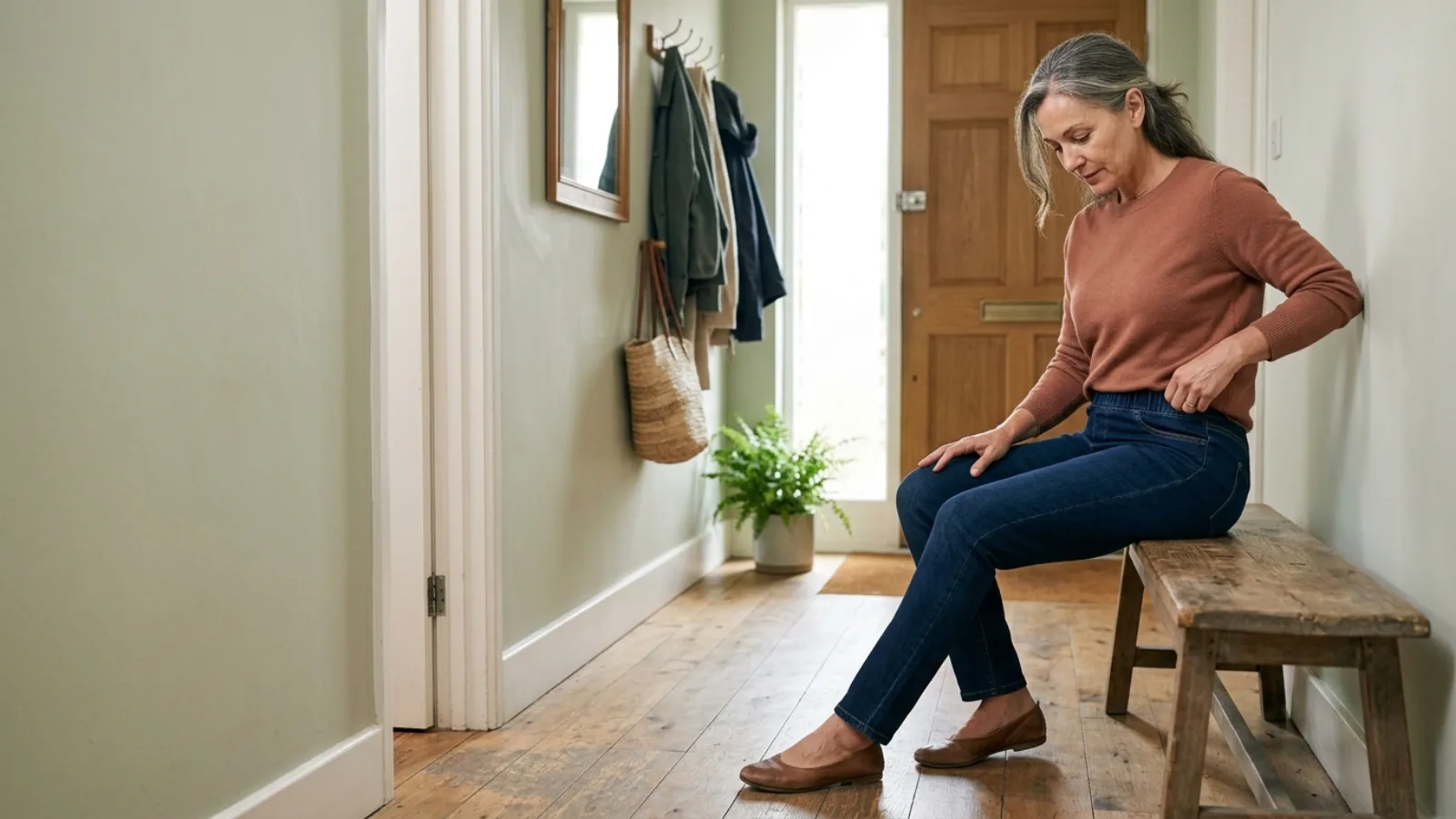
Sit down. Slide a finger between the band and your stomach; one finger of room is right, none means the rise or the band is wrong, three means the band is too loose to hold. Look at the knee: fabric with 4 to 8 percent elastane will give and then recover when you stand; below 2 percent it gives and stays given, and the knee bags. Stand again and check whether the band has moved. It should not have.
The figures below come from the sources listed at the end of this guide.
| What | Value | Source |
|---|---|---|
| elastane comfort lower bound | 4% | JEGINS Fit measurement standard |
| elastane comfort upper bound | 8% | JEGINS Fit measurement standard |
| elastane bagging threshold | 2% | JEGINS Fit measurement standard |
Which measurement to buy for
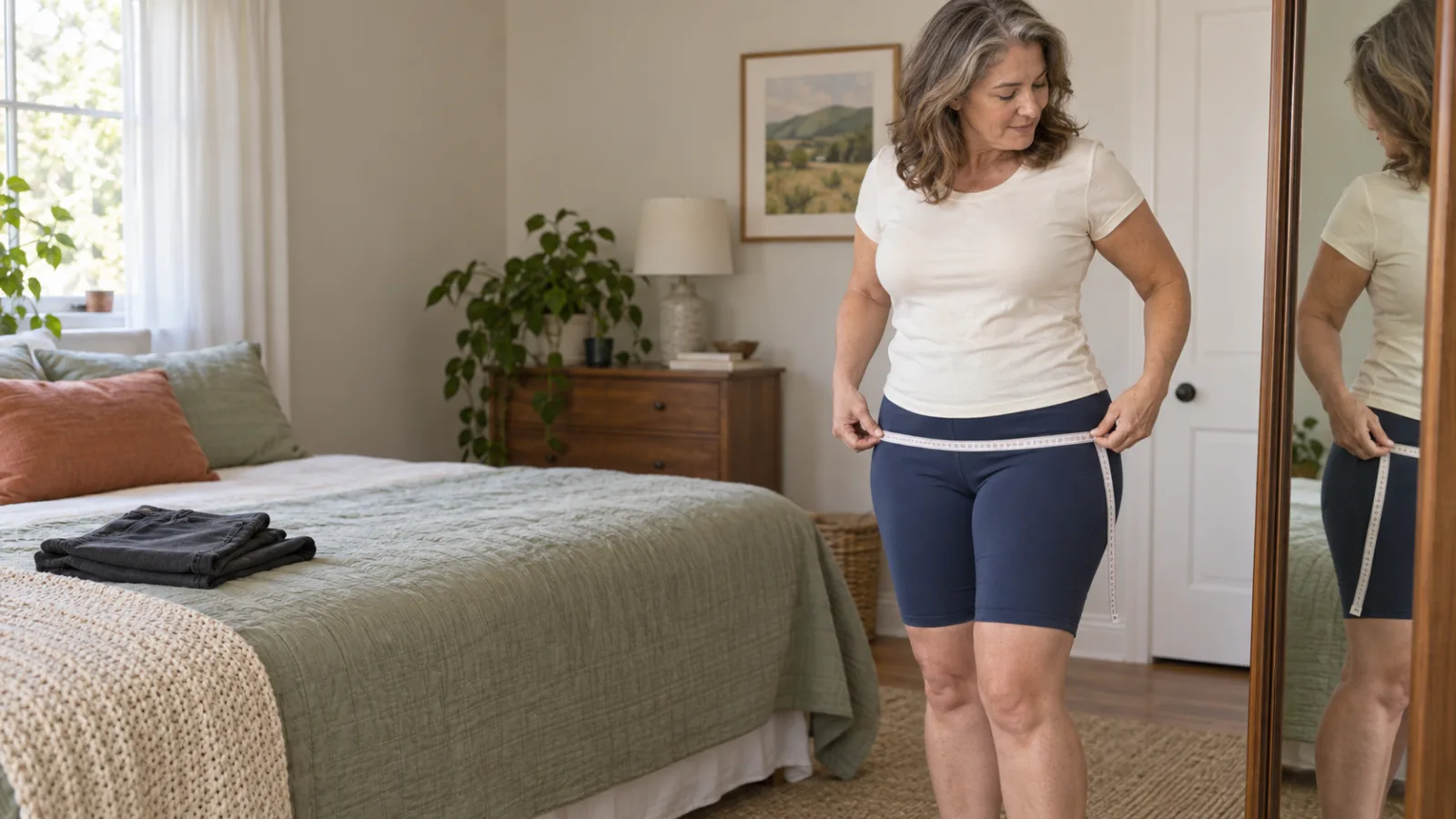
The band will stretch; the hip and the rise will not. Buy the size whose hip measurement on the chart matches yours, then check the front rise sits where you want it - roughly 9 to 10.5 inches for a mid rise at the natural waist, 11 inches or more for a high rise. If that size’s waistband is a little small, it will stretch. If it is a little big, it will slide, and nothing fixes a sliding pull-on.
The figures below come from the sources listed at the end of this guide.
| What | Value | Source |
|---|---|---|
| mid rise front rise lower bound | 9" | JEGINS Fit measurement standard |
| mid rise front rise upper bound | 10.5" | JEGINS Fit measurement standard |
| high rise threshold | 11" | JEGINS Fit measurement standard |
How it should feel after a day
The test that matters is the end of the day, not the fitting room. A pair that fits should look the same at six in the evening as it did at eight in the morning: band in the same place, knee and seat recovered. If the band has migrated down or the knees have bagged, the fabric has too little elastane or the size is too big, and the answer is not to size down but to look at the fibre content.
Related questions
- pull on jeans fit guide
- are pull on jeans supposed to be tight
- how tight should elastic waist jeans be
- do pull on jeans stretch out
Related guides
Frequently asked questions
- Should pull-on jeans feel tight?
- Snug at the waistband, not tight. The band is doing the work a button does, so it has to grip. Below the band the jeans should skim: no strain lines at the seat or thigh.
- Do pull-on jeans stretch out?
- It depends on the elastane. Between 4 and 8 percent the fabric recovers after a day; below 2 percent it stretches and stays stretched, so the knees and seat bag by evening.
- Should I size down in pull-on jeans?
- Buy for the hip and the rise, which do not stretch. If that size’s band is a little small it will give; if the band is too big the pair slides and nothing fixes it.
Sources
- JEGINS Fit measurement standard
Our published editorial standard for the figures used in this guide.
JEGINS Fit · Accessed September 1, 2026
- Waistband - Wikipedia
Background reference for the definitions used in this guide.
Accessed September 1, 2026
Scope and limits of this guide
This guide describes what we have measured or sourced. It does not cover every brand, and body measurements vary: use it as a starting point and check the specific product page for its evidence level before buying.
Fit glossary · How we test · Editorial policy · Affiliate disclosure