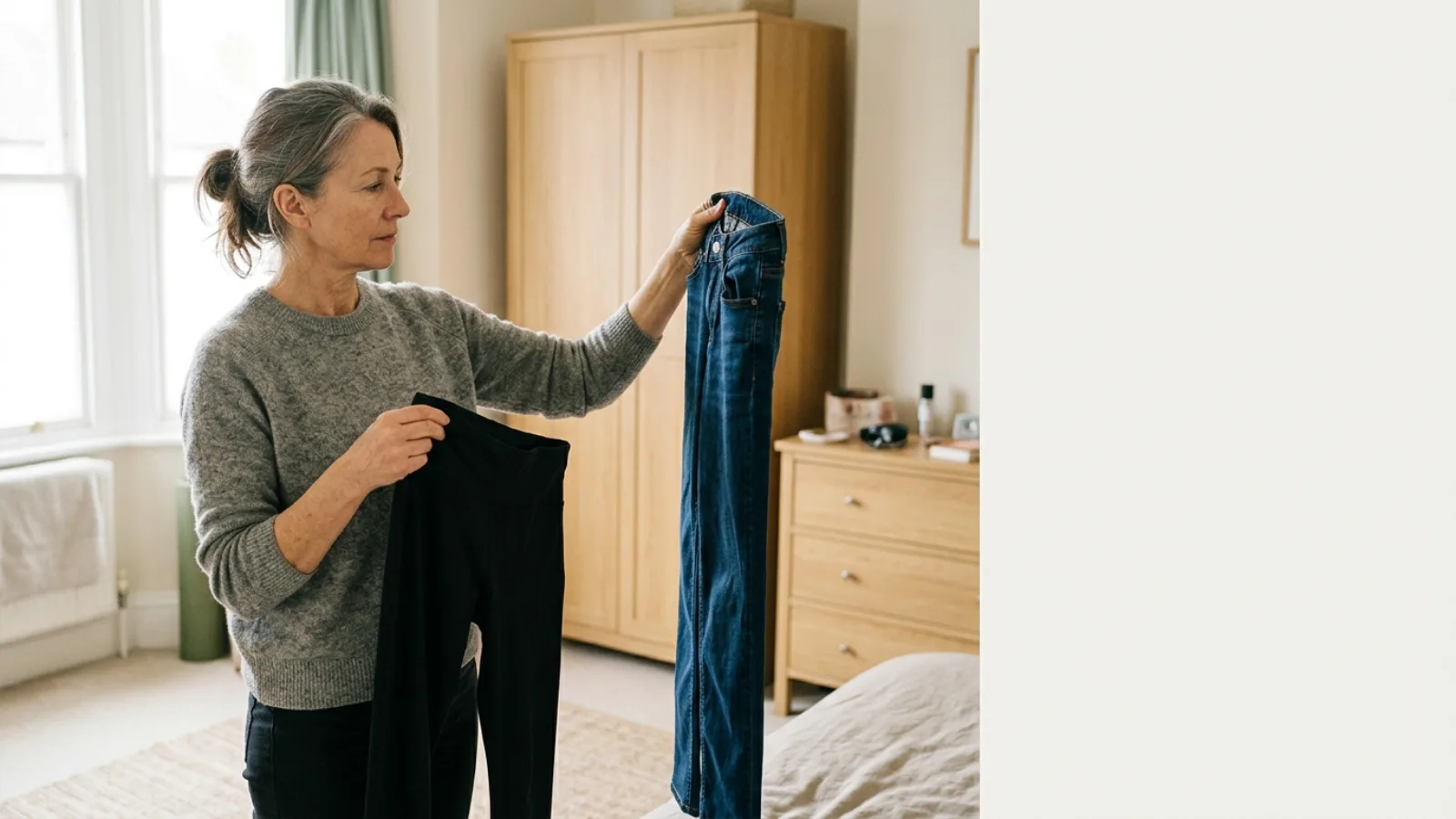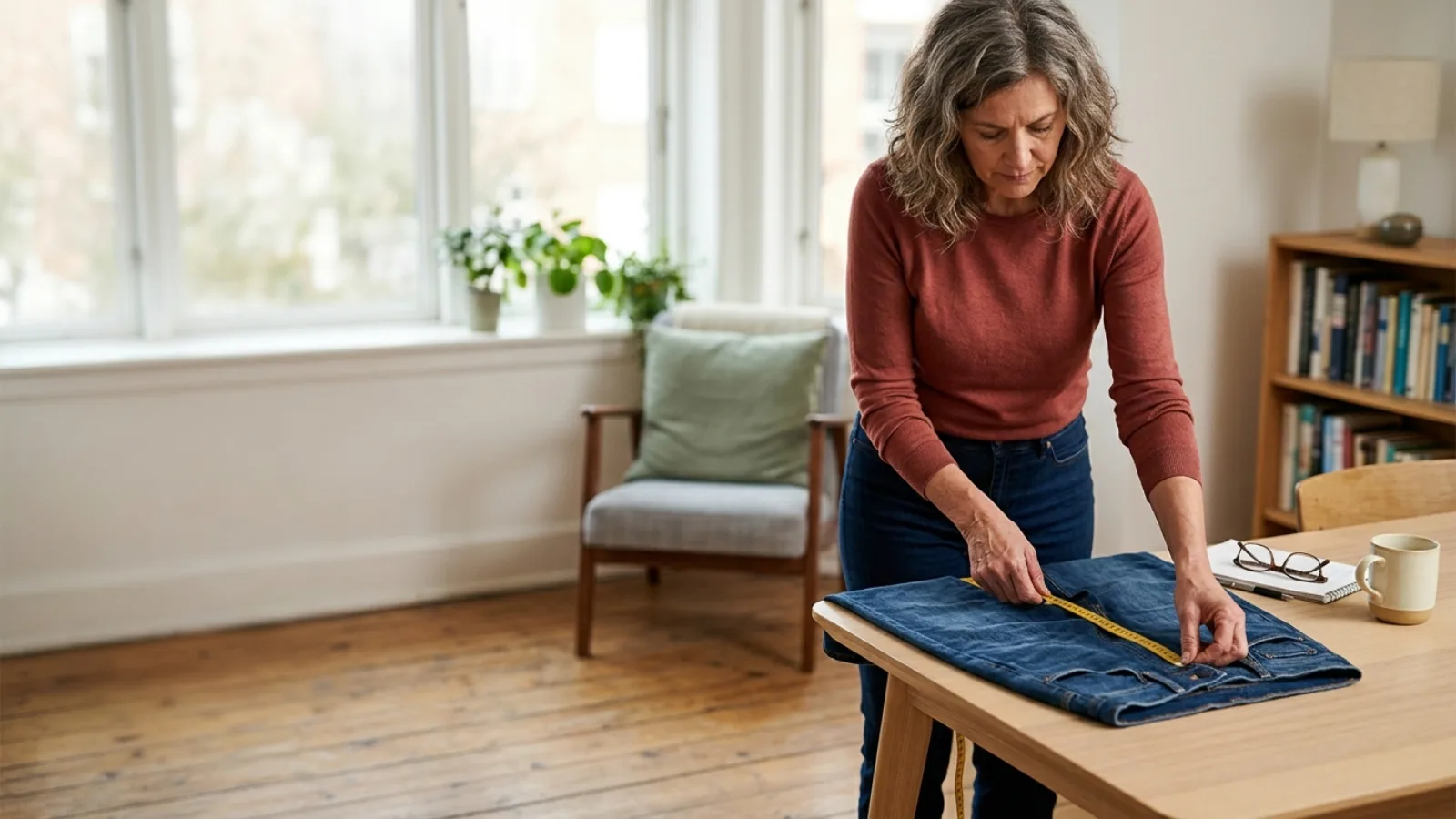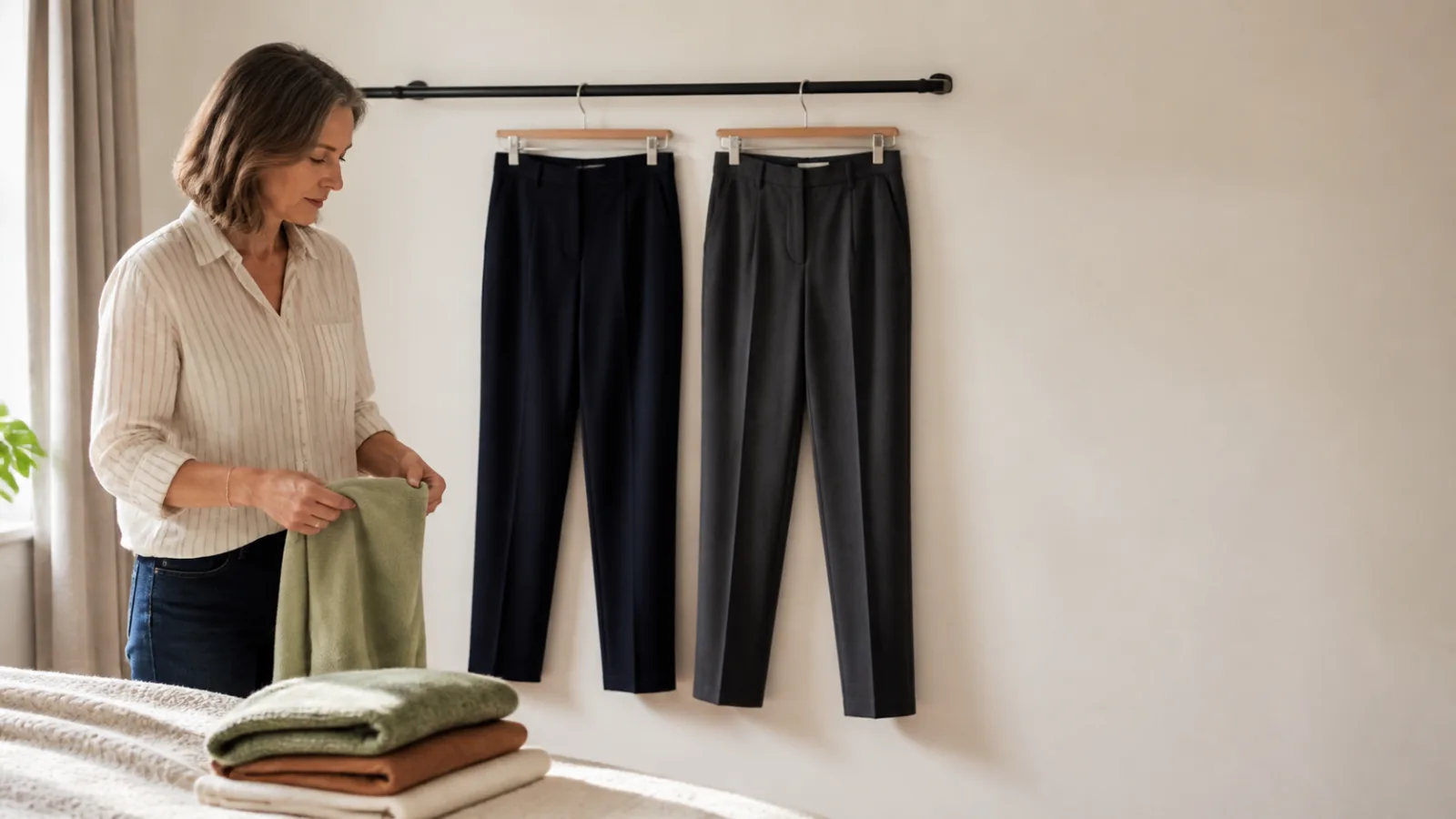
Ponte pants vs woven trousers for the office
Key takeaways
- Ponte recovers after sitting; a woven trouser holds a crease and shows it.
- A ponte waistband is usually a deep knit; a trouser waistband is usually narrow and rigid.
- Woven trousers look sharper standing and more formal; ponte looks the same at five as at nine.
- Elastane between 4 and 8 percent is what makes either one comfortable seated.
What ponte is
Ponte, or ponte di Roma, is a double knit: two layers of knit fabric interlocked into one dense, stable cloth. It is usually a polyester and rayon blend with elastane, which gives it weight, a matte surface and a stretch that returns. Because it is a knit, it does not hold a crease, which cuts both ways: it will not hold a pressed line, and it will not hold the crease across the lap that a woven trouser picks up by lunchtime.
What a woven trouser does better
A woven trouser - wool, a wool blend, a polyester twill - holds a sharp crease, drapes in a straight line and reads as formal in a way a knit does not. Standing up at nine in the morning it looks better. It also creases wherever it is folded, which for a seated day means across the lap and behind the knee, and with under 2 percent elastane it bags at the seat and stays bagged.
The figures below come from the sources listed at the end of this guide.
| What | Value | Source |
|---|---|---|
| elastane bagging threshold | 2% | JEGINS Fit fabric standard |
The waistband is the daily difference
Ponte trousers are usually built with a pull-on knit waistband at least 2 inches deep, which spreads pressure and moves with you through the day. Woven trousers usually have a narrow rigid band with a hook and zip that holds one circumference. For a day of sitting, that difference is more noticeable than the fabric: the ponte band is still comfortable after lunch; the rigid band is not.
The figures below come from the sources listed at the end of this guide.
| What | Value | Source |
|---|---|---|
| minimum waistband depth | 2" | JEGINS Fit fabric standard |
Stretch that lasts the day
Either fabric is comfortable seated if it has 4 to 8 percent elastane and recovers. Ponte usually does by construction. Woven trousers vary: a stretch twill with 4 to 8 percent elastane sits and recovers well; a traditional wool trouser under 2 percent does not. Read the fibre content on either; the category name does not tell you.
The figures below come from the sources listed at the end of this guide.
| What | Value | Source |
|---|---|---|
| elastane comfort lower bound | 4% | JEGINS Fit fabric standard |
| elastane comfort upper bound | 8% | JEGINS Fit fabric standard |
How to choose
Mostly seated, and the dress code allows a matte knit: ponte. Mostly standing, or the room expects a crease: a woven trouser, ideally a stretch twill with a deeper waistband. Many people keep one of each and choose by the day. On our product pages the fibre content, elastane percentage and waistband construction are listed where the brand publishes them.
Related questions
- ponte pants vs dress pants
- are ponte pants good for work
- ponte knit pants for the office
- most comfortable work pants for sitting all day
Related guides
Frequently asked questions
- Do ponte pants look professional?
- In a dark colour with a straight leg, yes, in most offices. They do not hold a crease, so they read less formal than a pressed woven trouser. Where a crease is expected, a stretch twill trouser is the middle ground.
- Do ponte pants stretch out?
- With 4 to 8 percent elastane they recover after a day. Like any stretch fabric they lose recovery with heat, so keep them out of a hot dryer.
- Why do my trousers dig in at my desk?
- A narrow rigid waistband holds one circumference, and the waist changes through the day. A knit band at least 2 inches deep, which ponte trousers usually have, spreads the pressure and moves with you.
Sources
- Knitted fabric - Wikipedia
Background reference for the definitions used in this guide.
Accessed September 2, 2026
- JEGINS Fit fabric standard
Our published editorial standard for the figures used in this guide.
JEGINS Fit · Accessed September 1, 2026
Scope and limits of this guide
This guide describes what we have measured or sourced. It does not cover every brand, and body measurements vary: use it as a starting point and check the specific product page for its evidence level before buying.
Fit glossary · How we test · Editorial policy · Affiliate disclosure