How to read a jeans size chart without getting caught out
Key takeaways
- Body chart or garment chart: work out which before comparing anything.
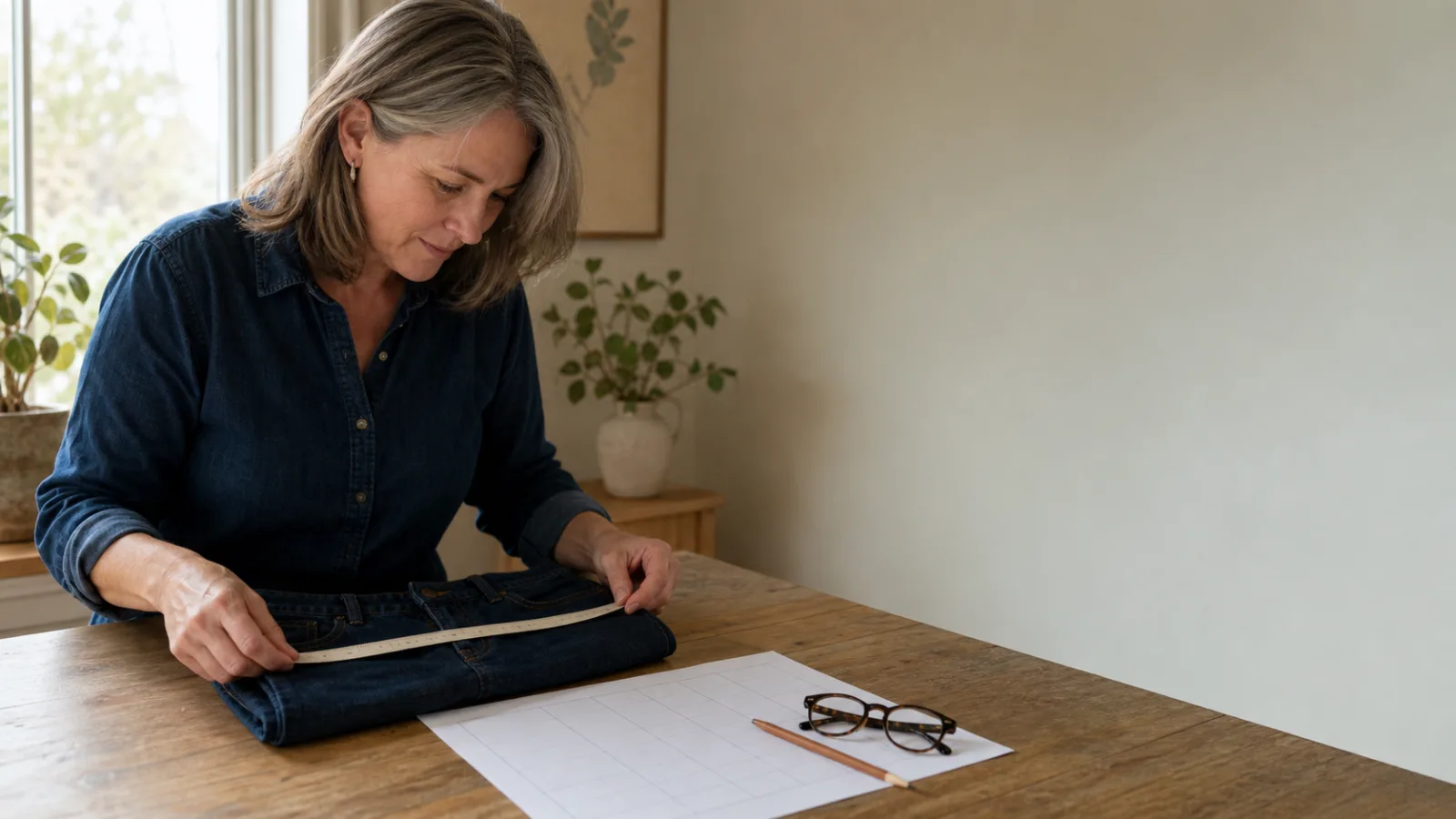
- A garment measurement is flat; double it to compare with your body.
- Compare waist, hip, front rise and inseam. Ignore the size number.
- The waist-to-hip difference on the chart is the number that predicts a gap.
Body chart or garment chart
A body chart says: this size is drafted for a body with these measurements. A garment chart says: this pair, laid flat, measures this. Brands rarely label which they are using. The quick test is the waist column. If a size 12 lists a waist of 16 inches, that is a flat garment measurement and you double it. If it lists 32 inches, that is either a body measurement or a doubled garment one. When in doubt, look for the words "measured flat" or "body measurements" in the chart footnote.
The figures below come from the sources listed at the end of this guide.
| What | Value | Source |
|---|---|---|
| flat waist example | 16" | JEGINS Fit measurement standard |
| doubled waist example | 32" | JEGINS Fit measurement standard |
Take your own four numbers
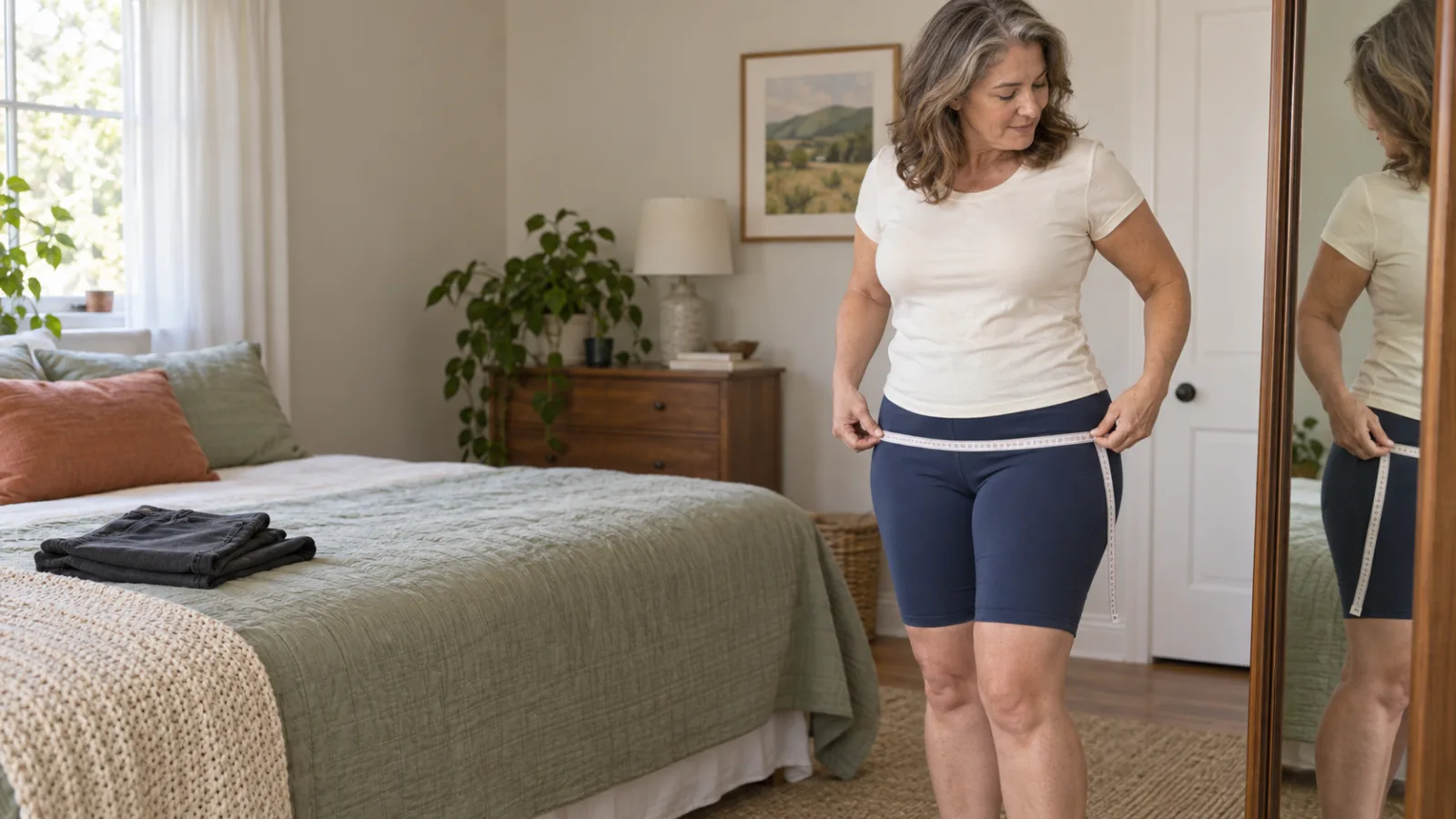
Measure your natural waist at its narrowest point. Measure your hip at its fullest point, usually 7 to 9 inches below the waist, with the tape parallel to the floor. Measure the inseam of a pair whose length you like, from the crotch seam to the hem. Measure the front rise on a pair that sits well seated, from the crotch seam to the top of the waistband. Those four numbers read any chart.
The figures below come from the sources listed at the end of this guide.
| What | Value | Source |
|---|---|---|
| hip measurement offset lower bound | 7" | JEGINS Fit measurement standard |
| hip measurement offset upper bound | 9" | JEGINS Fit measurement standard |
Read the difference, not the size
Subtract the chart’s waist from its hip for the size that matches your hip. Most standard women’s blocks show a difference of around 10 inches. If your own difference is 11 inches or more, a rigid waistband in that size will gap at the back regardless of how the rest fits. If yours is 6 inches or less, the band crosses the widest part of your torso and its depth matters more than the gap. This one subtraction predicts more about fit than the size number does.
The figures below come from the sources listed at the end of this guide.
| What | Value | Source |
|---|---|---|
| standard block waist-to-hip difference | 10" | JEGINS Fit measurement standard |
| waist gap threshold | 11" | JEGINS Fit measurement standard |
| apple waist-to-hip difference | 6" | JEGINS Fit measurement standard |
Stretch is not free
A chart for a stretch fabric sometimes lists the relaxed measurement and expects the garment to stretch to you. A knit waistband may measure several inches under your waist and still fit. That is fine within reason; a garment that has to stretch four inches to go on will feel it, and wear out where it stretched. If the chart does not say how it handles stretch, assume the number is the relaxed measurement and allow an inch or two, not four.
What to do when the chart is missing something
A chart that publishes only waist and inseam is asking you to guess the hip and the rise, which are the two measurements that most often go wrong. On our product pages a missing number reads "Not measured" rather than being filled in, so you can see what the brand has and has not published before you order.
Related questions
- jeans size chart explained
- how to measure yourself for jeans size chart
- size chart flat measurement vs body measurement
- how to compare your measurements to a size chart
Related guides
Frequently asked questions
- Why does the chart say 16 inches for a waist?
- It is a flat garment measurement: the pair laid flat, side seam to side seam. Double it to get the circumference and compare that with your body.
- Where do I measure my hip for a size chart?
- At the fullest point, usually 7 to 9 inches below the natural waist, with the tape level all the way round.
- The chart fits my hip but the waist number is way off. Which do I trust?
- Buy for the hip, then read the difference between the chart’s waist and hip. If it is smaller than your own by 2 inches or more, expect a gap and choose a stretch or contoured waistband.
Sources
- Clothing sizes - Wikipedia
Background reference for the definitions used in this guide.
Accessed September 1, 2026
- JEGINS Fit measurement standard
Our published editorial standard for the figures used in this guide.
JEGINS Fit · Accessed September 1, 2026
Scope and limits of this guide
This guide describes what we have measured or sourced. It does not cover every brand, and body measurements vary: use it as a starting point and check the specific product page for its evidence level before buying.
Fit glossary · How we test · Editorial policy · Affiliate disclosure