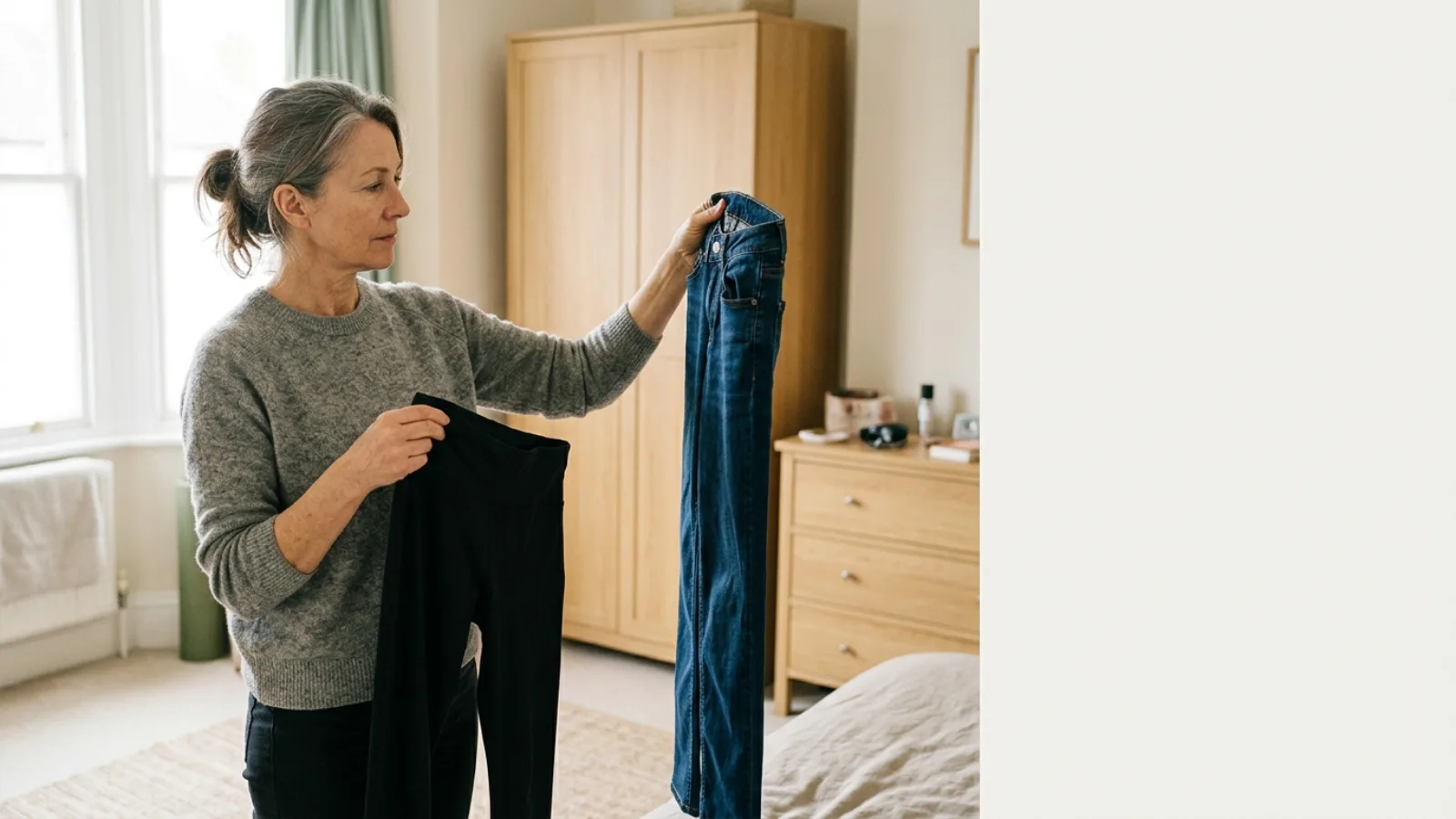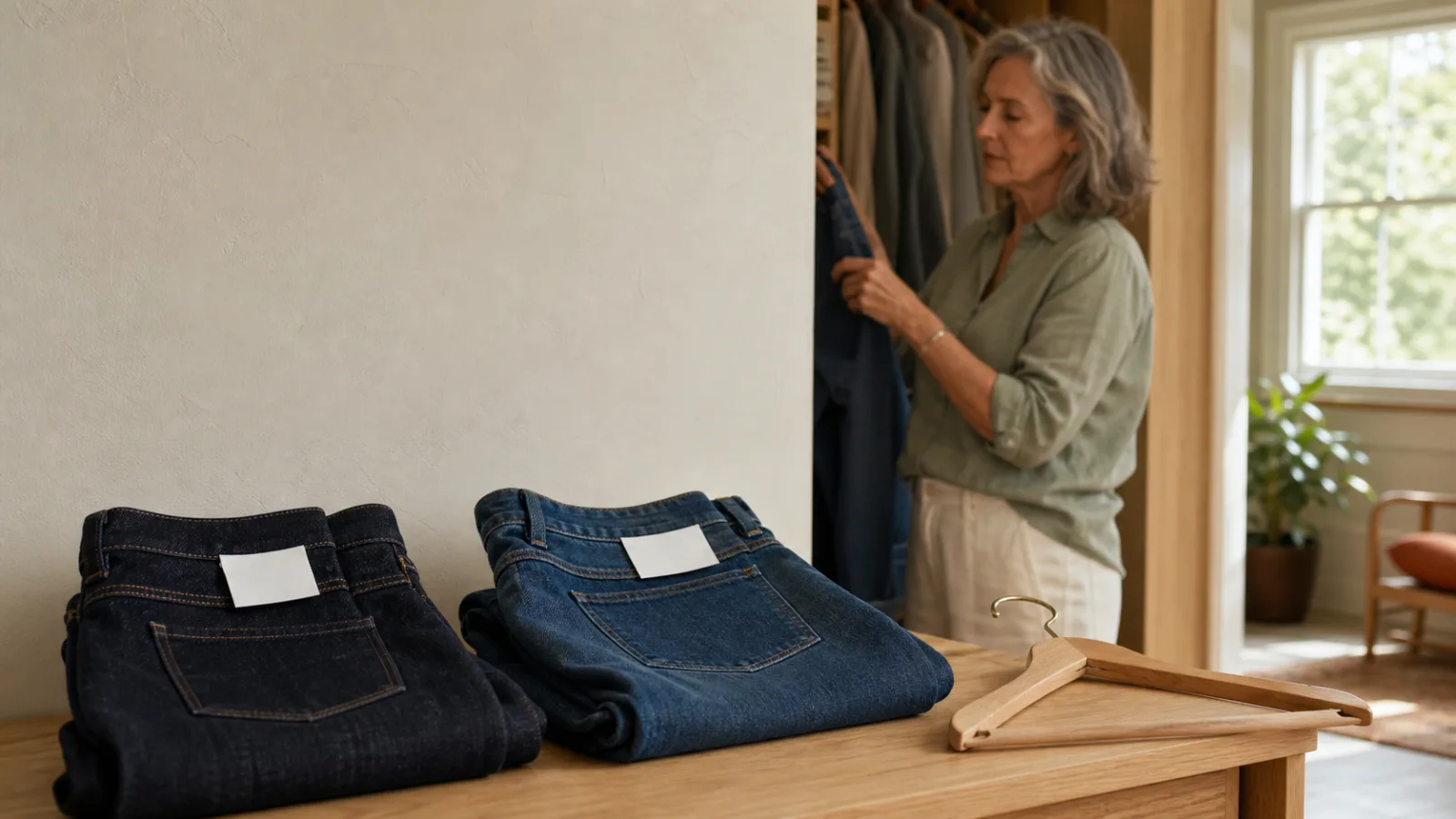
Stretch jeans vs rigid denim: which lasts, and which fits
Key takeaways
- Rigid denim at 0 to 1 percent elastane outlasts stretch as a fabric and never gives.
- At 2 to 3 percent, jeans still look like denim and stretch a little; life is barely affected.
- At 4 to 8 percent, jeans recover after a day of sitting; the elastane is what eventually tires.
- Elastane fails in heat: a hot dryer ages stretch denim faster than wear does.
What elastane changes
Elastane is the fibre that stretches and returns. At 0 to 1 percent the denim is rigid: it softens with wear and moulds to you over months, but it does not give on the day, and sitting in it for hours is work. At 2 to 3 percent the fabric stretches a little and still reads as denim. At 4 to 8 percent it stretches enough to sit in all day and recovers when you stand. Above 12 percent it behaves like a legging.
The figures below come from the sources listed at the end of this guide.
| What | Value | Source |
|---|---|---|
| rigid denim elastane upper bound | 1% | JEGINS Fit fabric standard |
| comfort stretch lower bound | 2% | JEGINS Fit fabric standard |
| comfort stretch upper bound | 3% | JEGINS Fit fabric standard |
| elastane comfort lower bound | 4% | JEGINS Fit fabric standard |
| elastane comfort upper bound | 8% | JEGINS Fit fabric standard |
| elastane legging threshold | 12% | JEGINS Fit fabric standard |
Which lasts longer as a fabric
Rigid denim wins. Cotton fibre wears slowly and has no component that tires. Elastane, by contrast, loses its recovery over time: after enough stretch cycles and enough heat, it stops pulling the fabric back, and the knees and seat bag permanently. A stretch pair worn daily will show that in a couple of years; a rigid pair worn daily will show fading and eventually a hole at the knee, on a longer timescale.
Which lasts longer in your wardrobe
This is the other half of the question. A pair that cannot be sat in for a long day gets worn less, and a pair worn less lasts longer without being useful. A 2 to 3 percent stretch keeps the character of denim while allowing a garment to be sat in; 4 to 8 percent trades more of that character for a longer comfortable day. Longevity of a garment you do not wear is not worth much.
What actually ages stretch denim
Heat. Elastane fibre is damaged by the dryer far more than by wear, and by hot washes more than cool ones. A stretch pair washed cold, inside out, and dried flat or on a line keeps its recovery for years longer than the same pair tumble-dried hot. If your stretch jeans bagged out fast, the dryer is the usual suspect before the fabric is.
How to choose
For a pair to break in and keep for years, wear occasionally, and accept stiffness: rigid. For everyday jeans that still look like denim: 2 to 3 percent. For pull-on jeans, jeggings or days spent seated: 4 to 8 percent, and keep them out of the dryer. Read the fibre content on the listing; it predicts the day far better than the price does.
Related questions
- do stretch jeans wear out faster
- stretch denim vs rigid denim
- are stretch jeans bad quality
- how long do stretch jeans last
Related guides
Frequently asked questions
- Do stretch jeans wear out faster?
- The elastane tires with stretch cycles and especially with heat, so a stretch pair loses recovery over a couple of years of daily wear. Rigid denim has no elastane to tire and lasts longer as a fabric, but it never gives.
- What elastane percentage is best for jeans?
- For jeans that still look like denim, 2 to 3 percent gives comfort stretch. For pull-on jeans or long seated days, 4 to 8 percent recovers much better. Below 2 percent expect bagging at the knee and seat by evening.
- How do I make stretch jeans last?
- Keep them out of the dryer and wash cold, inside out. Heat is what damages elastane; wear is a distant second.
Sources
- Denim - Wikipedia
Background reference for the definitions used in this guide.
Accessed September 2, 2026
- JEGINS Fit fabric standard
Our published editorial standard for the figures used in this guide.
JEGINS Fit · Accessed September 1, 2026
Scope and limits of this guide
This guide describes what we have measured or sourced. It does not cover every brand, and body measurements vary: use it as a starting point and check the specific product page for its evidence level before buying.
Fit glossary · How we test · Editorial policy · Affiliate disclosure