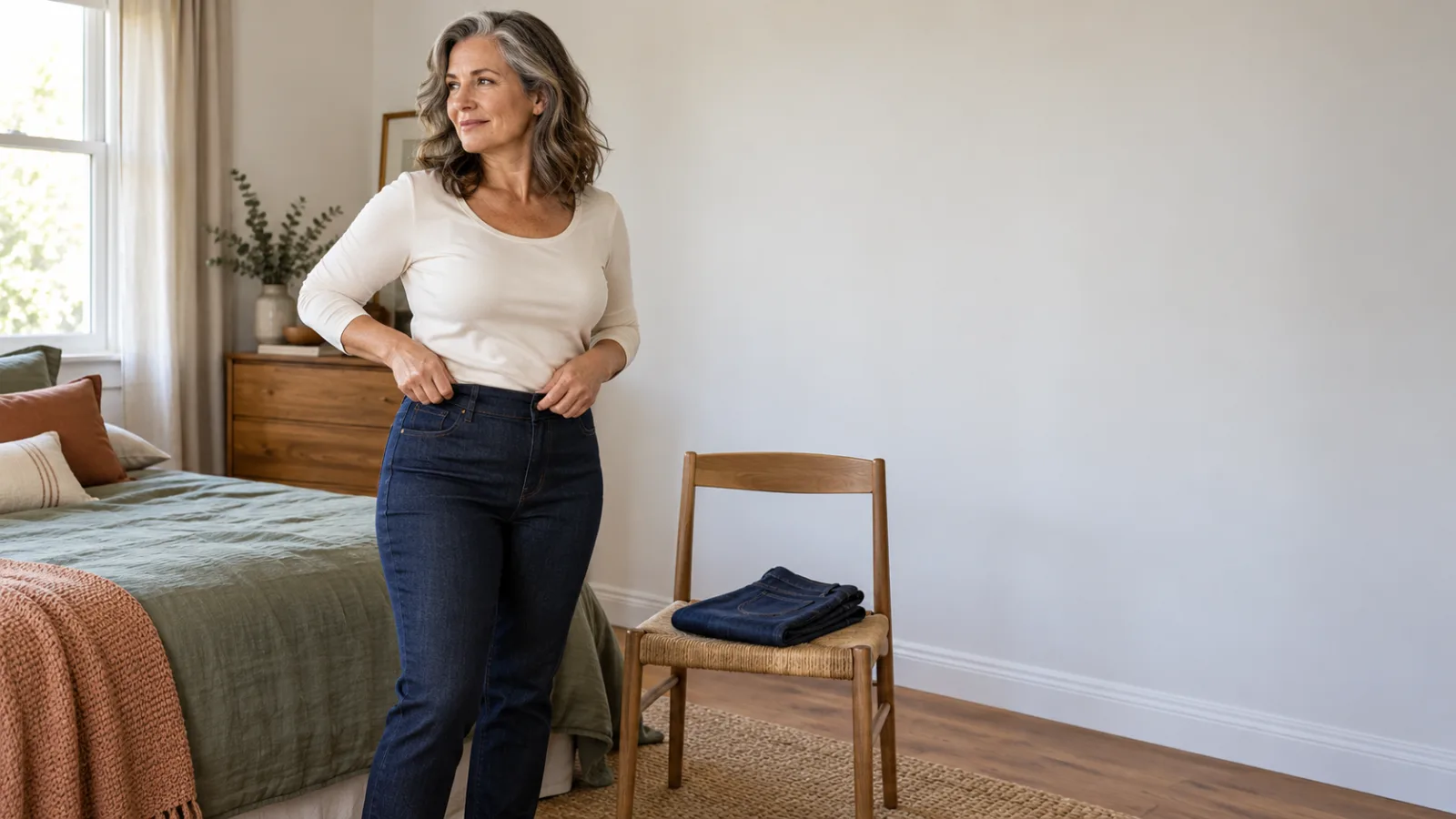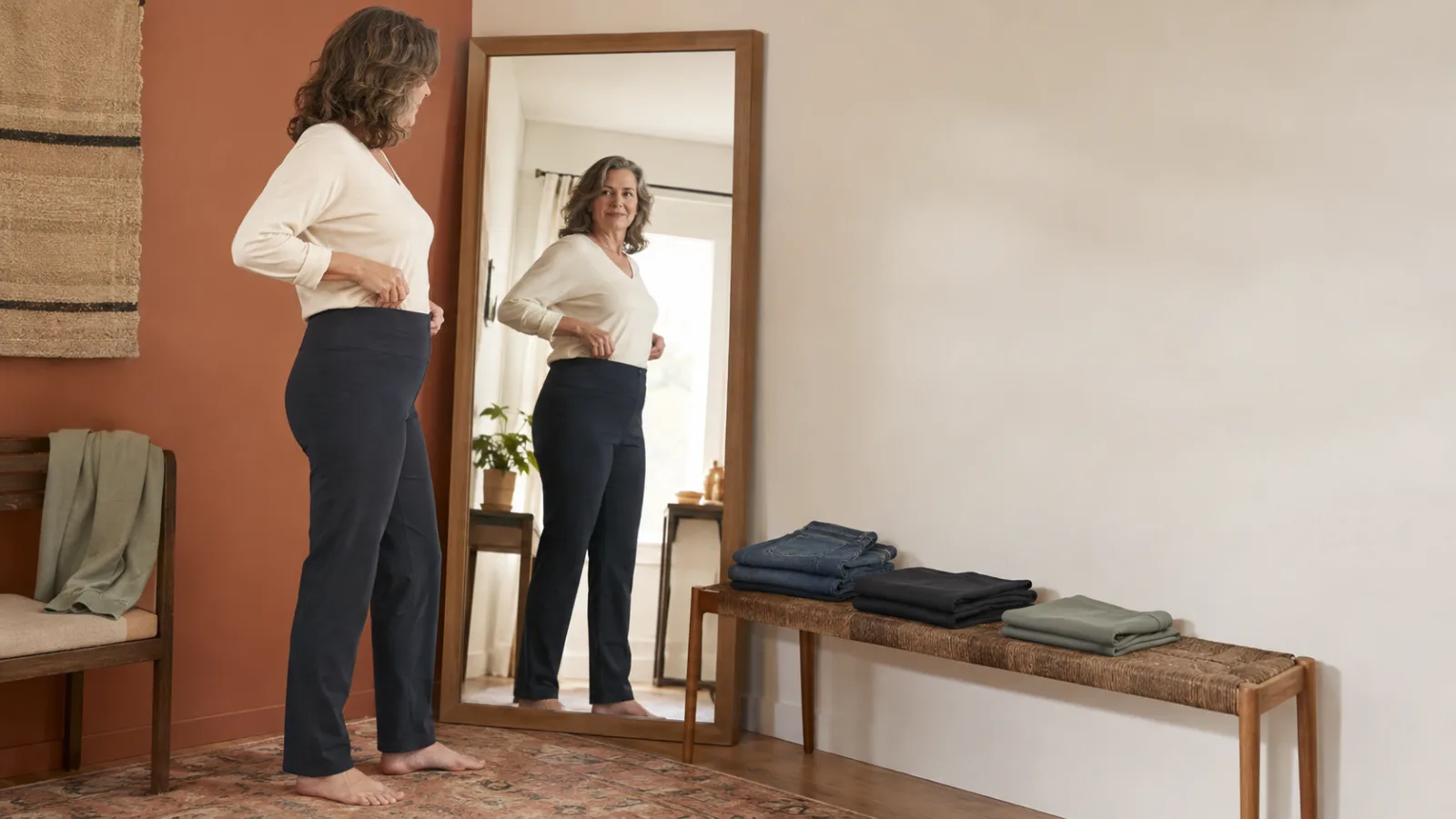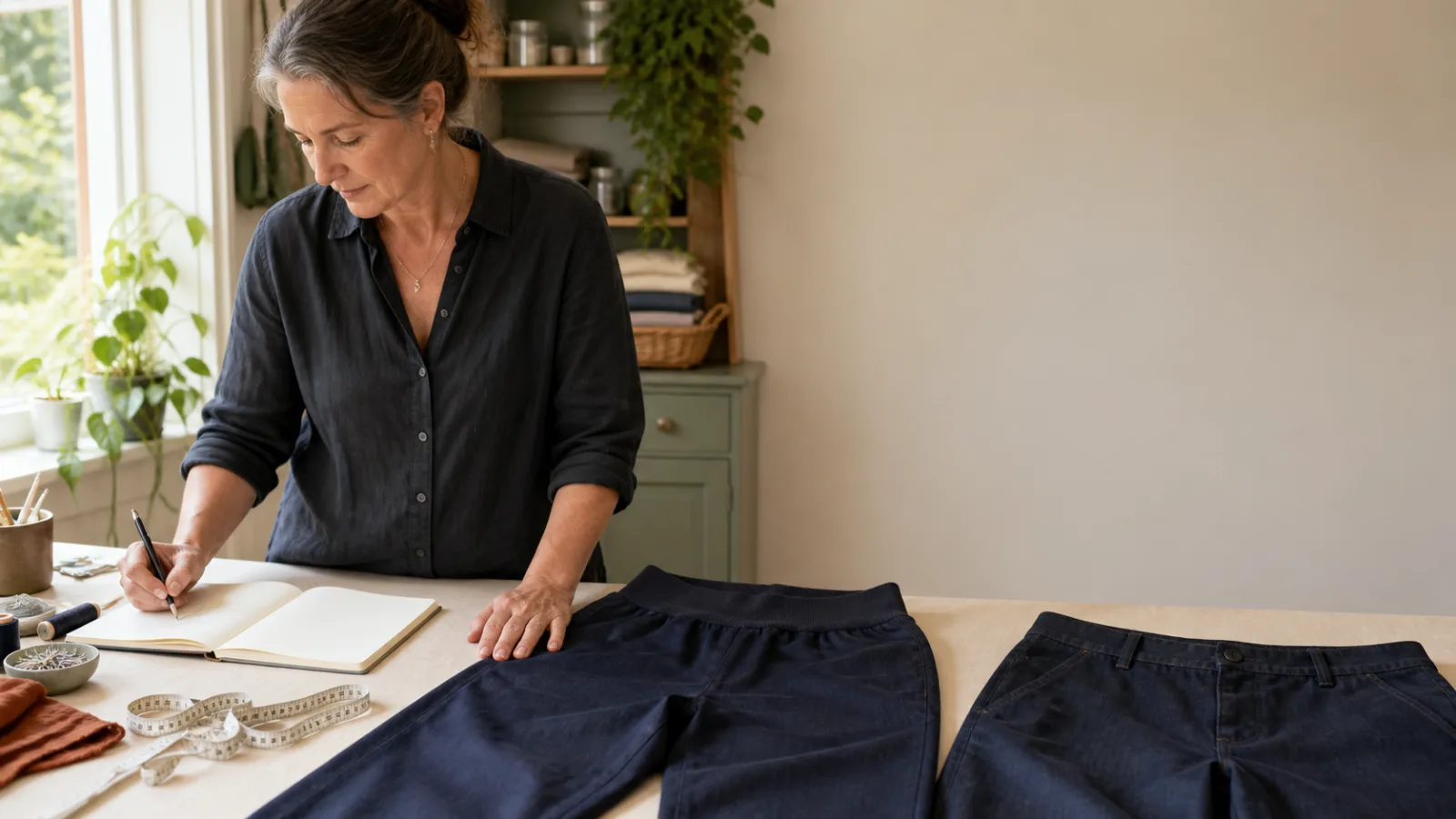
Pants for an apple shape: waistband first, then everything else
Key takeaways
- The waistband crosses the widest part of the torso, so its depth and softness matter more than anything else.
- A waist-to-hip difference of 6 inches or less is the apple pattern; it changes what to look for.
- Mid rise sits at the natural waist; super-high rise stacks pressure on the stomach when seated.
- A leg with some width balances the top and stops the fabric gripping the thigh.
What apple shape means for a pattern
An apple shape usually means a waist-to-hip difference of about 6 inches or less. The pattern implication is simple: the waistband sits across the fullest part of your torso instead of at a narrowing above the hip. So the questions that matter for a pear shape - will the waist gap - do not apply. The question is whether the band can sit across a full, moving part of the body for a day without digging in or rolling.
The figures below come from the sources listed at the end of this guide.
| What | Value | Source |
|---|---|---|
| apple waist-to-hip difference | 6" | JEGINS Fit body shape standard |
Depth and softness of the band
A band at least 2 inches deep spreads the same tension over twice the surface of a one-inch band, which is the difference between pressure you notice and pressure you do not. Knit bands and covered elastic bands move with the torso; a flat woven band with a button holds one circumference and either digs in or, if it is loose enough not to, folds over. A wide band in a knit that differs from the leg fabric is also the construction least likely to roll, because the two fabrics do not fold together.
The figures below come from the sources listed at the end of this guide.
| What | Value | Source |
|---|---|---|
| minimum waistband depth | 2" | JEGINS Fit body shape standard |
Rise: mid, not maximum
A front rise of roughly 9 to 10.5 inches sits at the natural waist. The instinct on an apple shape is often to go higher for coverage, but a rise of 11 inches or more sits above the widest point and, when seated, the band has nowhere to go but into the stomach. Mid rise sits at the narrowest available point and lets the band rest rather than grip.
The figures below come from the sources listed at the end of this guide.
| What | Value | Source |
|---|---|---|
| mid rise front rise lower bound | 9" | JEGINS Fit body shape standard |
| mid rise front rise upper bound | 10.5" | JEGINS Fit body shape standard |
| high rise threshold | 11" | JEGINS Fit body shape standard |
Fabric that recovers
Elastane between 4 and 8 percent is the band that lets a waistband stretch when you sit and return when you stand. Below 2 percent the fabric stretches and stays stretched, so the waist that was comfortable at nine in the morning is loose and folding by four. Above 12 percent the whole garment behaves like a legging, which some people want and others find shows more than they intended.
The figures below come from the sources listed at the end of this guide.
| What | Value | Source |
|---|---|---|
| elastane comfort lower bound | 4% | JEGINS Fit body shape standard |
| elastane comfort upper bound | 8% | JEGINS Fit body shape standard |
| elastane bagging threshold | 2% | JEGINS Fit body shape standard |
| elastane legging threshold | 12% | JEGINS Fit body shape standard |
Leg shape
A straight or gently wide leg from a defined waistband is the cut most apple-shaped women find balances the outfit and keeps fabric off the thigh. Skinny cuts work with a longer top. What to avoid is a leg that grips the thigh below a soft waistband, because the eye reads the tightest point as the widest. The rule is that the pants should touch you at the waistband and skim everywhere else.
Related questions
- best jeans for apple shape
- pants for women who carry weight in the middle
- apple shape body jeans that don’t dig in
- what rise is best for apple shape
Related guides
Frequently asked questions
- Should apple-shaped women wear high-waisted pants?
- A mid rise of roughly 9 to 10.5 inches usually works better than a super-high rise, because it sits at the natural waist and does not press into the stomach when seated. High rise can work with a very deep soft band, but a rigid high-rise closure is the combination that fails most often.
- Why does my waistband roll over?
- A narrow band under tension on a curved surface folds outward. A band at least 2 inches deep, ideally in a knit that differs from the leg fabric, spreads the tension and does not fold.
- Are pull-on pants the only option?
- No, but they are built with the right waistband by default. Woven jeans with a hidden elastic panel behind a conventional front give the same comfort with a jeans look. Check the waistband depth and the elastane percentage rather than the closure.
Sources
- JEGINS Fit body shape standard
Our published editorial standard for the figures used in this guide.
JEGINS Fit · Accessed September 1, 2026
- Waistband - Wikipedia
Background reference for the definitions used in this guide.
Accessed September 1, 2026
Scope and limits of this guide
This guide describes what we have measured or sourced. It does not cover every brand, and body measurements vary: use it as a starting point and check the specific product page for its evidence level before buying.
Fit glossary · How we test · Editorial policy · Affiliate disclosure