Pants for a longer torso: why mid rise slides and what to do
Key takeaways
- A long torso means the natural waist is higher, so mid rise sits below it and slides.
- A front rise of 11 inches or more reaches the waist and stays.
- A wide knit band grips; a thin elastic band rolls down.
- Torso length and leg length are separate; do not assume tall length.
Why mid rise slides
The natural waist on a long torso sits well above the hip bone. A mid-rise band, at roughly 9 to 10.5 inches of front rise, arrives below that point, on a section of the body that narrows upward. Every step pulls the band toward the narrower part, which is down, and the pants follow. This is the same physics as a band rolling on an apple shape, in the other direction: the band is sitting on a slope.
The figures below come from the sources listed at the end of this guide.
| What | Value | Source |
|---|---|---|
| mid rise front rise lower bound | 9" | JEGINS Fit measurement standard |
| mid rise front rise upper bound | 10.5" | JEGINS Fit measurement standard |
A rise that reaches the waist
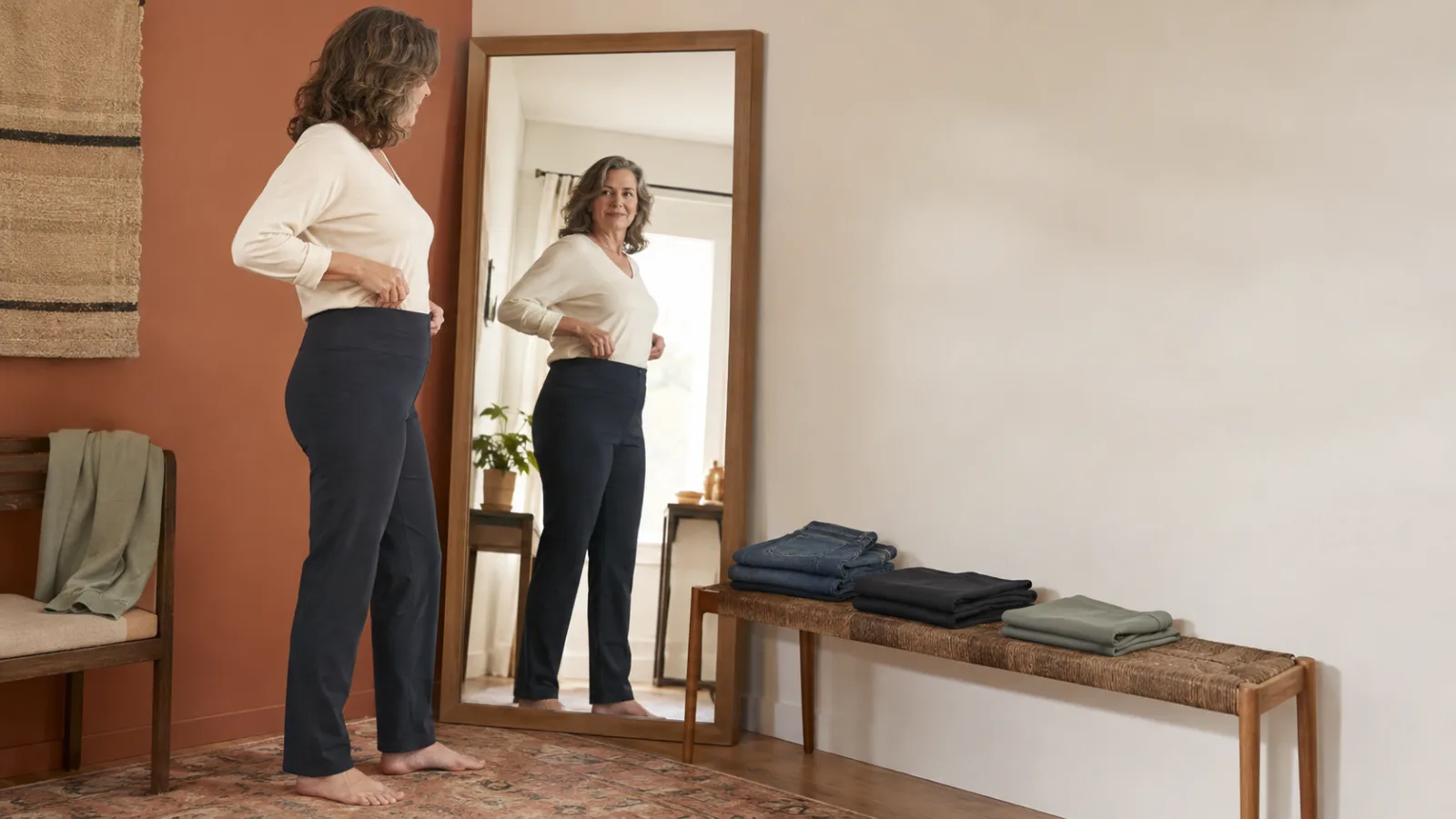
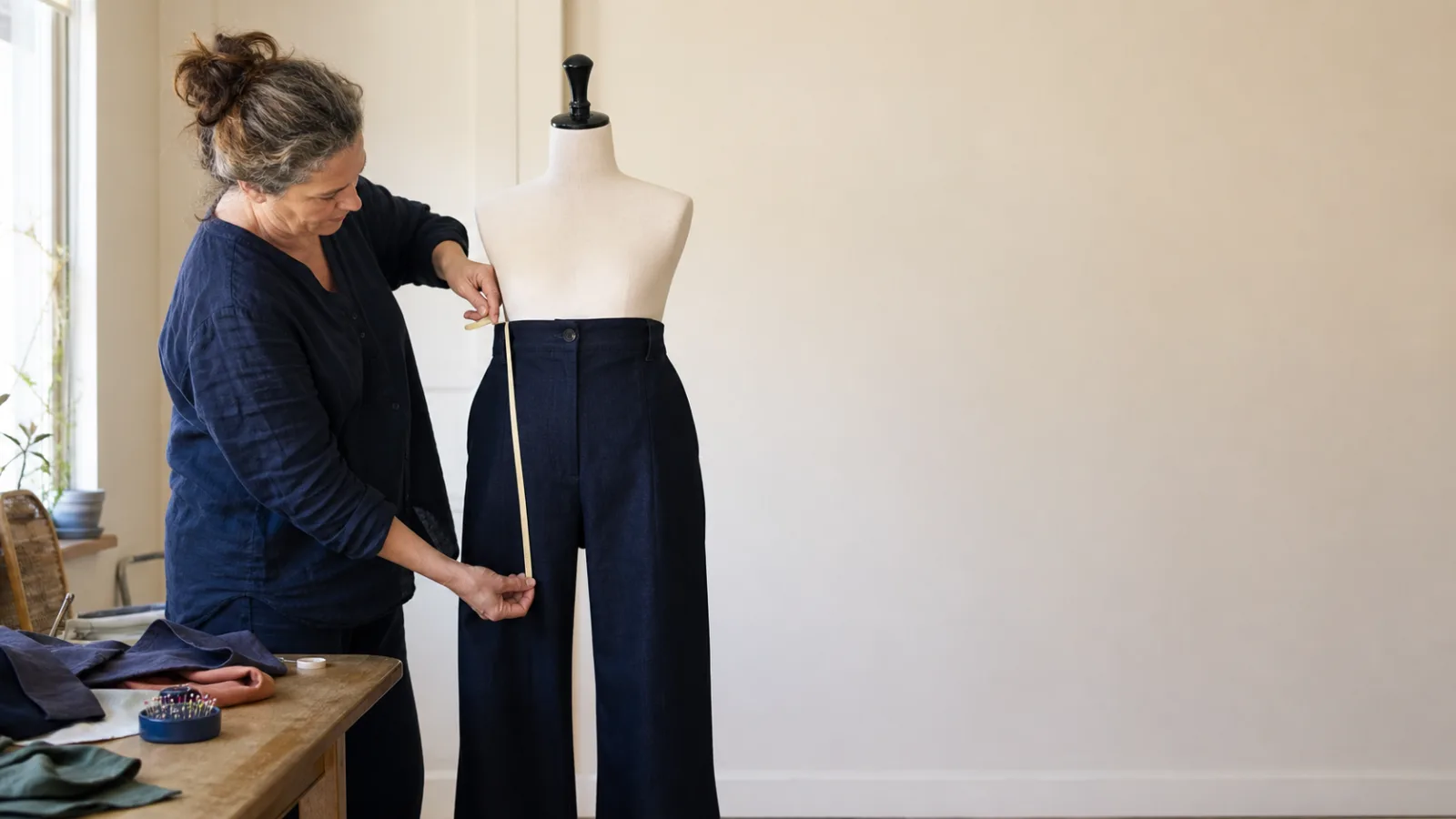
A front rise of 11 inches or more is a high rise on most women’s blocks, and on a long torso it is the rise that reaches the natural waist. There the body narrows in both directions and the band has somewhere to sit. Measure the front rise on the pair that has stayed up best - crotch seam to top of the band - and use that number to read every other chart. If the brand does not publish the rise, expect it to be drafted for an average torso and to slide.
The figures below come from the sources listed at the end of this guide.
| What | Value | Source |
|---|---|---|
| high rise threshold | 11" | JEGINS Fit measurement standard |
The band has to grip
A knit band at least 2 inches deep grips a wide section of the waist and stays put. A thin elastic band, an inch or less, has too little surface to hold and rolls down as it slides. If the leg fabric and the band are the same knit they fold together; a band in a different, heavier knit than the leg is the construction that stays.
The figures below come from the sources listed at the end of this guide.
| What | Value | Source |
|---|---|---|
| minimum waistband depth | 2" | JEGINS Fit measurement standard |
Do not assume a long leg
Torso length and leg length are independent, and a long torso at average height often means a shorter leg than the height suggests. Measure the inseam on a pair that fits rather than reading it off your height, and compare it to the chart per size. Tall lengths add inseam, not rise; they do not solve the sliding.
How to tell you have a long torso
Stand and find the bottom of your ribcage and the top of your hip bone at the side. If there is a hand’s width or more between them, the torso is long, and the natural waist sits roughly in the middle of that gap. That point is where the band should sit; a rise that lands below it will slide.
Related questions
- high rise pants for long torso
- pants keep sliding down long torso
- best rise for long torso women
- how to tell if you have a long torso
Related guides
Frequently asked questions
- Why do my pants slide down all day?
- On a long torso a mid rise sits below the natural waist, on a part of the body that narrows upward, so movement pulls the band down. A front rise of 11 inches or more reaches the waist and stays.
- Do I need tall sizes?
- Not necessarily. Tall lengths add inseam, not rise. A long torso often comes with an average or shorter leg, so measure your inseam on a pair that fits rather than assuming tall.
- What waistband stops rolling on a long torso?
- A knit band at least 2 inches deep, ideally in a heavier knit than the leg fabric, so the two do not fold together. A thin elastic band rolls.
Sources
- JEGINS Fit measurement standard
Our published editorial standard for the figures used in this guide.
JEGINS Fit · Accessed September 1, 2026
- Waistband - Wikipedia
Background reference for the definitions used in this guide.
Accessed September 1, 2026
Scope and limits of this guide
This guide describes what we have measured or sourced. It does not cover every brand, and body measurements vary: use it as a starting point and check the specific product page for its evidence level before buying.
Fit glossary · How we test · Editorial policy · Affiliate disclosure