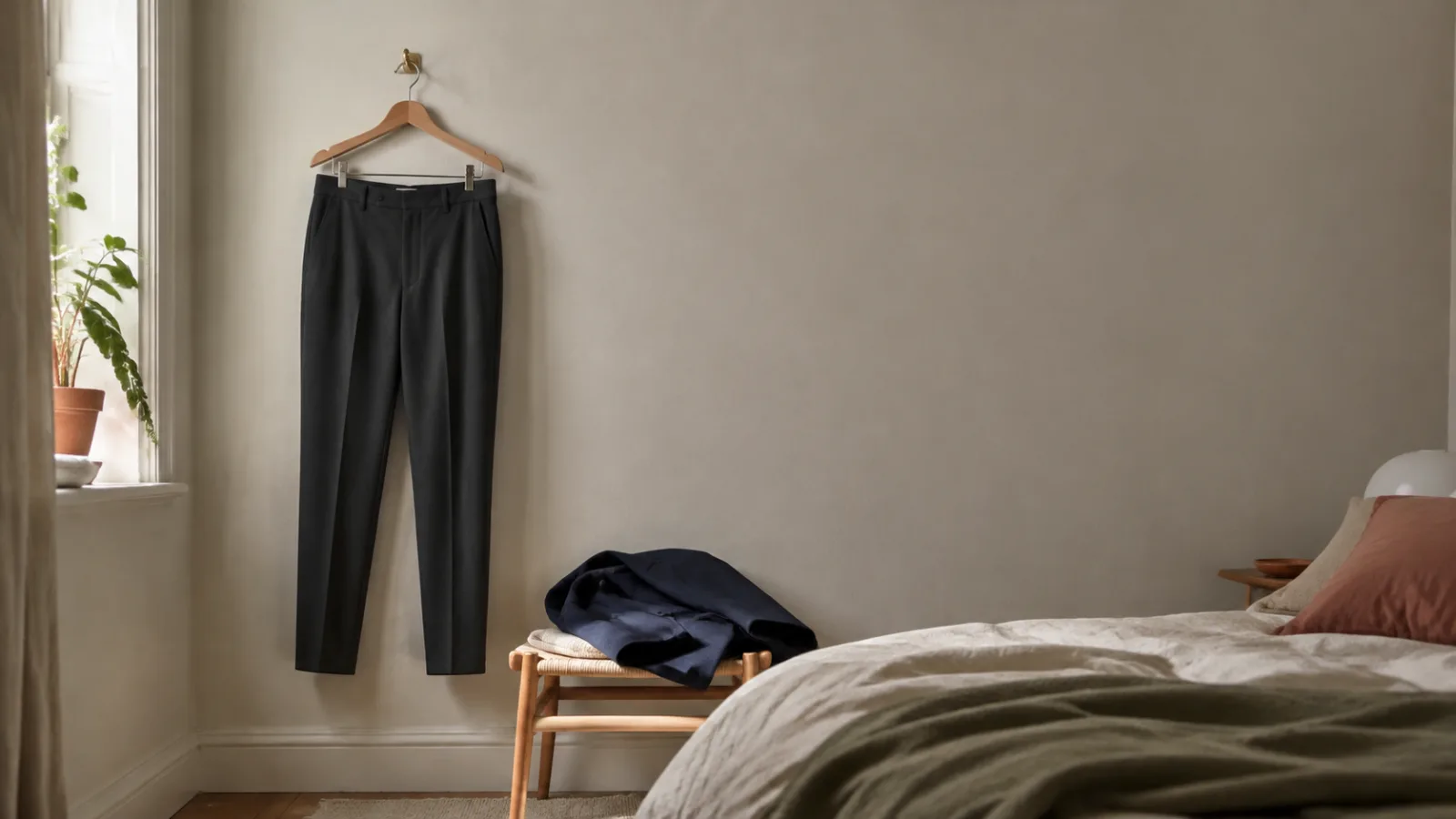
What are comfortable work pants?
Comfortable work pants are a use-case category built around presenting as office- or workplace-appropriate while adding stretch comfort -- most commonly realized as a ponte-knit or stretch-woven trouser styled with a trouser silhouette (straight or tapered leg, no denim styling, often a front crease). Like travel pants, this is a use case layered on top of one of the structural fabric categories rather than a distinct construction of its own.
What distinguishes comfortable work pants from similar pants?
- Trouser or dress-pant styling (crease, tailored waistband, no denim details) intended to read as workplace-appropriate rather than casual
- Base construction is most often ponte knit or a stretch-woven trouser fabric, chosen for its ability to hold a tailored silhouette while adding stretch
- Waistband is frequently a contour (elastic-back-only) design so the front reads flat and tailored while the back offers stretch comfort
How are comfortable work pants constructed?
Varies by base fabric: a ponte-based work pant follows the ponte construction described on the ponte pants page, while a woven-based work pant follows a stretch-trouser construction closer to stretch jeans but with a trouser (not jean) waistband and no rivets or denim topstitching. The common thread across the category is tailored styling rather than a single fabric or seam structure.
What fabrics are comfortable work pants typically made from?
Ponte knits (4–8% elastane) or woven stretch-suiting fabrics (1–4% elastane) are both common. Woven stretch-suiting fabrics generally use lower elastane percentages than casual stretch-denim because a crisper, more tailored hand is prioritized over maximum stretch.
What waistband structures do comfortable work pants use?
Contour (elastic-back-only) waistbands are especially common in this category, since they let the front sit flat like a dress trouser while the back stretches for sitting comfort. Full elastic and traditional rigid waistbands both also appear depending on how casual or tailored the specific design is.
What pocket structures do comfortable work pants have?
Real front and back pockets, styled like dress-trouser pockets (slanted front, welt back) rather than denim-style pockets, are typical, though faux pockets appear on some more casual, ponte-based designs.
How much stretch do comfortable work pants have?
Depends on the base fabric -- four-way stretch if built on a ponte or other knit, one-direction stretch if built on a woven stretch-suiting fabric. Generally more restrained stretch than jeggings or leggings, since the priority is a tailored silhouette rather than maximum give.
How do comfortable work pants fit?
Tailored trouser silhouette -- straight or slightly tapered leg, often with a crease -- prioritizing a clean workplace appearance over the closer body-hugging fit seen in jeggings or leggings.
What sizing system do comfortable work pants use?
Varies by base construction, similar to travel pants: knit-based designs often use body-measurement charts, woven-based designs more often use numeric waist sizing similar to dress trousers.
What are the advantages of comfortable work pants?
- Workplace-appropriate appearance with meaningfully more stretch comfort than a traditional rigid dress trouser
- Contour waistbands offer a flat, tailored front with stretch comfort at the back where it is least visible
What are the trade-offs of comfortable work pants?
- Less overall stretch than jeggings or leggings, since tailored appearance is prioritized over maximum give
- Construction and sizing vary more across brands than in structurally-defined categories, since "work pants" describes an intended use rather than one fixed build
What fit problems are common with comfortable work pants?
- Contour waistband gapping at the sides if the flat front panel does not match the wearer’s waist shape
- Knee bagging over a workday in ponte-based designs, similar to other ponte or jersey knits though generally slower given ponte’s firmer structure
How do you care for comfortable work pants?
Follow the specific base fabric’s care needs: ponte-based work pants respond to knit care guidance (avoid high heat to protect elastane recovery); woven stretch-suiting fabrics may have dry-clean or gentle-wash-only labeling that should be checked individually.