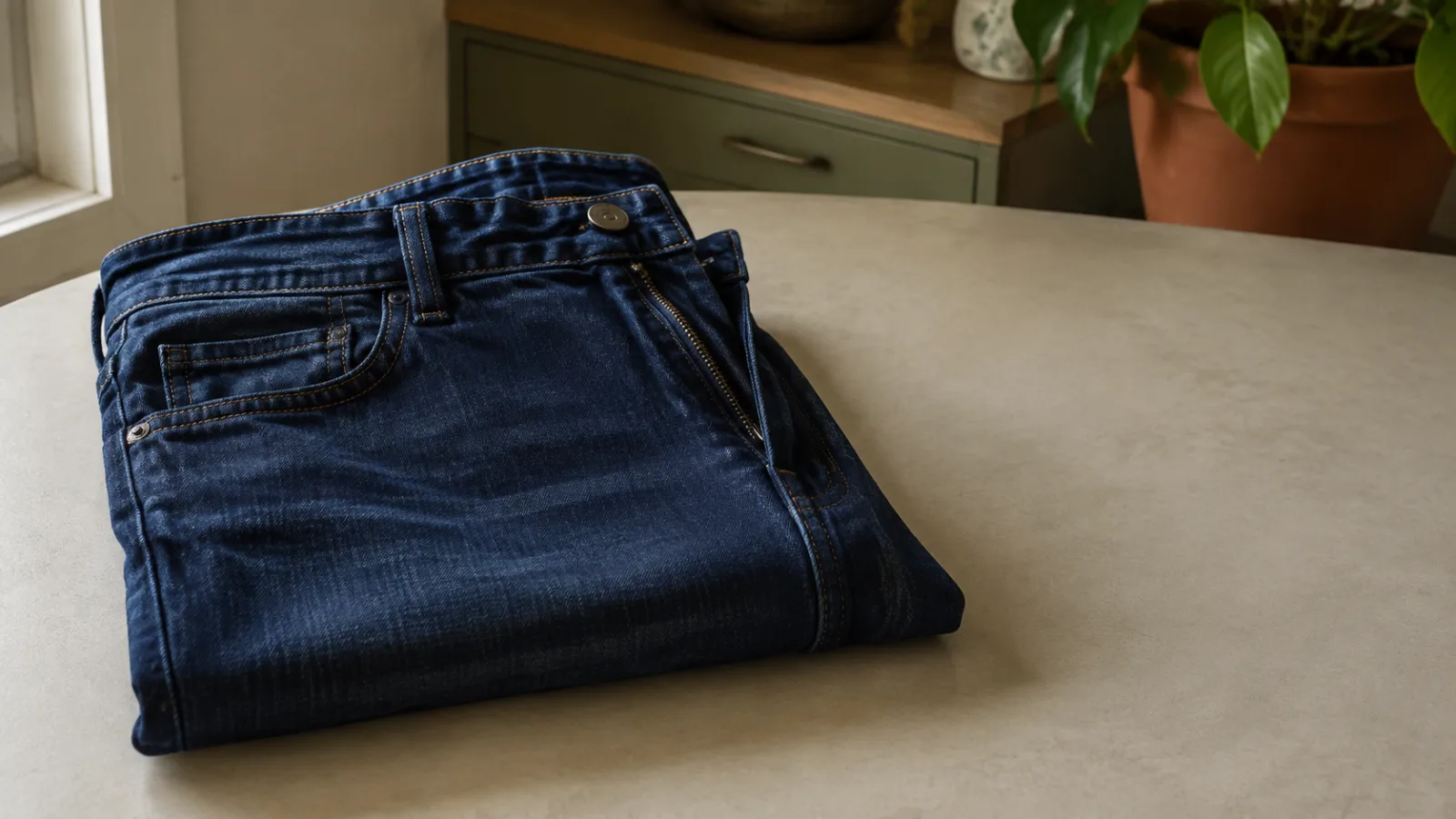
What are stretch jeans?
Stretch jeans are traditional woven denim jeans with a working button-and-zip fly, built from a fabric that carries enough elastane to add give without changing the fundamental construction of a classic jean. They are the closest category on this site to what most people picture when they hear "jeans" -- the difference from a rigid jean is entirely in the fabric’s fiber content, not in the pattern or closures.
What distinguishes stretch jeans from similar pants?
- A functional button-and-zip fly and a rigid, faced waistband -- the structural feature that separates stretch jeans from pull-on jeans and jeggings
- Woven denim fabric with a visible warp/weft structure, carrying elastane typically in the 1–3% range for light stretch or up to about 5–6% for a noticeably stretchier "comfort" jean
- Full five-pocket (or similar) construction with real pocket bags, rivets and belt loops matching traditional denim styling
How are stretch jeans constructed?
Identical panel construction to a rigid jean -- yoke, front and back leg panels, waistband with belt loops, a faced fly extension holding the zip and button -- with the only material difference being an elastane-blended denim rather than 100% cotton. Because the waistband is rigid and faced rather than elastic, size adjustment happens through the button/zip and belt rather than through fabric stretch at the waist.
What fabrics are stretch jeans typically made from?
Woven cotton/elastane denim, most commonly in the 1–3% elastane band for "slight stretch" or comfort-stretch jeans, occasionally reaching 4–6% in designs marketed specifically for extra flexibility. At 0–1% elastane a jean is effectively rigid denim and sits outside the "stretch jeans" framing even if labeled that way; anything above roughly 8% starts to cross into pull-on-jean or jegging fabric territory and usually cannot support a rigid waistband and structural fly comfortably.
What waistband structures do stretch jeans use?
Rigid, faced waistbands with a button-and-zip closure -- the same structure as a traditional rigid jean. This is the primary structural marker distinguishing stretch jeans from every pull-on category on this site.
What pocket structures do stretch jeans have?
Real front and back pockets built the traditional way, with a full pocket bag sewn behind the visible opening, matching classic five-pocket jean construction.
How much stretch do stretch jeans have?
Stretches mainly in one direction (usually crosswise, following the elastane yarn in the weft), giving room to move without changing the garment’s overall structure or waistband adjustability. The amount of stretch and how quickly it recovers scales closely with elastane percentage: 1–3% gives a small amount of give for comfort while barely changing the fabric’s hand versus rigid denim; 4–6% gives noticeably more flexibility at the cost of some of denim’s structural stiffness.
How do stretch jeans fit?
Follows the same range of silhouettes as rigid jeans (skinny, straight, slim, bootcut, wide), since the pattern is unchanged from a rigid jean -- what changes is comfort while sitting, bending or crouching, not the garment’s shape on the body.
What sizing system do stretch jeans use?
Sized on the traditional numeric waist/inseam system (e.g. 28/30) used across the jean category generally, since fit is governed by the rigid waistband and structural pattern rather than by stretch-to-fit body measurements.
What are the advantages of stretch jeans?
- Preserves the traditional jean look, structure and pocket function while adding meaningful ease of movement
- Rigid waistband allows the same fine adjustment (belt, button positioning) available on any traditional jean
- Denim’s structural stiffness generally holds its shape and resists bagging better than a more heavily stretched pull-on or knit fabric
What are the trade-offs of stretch jeans?
- Less overall give than pull-on jeans or jeggings, since both the pattern and the rigid waistband limit how much stretch actually reaches the body
- Still requires fitting around a fixed waistband and working fly, unlike pull-on categories
What fit problems are common with stretch jeans?
- Fabric that "bags out" at the knee over a wear cycle if elastane percentage is on the low end and the denim is worn repeatedly between washes
- Waistband gapping at the back for wearers whose waist-to-hip ratio does not match the jean’s rigid waistband curve
- Stretch loss over time as elastane degrades faster than the cotton around it, particularly with frequent hot-washing or drying
How do you care for stretch jeans?
Elastane degrades primarily from heat rather than from stretching or ordinary wear, so washing cold or warm and drying on low heat (or air-drying) preserves recovery substantially longer than routine hot-cycle laundering.