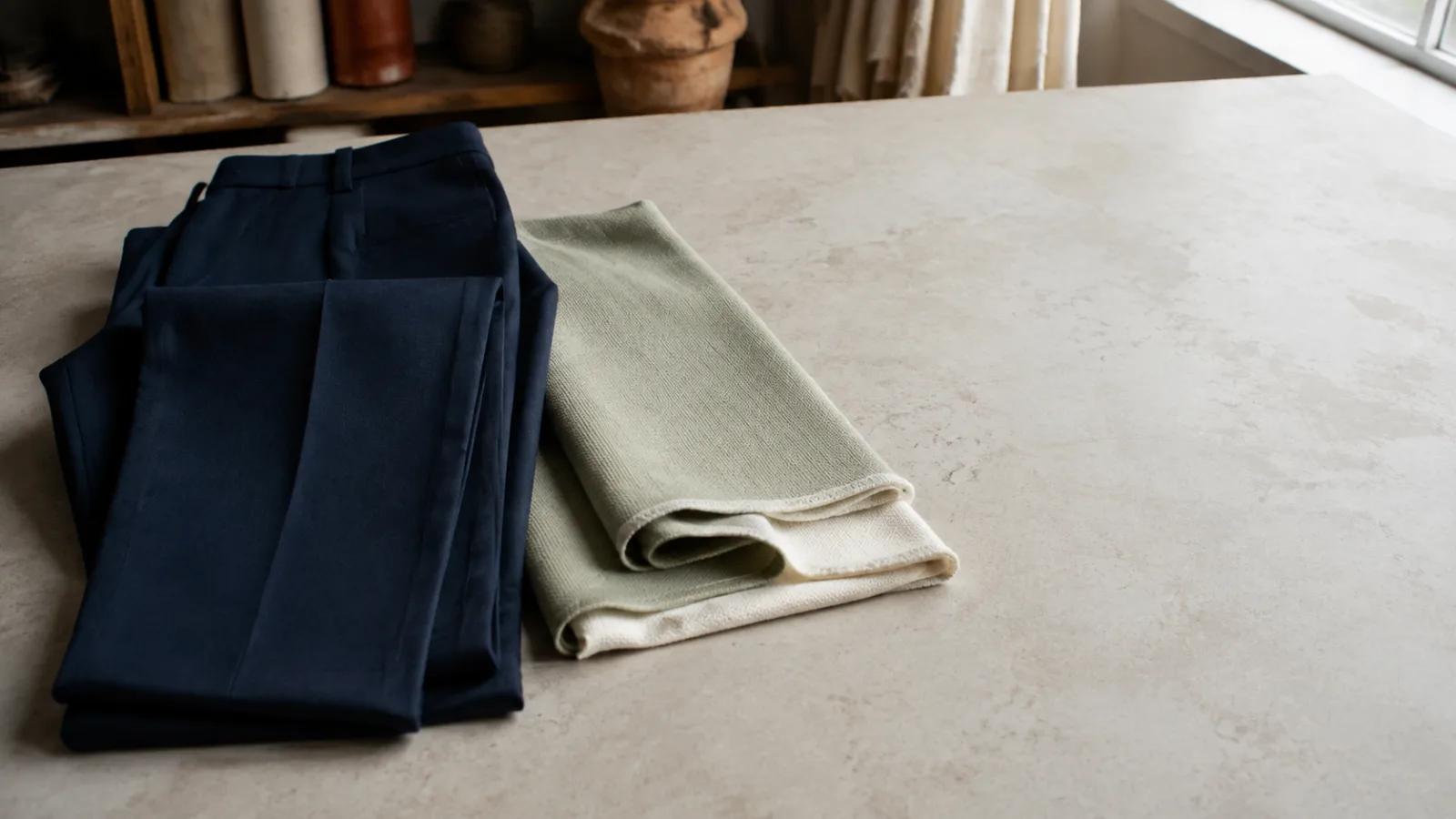
What are ponte pants?
Ponte pants are made from ponte di Roma, a dense double-knit fabric with a firmer, less see-through hand than a light jersey. Unlike jeggings, ponte pants are usually styled and cut as trousers rather than as denim-look leg coverings -- a tailored or straight leg, sometimes a seam crease, and a waistband finished to look closer to a trouser than a jean.
What distinguishes ponte pants from similar pants?
- Double-knit (ponte) construction -- denser and less stretchy in feel than a single-layer jersey, though still a true knit rather than a woven fabric
- Trouser-style tailoring cues (creases, tailored waistbands, ankle or straight leg openings) rather than denim styling
- Opaque even in lighter colors, because the double-knit structure is thicker than a typical jegging jersey
- Minimal or no surface topstitching mimicking denim -- ponte pants generally do not try to look like jeans
How are ponte pants constructed?
Cut similarly to a tailored trouser -- often with a front crease line and a slightly more structured leg than a jegging -- but using knit ponte fabric and knit-appropriate seams rather than woven trouser construction (no lining, no separate waistband facing in most designs). The double-knit structure holds a crease and drape better than a lighter single jersey, which is why ponte is favored for trouser-like silhouettes.
What fabrics are ponte pants typically made from?
Ponte di Roma: a cotton, rayon, polyester or wool blend double-knit typically carrying 4–8% elastane, in the "recovers" band described in our fabric guide. The denser double-knit structure means ponte fabrics in this range feel firmer and less clingy than a single jersey at the same elastane percentage.
What waistband structures do ponte pants use?
A mix of full elastic waistbands and contour (elastic-back-only) waistbands with a flatter front panel is common, since ponte’s firmer hand supports a flat front panel better than a lighter jersey would. Wide-knit waistbands also appear, particularly on more casual designs.
What pocket structures do ponte pants have?
Both faux and real pockets appear across the category; ponte’s density supports a real welt or slant pocket better than a lighter jersey can, so real front pockets are somewhat more common here than on jeggings.
How much stretch do ponte pants have?
Still four-way stretch because ponte is a knit, but the double-knit structure resists stretching as far or as easily as a single jersey, giving a firmer, more controlled stretch that holds its shape through a workday rather than loosening progressively.
How do ponte pants fit?
Closer to a tailored trouser silhouette than to a jegging or legging -- follows the body but with enough structure to hold a straight or slightly tapered leg line rather than clinging at the ankle.
What sizing system do ponte pants use?
Typically sized like trousers (numeric size or XS–XXL body-measurement charts), similar to jeggings, since the knit fabric still stretches to fit rather than being cut to fixed finished measurements the way a woven trouser is.
What are the advantages of ponte pants?
- Trouser-appropriate look and drape with knit stretch and pull-on-style comfort
- Firmer double-knit resists bagging at the knee and seat better than a lighter single jersey
- Generally more opaque than lighter jerseys, reducing show-through concerns
What are the trade-offs of ponte pants?
- Less overall stretch give than a lighter jersey jegging or legging, since the double-knit structure is inherently firmer
- Can run warmer than a lighter single-jersey fabric due to its density
What fit problems are common with ponte pants?
- Waistband digging in at the natural waist if the contour waistband’s curve does not match the wearer’s waist-to-hip difference
- Knee and seat bagging still occurs over long wear, though generally slower than in a lighter single jersey
How do you care for ponte pants?
As with any elastane knit, heat from washing or drying is the main cause of lost recovery; ponte’s denser structure is somewhat more resistant to visible wear than a lighter jersey but is not immune to elastane heat damage.